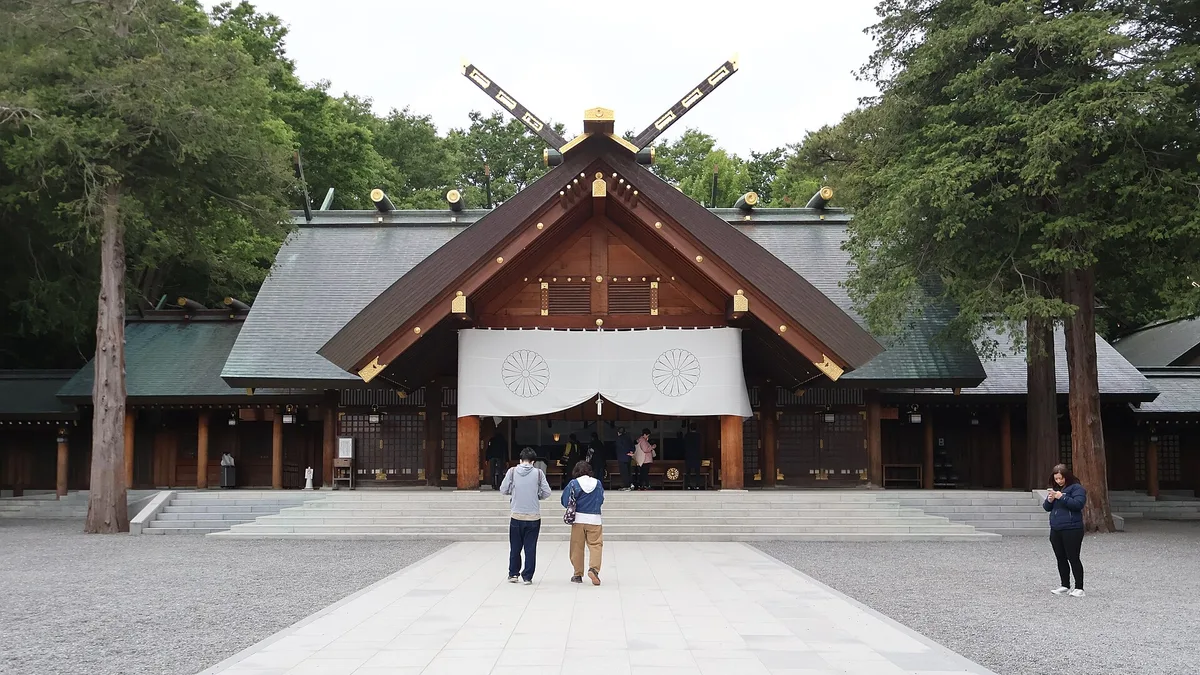
Walk through the first torii gate at Hokkaido Jingu and the city noise from Sapporo’s grid streets drops away almost immediately. Tall Katsura and oak trees line the approach, planted when the shrine was founded in 1869 as Sapporo’s guardian shrine for the newly settled island of Hokkaido. The gravel path bends twice before the main hall comes into view, a deliberate layout meant to slow your steps and clear your head before you arrive.
The shrine and its four deities
This is not a single-deity shrine. Hokkaido Jingu enshrines four kami: Okunitama, Onamuchi, and Sukunahikona, the trio credited with developing and protecting the land of Hokkaido, plus Emperor Meiji, added after his death in 1912.
That combination reflects the shrine’s original purpose. It was built to bless Japan’s colonization-era development of Hokkaido, and the shrine’s history is tied directly to that 19th-century settlement push.
At the main hall, the routine is simple: toss a coin into the offertory box, bow twice, clap twice, bow once more. Off to the side you’ll find ema boards covered in handwritten wishes and a stand selling omamori charms, many specific to travel safety and good health.
Maruyama Park and the mountain behind it
Hokkaido Jingu sits inside Maruyama Park, one of Sapporo’s most-loved green spaces and a famous hanami spot when the cherry blossoms open in late April or early May. Wild squirrels and even the occasional Ezo red fox turn up along the park’s quieter trails.
If you have energy left, the trailhead for Mt. Maruyama starts near the shrine and climbs roughly 60 to 90 minutes round trip to a summit with wide views over Sapporo. It’s a steady, well-marked path rather than a technical hike, doable in ordinary walking shoes.

When to go
Hokkaido Jingu is open every day from 6am to 5pm, with no weekly closure. Given how popular it is, timing your visit matters more than at a quieter shrine.
On weekdays, mornings tend to stay relatively calm, so there’s no need to rush. Weekends are different: going early in the morning is your best bet for a quieter visit, since crowds tend to build up as the day goes on.
New Year’s is the exception to all of this. Hatsumode, the first shrine visit of the year, draws enormous lines here in early January, and normal crowd patterns don’t apply.
Getting there and paying your respects properly
The shrine sits in the Maruyama district of Chuo Ward, a short walk from Maruyama Koen Station on the Tozai subway line. From the station, it’s about a 15-minute walk uphill through the park to reach the torii gate.
A few habits will make the visit smoother:
- Bow slightly before passing through each torii gate, and try to walk along the sides of the path rather than straight up the center, which is traditionally left for the deity.
- At the temizuya (water basin) near the entrance, rinse your left hand, then your right, then your mouth, before approaching the main hall.
- Coins of any small denomination work for the offering box; there’s no fixed amount expected.
- Photography is generally fine in the outer grounds, but keep phones down and voices low directly in front of the main hall, especially if a wedding or ceremony is underway.
Because this is a very popular shrine rather than a hidden one, don’t expect solitude on weekend afternoons. The upside is that it handles the volume well: paths are wide, the grounds are large, and the crowd thins out fast once you step off the main approach and into the surrounding park trails.
Nearby stops worth combining
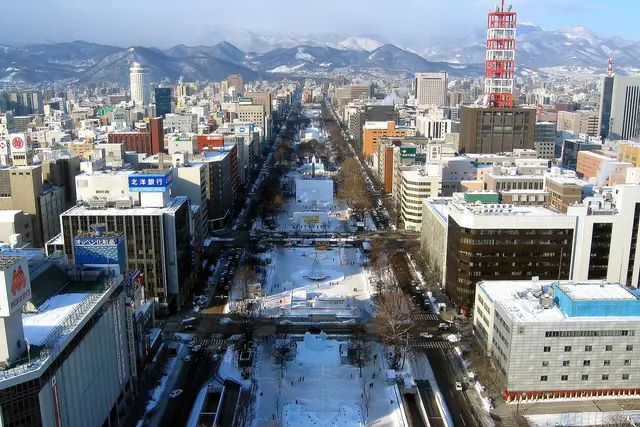
Maruyama Zoo sits just next to the park and makes an easy pairing if you’re traveling with kids. Central Sapporo, including Odori Park and the clock tower, is about 15 to 20 minutes away by subway, making Hokkaido Jingu an easy half-day add-on to a city itinerary rather than a standalone trip.
Frequently asked questions
How do I get to Hokkaido Jingu?
Take the Tozai subway line to Maruyama Koen Station, then walk about 15 minutes uphill through Maruyama Park to the shrine's main torii gate.
What are the opening hours?
Hokkaido Jingu is open daily from 6am to 5pm, with no weekly closing day.
When is it least crowded?
Weekdays stay fairly calm all day from 7am to 5pm. On weekends, go between 7am and 8am; crowds build fast from 9am and stay heavy until around 4pm.
How much time should I set aside?
Plan on 45 minutes to an hour for the shrine grounds alone, or half a day if you add a walk in Maruyama Park or the hike up Mt. Maruyama.
Is there an entrance fee?
No, entry to the shrine grounds is free; you'll only spend money if you buy an omamori charm or make an offering.
Plan your trip to Sapporo
Japan eSIM & staying connected →
Some links above are affiliate links — if you book through them, Wander Atlas earns a small commission at no extra cost to you. It's how we keep every guide free.