Why Bousra Waterfall is worth the drive
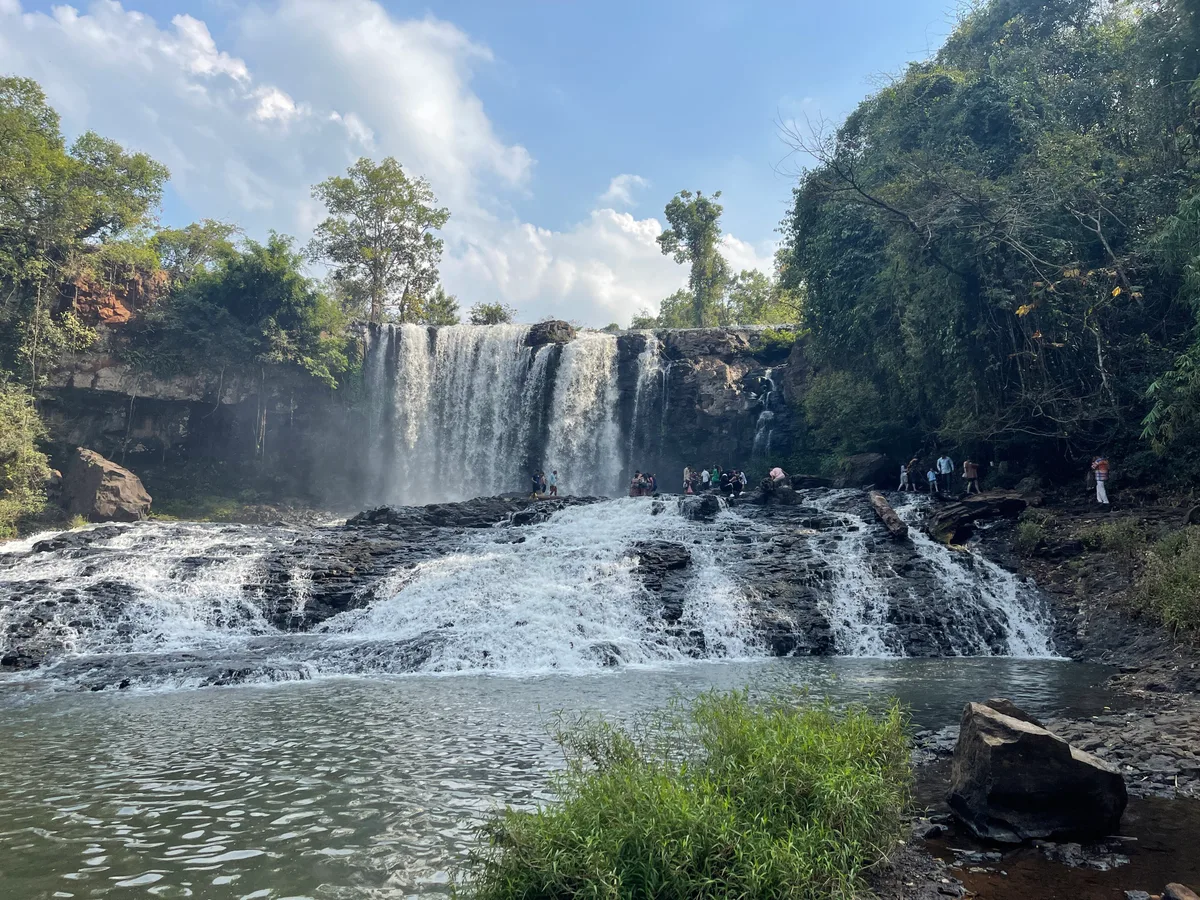
Mondulkiri’s red-dirt roads eventually spit you out at a wall of noise before you see anything. That’s Bousra’s upper tier, a broad curtain of water dropping onto black basalt rock, the kind of volcanic stone that gives this whole plateau its rust-colored soil.
The falls run in three tiers, though most visitors only see the first two. The upper tier is the postcard shot, wide, thunderous, framed by jungle. A path leads down to a second, taller drop where a viewing platform lets you feel the spray on your face.
Bousra sits inside Mondulkiri’s protected forest, in Pech Chreada district. It’s one of the province’s best-known sights, so you’ll share it with tour vans, especially later in the day.
Getting there from Sen Monorom
The waterfall is roughly 40 kilometers northeast of Sen Monorom town, about an hour by road. Most travelers hire a moto or a rented scooter, though the last stretch of dirt track can turn slick and rutted after rain.
Tuk-tuks and private cars are easy to arrange through any Sen Monorom guesthouse. Many pair the trip with a stop at a nearby Bunong minority village or a coffee plantation en route, since Mondulkiri’s coffee farms line much of this route.
There’s no public transport out here, you need your own wheels or a hired driver. Confirm a return time with your driver before you set off, since phone signal thins out near the falls.
What to see and do once you’re there
Wooden staircases and viewing platforms wind along both tiers, giving you angles impossible to get from the road. The lower pool is where most people swim, though currents near the base can run stronger than they look.
Vendors near the entrance sell grilled corn, fruit, and drinks, useful since there’s little else close by. A short walk connects the two main platforms, easy enough in flip-flops on dry days but better in proper shoes when it’s wet.
- Upper platform: wide-angle view of the main curtain
- Lower platform: closer to the pool, mistier, louder
- Basalt rock formations: worth a slow look, distinct to this volcanic plateau
- Nearby vendors: corn, fruit, cold drinks, basic snacks
Give yourself at least an hour at the falls themselves, more if you plan to swim or linger over lunch from a vendor stall.
When to go
Bousra Waterfall is open daily from 7am to 5pm. The measured crowd pattern here is clear: weekends get genuinely busy between 10am and 4pm, when tour groups from Sen Monorom and beyond arrive in waves.
Both weekdays and weekends are quietest from 7am to 9am, right at opening. Arriving then gets you the falls with far fewer people in your photos and a calmer path along the platforms.
Wet season, roughly June through October, brings the most dramatic water volume but also the muddiest roads in. Dry season means an easier ride but a noticeably thinner curtain of water by the tail end of it, around March and April.
How to visit like a local
Bousra is well-known and well-visited, so beating the crowd matters more than finding a secret entrance. There isn’t one. Show up at opening, 7am, and you’ll likely have the upper platform close to yourself for a stretch.
Pay in Cambodian riel or US dollars in cash; there’s no card payment at the entrance gate or the food vendors. Small bills help, since change can be limited at the stalls.
Wear sandals or water shoes you don’t mind getting wet, and carry a dry bag for your phone if you’re heading down to the lower pool. Sun protection matters too. The walk between platforms has little shade.
The common mistake is treating this as a quick photo stop. Rushing in around midday, snapping a picture, and leaving means fighting tour-bus crowds and missing the calmer, cooler morning light that makes the basalt and spray genuinely worth the drive.
Pair your visit with lunch back in Sen Monorom or at a roadside stall near a Bunong village, and you’ve got a full, unhurried Mondulkiri morning.
Frequently asked questions
How far is Bousra Waterfall from Sen Monorom?
About 40 kilometers, roughly an hour's drive northeast into Pech Chreada district, mostly on dirt roads for the final stretch.
What's the quietest time to visit?
Between 7am and 9am, both on weekdays and weekends. Weekends get busy from 10am to 4pm as tour groups arrive, so aim to arrive right at opening.
Can you swim at Bousra Waterfall?
Yes, mainly in the lower pool near the second tier, though currents can be stronger than they appear, so stick to designated swimming areas.
How long should I plan to spend there?
At least an hour at the falls, plus travel time. Many visitors turn it into a half-day trip by combining it with a nearby Bunong village or coffee plantation stop.
Do I need a car or can I get there by public transport?
There's no public transport to Bousra. You'll need a rented scooter, a hired tuk-tuk, or a private car arranged through a Sen Monorom guesthouse.
Plan your trip to Sen Monorom
Cambodia eSIM & staying connected →
Some links above are affiliate links — if you book through them, Wander Atlas earns a small commission at no extra cost to you. It's how we keep every guide free.
Related guides
 hidden gem
 Phnom Srei: Kampong Cham Travel Guide (4.3★)
 hidden gem
 Independence Monument: Phnom Penh Travel Guide (4.5★)
 hidden gem
 Central Market: Phnom Penh Travel Guide (4.4★)
 hidden gem