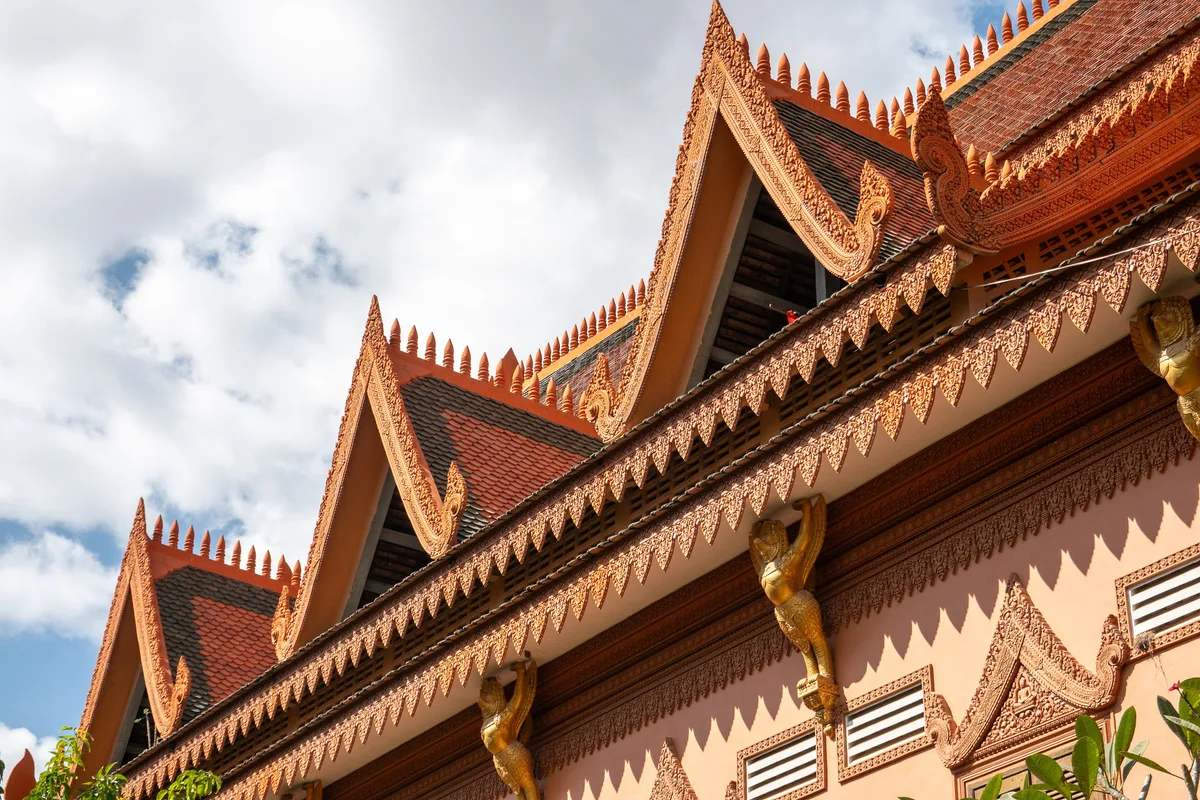
Why Wat Bo is worth the detour
Most visitors to Siem Reap spend their energy on Angkor Wat and never cross the river into Wat Bo village. That’s their loss.
This is one of the oldest temples in the city, said to sit on the site of an earlier wooden pagoda, and it still functions as a working monastery. Saffron-robed monks go about daily routines around you, unhurried, while the compound itself stays remarkably calm compared to the crowds swirling through the Angkor complex 20 minutes away.
What you’ll actually see
The main draw is inside the vihara, the ordination hall, where faded mural paintings wrap the interior walls. These aged paintings depict the Reamker, Cambodia’s version of the Ramayana epic, alongside scenes from the Buddha’s life.
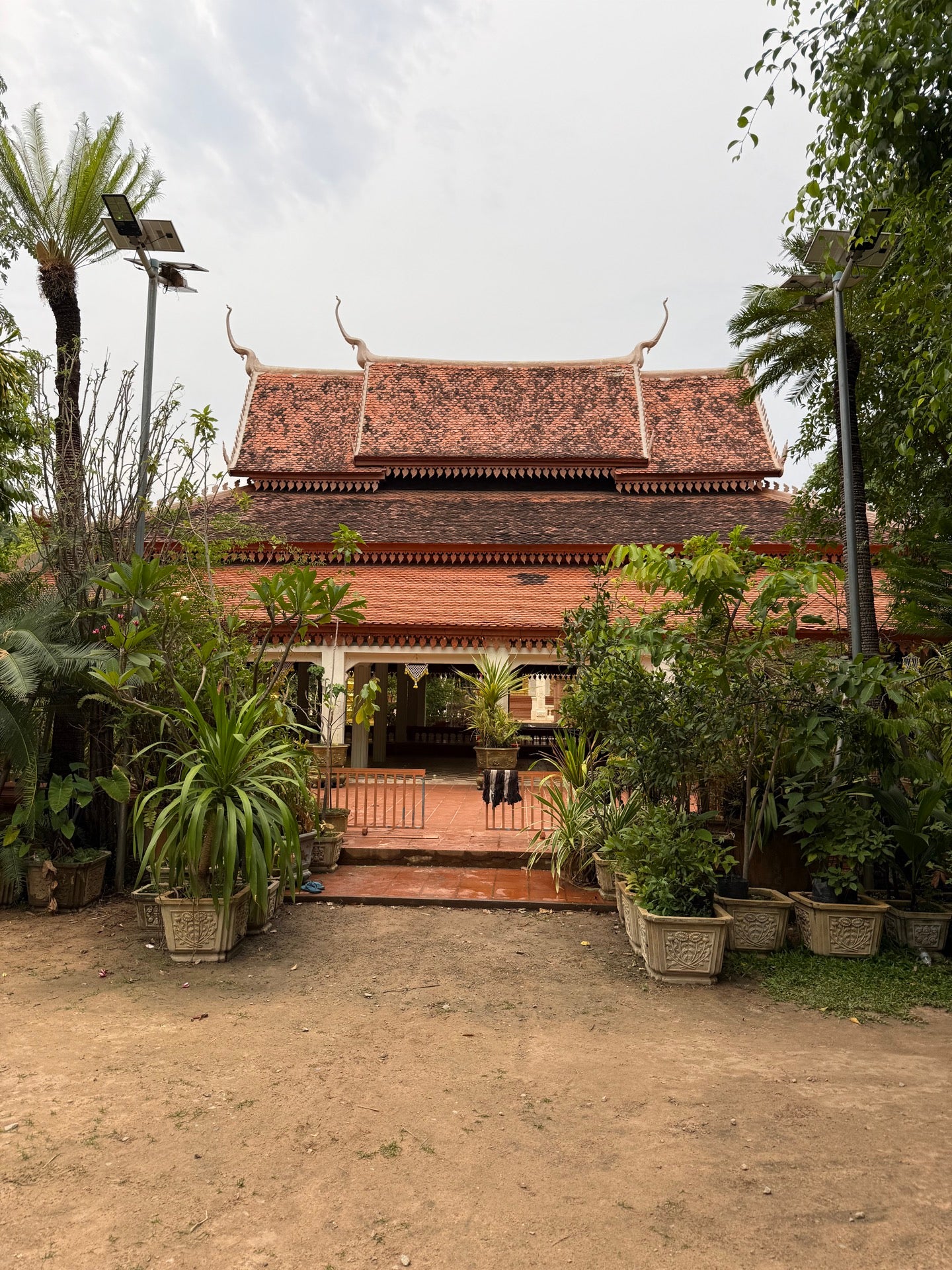
The colours have softened with age (dusty ochres, cracked blues, patches where the plaster has worn through), but the detail rewards a slow look. Look up near the roofline for gilded naga serpents, and take in the peaked, tiered roof typical of Khmer temple architecture.
Outside, the grounds are shaded by tall trees, with monks’ dormitories, stupas holding ashes of the deceased, and the occasional dog sleeping in a patch of sun. It’s a lived-in space, not a roped-off attraction.
Getting there
Wat Bo sits on Street 22 in the Wat Bo neighbourhood, on the east bank of the Siem Reap River.
From Pub Street or the Old Market area, it’s a 15–20 minute walk or a five-minute tuk-tuk ride if you’d rather not walk in the heat. Many boutique hotels and guesthouses cluster in this same leafy residential pocket, so you may already be staying nearby without realizing the temple is around the corner.
There’s no fixed entry fee, a small donation toward the temple’s upkeep is customary and appreciated.
When to go
Early morning is when the light through the trees is softest and monks are often visible doing chores or chanting.
Late afternoon, after 4pm, works too, once the midday heat breaks. Because this is an under-the-radar stop compared with Angkor Wat or Bayon, you’re unlikely to deal with tour groups at any hour, but avoid arriving during active ceremonies unless you’re invited to observe respectfully.
Give yourself enough time to see the murals, walk the grounds, and sit for a few quiet minutes.
How to visit like a local
Treat Wat Bo as an active place of worship, because that’s exactly what it is.
- Dress modestly: shoulders and knees covered, no swimwear or tank tops.
- Remove shoes before entering the vihara.
- Keep your voice low inside the ordination hall, especially if monks are present.
- Photography is generally fine outside, but ask before photographing monks up close or during prayer.
- Leave a small donation in the collection box rather than expecting a ticket booth.
The mistake most visitors make is rushing in during a midday tuk-tuk loop between Angkor temples, snapping a few photos, and leaving in ten minutes. Slow down instead. Sit under one of the shade trees, watch the daily rhythm of the monastery, and let the murals hold your attention longer than a glance.
Pair the visit with a wander through Wat Bo village itself, its quiet lanes, French-era shophouses, and small local cafés make for an easy extension once you’ve finished at the temple.
Nearby to combine with your visit
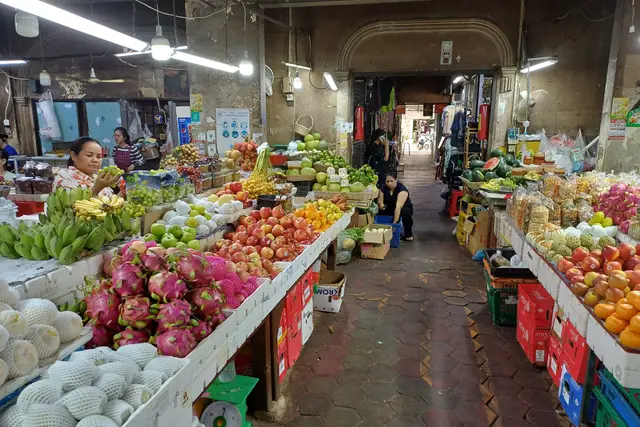
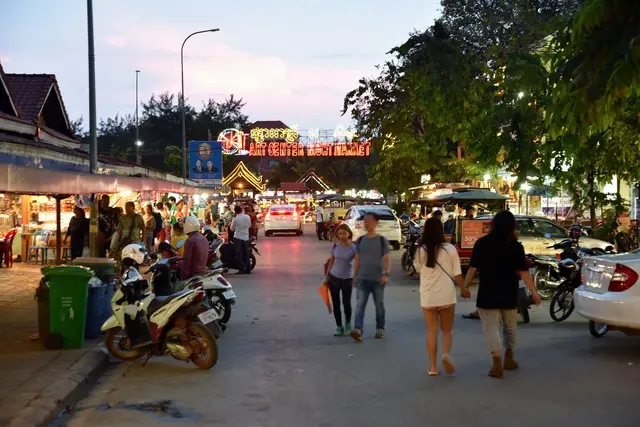
Because it sits so close to the town centre, Wat Bo pairs naturally with an evening at the Old Market or Pub Street, both an easy walk away.
If you want a fuller temple morning, combine it with Wat Preah Prom Rath near the river, which has its own murals and a small monk-blessing area. Either way, Wat Bo works best as a calm bookend to a day otherwise spent on the move.
Frequently asked questions
How much does it cost to visit Wat Bo?
There's no official entry ticket. A small voluntary donation toward the temple's upkeep is the norm, usually left in a box near the entrance.
How do I get to Wat Bo from central Siem Reap?
It's on Street 22 in the Wat Bo neighbourhood, about a 15–20 minute walk or a short, inexpensive tuk-tuk ride from Pub Street and the Old Market.
How long should I spend at Wat Bo?
Most visitors need 30–45 minutes to see the murals in the ordination hall and walk the grounds.
When is the best time to visit?
Early morning (around 7–9am) or late afternoon after 4pm, when the light is softer and the heat has eased. It stays quiet most of the day since it's off the main Angkor tourist circuit.
What should I wear or know before entering?
Dress modestly with shoulders and knees covered, remove your shoes before entering the vihara, and keep noise down — it's an active monastery, not a tourist site.
Plan your trip to Siem Reap
Cambodia eSIM & staying connected →
Some links above are affiliate links — if you book through them, Wander Atlas earns a small commission at no extra cost to you. It's how we keep every guide free.
Related guides
 hidden gem
 Old Market: Siem Reap Travel Guide (4.2★)
 hidden gem
 Siem Reap Art Center Night Market: Travel Guide (4.2★)
 hidden gem
 Bayon Temple: Siem Reap Travel Guide (4.8★)
 attraction
 Royal Independence Gardens: Siem Reap Travel Guide (4.4★)
This spot is Day 2 of our Siem Reap 3-day itinerary