Two days in the dry season
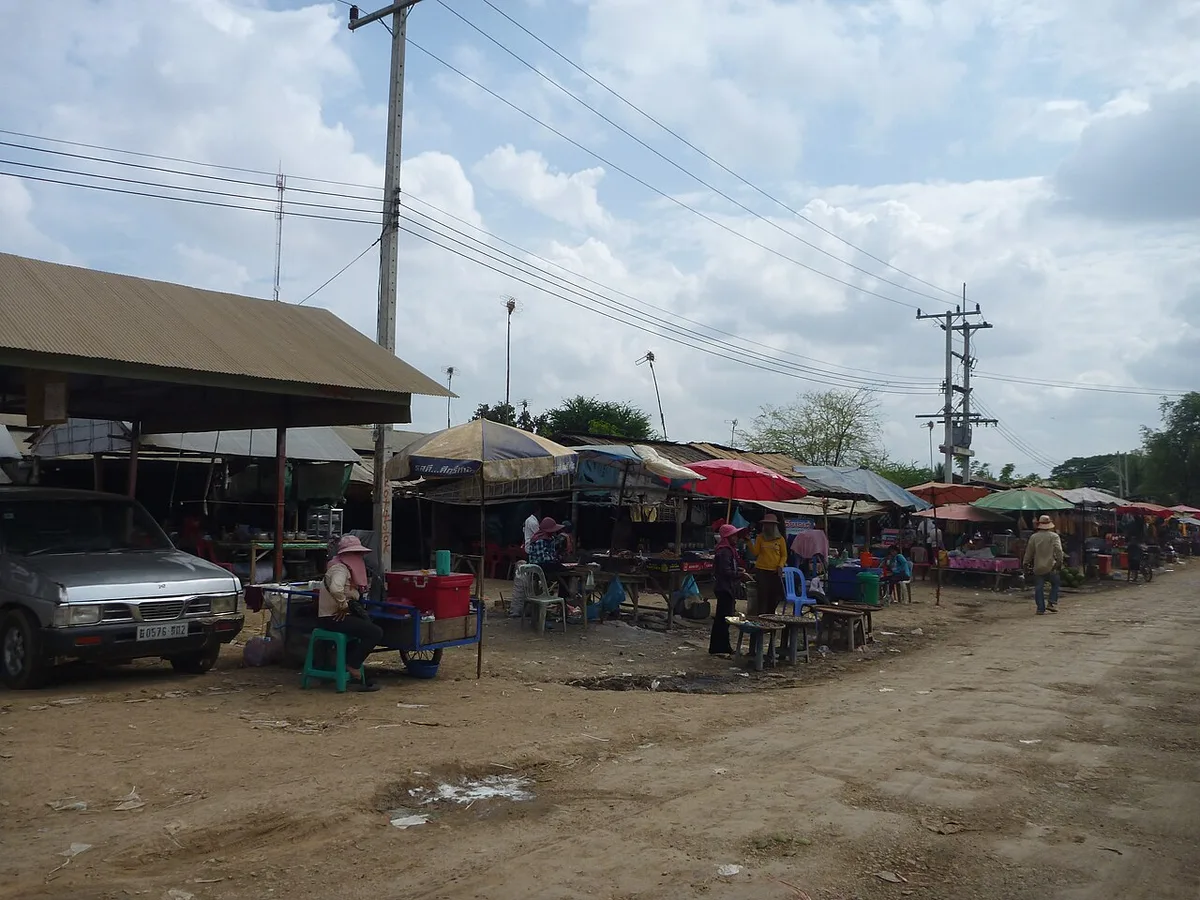
Mid-December is the right moment for this. Big Mountain Music Village runs on December 12 and 13, 2026, in the border country around Sisophon, the capital of Banteay Meanchey province in northwest Cambodia. December falls in the cool, dry season, when the rice fields have been harvested and the plains turn straw-coloured and dusty.
The festival is a regional one. It belongs to a cluster of cross-border festival tourism events that draw visitors to the Cambodia–Thailand frontier in December. Expect a crowd that mixes Cambodians, Thais and travellers who have come overland. It does not feel like a stadium show flown in from abroad.
Where Sisophon sits
Sisophon is a crossroads town, and its geography explains the festival’s draw. National Road 5 and National Road 6 meet here. One runs west to the Thai border, the other east toward Angkor.
Rough distances by road:
- Poipet border crossing (to Aranyaprathet, Thailand): about 50 km west
- Battambang: about 70 km south on National Road 5
- Siem Reap: about 100 km east on National Road 6
- Phnom Penh: roughly 360 km southeast
The town itself is low-rise and practical. Its central market, petrol stations and roadside rice shops serve truckers and travellers heading toward the border. Locals also call it Serei Saophoan, and you will see that name on signs and maps.
Getting there from Bangkok or Siem Reap
Most festival-goers arrive by road. From Thailand, the usual route is to Aranyaprathet, then across on foot at Poipet. From there, shared taxis and minibuses cover the short run east to Sisophon. Cambodia issues e-visas, and Poipet also handles visas on arrival.
From inside Cambodia, buses on the Phnom Penh–Poipet and Siem Reap–Poipet routes pass through Sisophon. Many visitors base themselves in Siem Reap or Battambang and do the drive as a day trip. Others take a guesthouse in Sisophon itself, which keeps the late-night journey home short.
Tuk-tuks and motodops (motorbike taxis) cover the last stretch from town to rural sites. Drivers usually wait outside large events for the return trip.
Riel, dollars and the sampeah
Cambodia runs on two currencies at once. US dollars and Khmer riel circulate side by side, and change often arrives as a mix of both. This close to the border, Thai baht also turns up in markets and at some stalls. Cash handles most small purchases. Mobile payment by KHQR code (the ABA app is the common one) is now everywhere in Cambodian towns.
A few habits that go down well:
- Greeting: the sampeah, palms pressed together at chest height with a slight bow, answers anyone who greets you that way.
- Thank you: aw kun (or aw kun charan for “thank you very much”).
- Haggling: for tuk-tuk rides, attendees usually agree the fare before getting in. A smile helps more than hard bargaining.
- Tipping: not expected, though rounding up for a driver who waited is appreciated.
Dress at an outdoor show is relaxed. Covered shoulders matter only at the temples you might add on either side of the weekend.
What the nights feel like
December nights on the northwestern plains are noticeably cooler than the afternoons. Attendees at outdoor events here typically bring a light layer for after dark and something to keep the dust off. That means a scarf or a krama, the checked Cambodian cotton cloth sold in every market.
Roadside food in Banteay Meanchey leans on grilled meats, rice dishes and noodle soups. Outdoor festivals in the region usually have food and drink stalls alongside the stages. The organiser handles the lineup, set times and the venue map, and this guide does not repeat any of them.
Temples and border towns nearby
The days either side of the festival are easy to fill. The pick for most visitors is Banteay Chhmar, a vast 12th–13th century temple complex about 60 km north of Sisophon. It is known for its carved bas-reliefs and sees few visitors compared with Angkor.
Other stops on the same roads:
- Battambang: colonial-era shophouses, the bamboo train area and Phnom Sampeau’s bat cave at dusk
- Siem Reap and Angkor Wat: about two hours east
- Aranyaprathet: Rong Kluea market on the Thai side, a wholesale market for cross-border goods
Many travellers run the festival into a loop: Bangkok, Poipet, Sisophon, then on to Siem Reap or Battambang before heading home.
Frequently asked questions
When is Big Mountain Music Village 2026?
It takes place on December 12–13, 2026, in the area around Sisophon in Banteay Meanchey province, northwest Cambodia.
How do I get to Sisophon from Thailand?
The usual overland route is Bangkok to Aranyaprathet, then across the Poipet border crossing on foot. From Poipet it is about 50 km east to Sisophon by shared taxi or minibus. Cambodia offers e-visas, and Poipet also issues visas on arrival.
Where do festival-goers usually stay?
Some stay in Sisophon's guesthouses to keep the late-night trip short. Others base themselves in Battambang (about 70 km south) or Siem Reap (about 100 km east) and travel in by road.
What is the weather like in mid-December?
December is in Cambodia's cool, dry season. Days are warm and dusty, and nights are cooler, so attendees typically carry a light layer and a scarf or krama for the dust.
What is there to see nearby?
Banteay Chhmar temple is about 60 km north. Battambang and Siem Reap's Angkor temples are both within a couple of hours, and Rong Kluea market at Aranyaprathet is just over the Thai border.
Plan your trip to Sisophon
Cambodia eSIM & staying connected →
Some links above are affiliate links — if you book through them, Wander Atlas earns a small commission at no extra cost to you. It's how we keep every guide free.
Related guides
 event
Chumnor Arts Festival: Dates, Tickets & Venue (Battambang)
 event
Sea Festival (Cambodia): Dates, Tickets & Venue (Koh Kong)
 Ended
AIA Pink Run 2026: Dates, Tickets & Venue (Phnom Penh)
 Ended