
Why go
Angkor Wat isn’t just a temple. It’s the largest religious monument on Earth, built in the early 12th century by King Suryavarman II. You come for the scale first: five lotus-bud towers rising over a moat nearly 200 meters wide, visible from the causeway long before you reach the entrance.
Then you come for the detail. Half a kilometer of bas-relief carvings wraps the outer gallery, depicting Hindu epics, historical battles, and a churning-of-the-ocean-of-milk scene with hundreds of figures. Apsara dancers are carved into nearly every surface, some still holding traces of original paint.
Getting there
Angkor Wat sits about 6 kilometers north of Siem Reap town, roughly a 15-20 minute ride. Most visitors hire a tuk-tuk driver for the day since the wider Angkor Archaeological Park spreads over hundreds of square kilometers.
Tickets are sold only at the official Angkor Enterprise counter on the road toward the temples, not at the gate itself. Bring your passport, photos are taken on-site for your pass. A one-day pass covers Angkor Wat itself, but a three-day or seven-day pass makes far more sense once you factor in Bayon, Ta Prohm, and Banteay Srei.
What to see inside
Budget at least half a day for the core complex. Highlights to prioritize:
- The outer gallery bas-reliefs, especially the Churning of the Ocean of Milk on the east wall
- The central sanctuary’s steep staircase up to the highest tower (limited daily entries, dress code enforced)
- The library buildings and cruciform terrace just past the main entrance
- The reflecting pools on the northwest side, the classic sunrise photo spot
Wear something that covers shoulders and knees. This is an active religious site, and guards do turn people away at the upper level.

When to go
Angkor Wat opens early, and the sunrise crowd gathers well before the sky lightens. If you want the classic reflection shot, arrive well before sunrise and stake out a spot at the left-hand pool.
Midday sun is brutal from around 11am to 2pm, with little shade inside the complex. Late afternoon, from around 4pm onward, is quieter and cooler, though the light inside the towers fades fast.
Dry season (November to March) brings the biggest crowds but the most reliable weather. June through October is wetter and thinner on tourists, though sudden downpours can shut down photo plans.
How to visit like a local
Angkor Wat draws huge numbers of visitors year-round, so the smart move is working around the crowds rather than hoping to avoid them entirely.
- Buy your pass the afternoon before at the ticket counter. It’s open into the evening and saves a pre-dawn queue
- Skip the packed reflecting-pool sunrise and instead enter through the west gate, walk straight to the central towers, and watch the light hit the sanctuary from inside, far fewer people bother
- Pay your tuk-tuk driver in US dollars, cash, in small bills; card payment isn’t standard for informal transport
- Tip guides and drivers modestly at the end of the day rather than upfront
- Remove shoes before climbing to the upper sanctuary, and keep voices low near monks or active prayer areas, this remains a working Buddhist site, not a museum
The most common tourist mistake is treating Angkor Wat as a quick photo stop. It rewards a slow, full morning, ideally paired with Angkor Thom’s Bayon temple in the same trip since they’re only about a 20-minute drive apart.
Nearby stops worth combining
Once inside the park boundary, it’s inefficient to visit only Angkor Wat. Consider:
- Bayon, in Angkor Thom, famous for its stone faces, about 20 minutes by tuk-tuk
- Ta Prohm, the jungle-strangled temple made famous by Tomb Raider, 15 minutes further
- Banteay Srei, a smaller pink sandstone temple with the finest carving detail, about 40 minutes out
Most drivers offer a standard “small circuit” route covering Angkor Wat, Bayon, and Ta Prohm in a single day, which is the most efficient way to see the highlights without doubling back.
Frequently asked questions
How much does it cost to visit Angkor Wat?
Tickets are sold as passes: a one-day pass, a three-day pass, or a seven-day pass, priced in USD. Prices have changed over the years, so confirm current rates at the official Angkor Enterprise ticket office before you go.
How long should I spend at Angkor Wat?
Plan at least half a day for the temple itself, longer if you also want to see Bayon and Ta Prohm the same day. Many visitors return over two or three days using a multi-day pass.
What's the best time of day to avoid crowds?
Sunrise is the most crowded window since everyone aims for the same reflecting-pool shot. Arriving mid-to-late afternoon, after 4pm, tends to be noticeably quieter.
How do I get from Siem Reap to Angkor Wat?
It's about a 15-20 minute tuk-tuk ride from central Siem Reap. Most travelers hire a driver for the full day rather than arranging one-way trips.
Is there a dress code?
Yes — shoulders and knees must be covered, especially to climb to the upper central sanctuary, and guards do enforce it at the stairs.
Plan your trip to Siem Reap
Cambodia eSIM & staying connected →
Some links above are affiliate links — if you book through them, Wander Atlas earns a small commission at no extra cost to you. It's how we keep every guide free.
Related guides
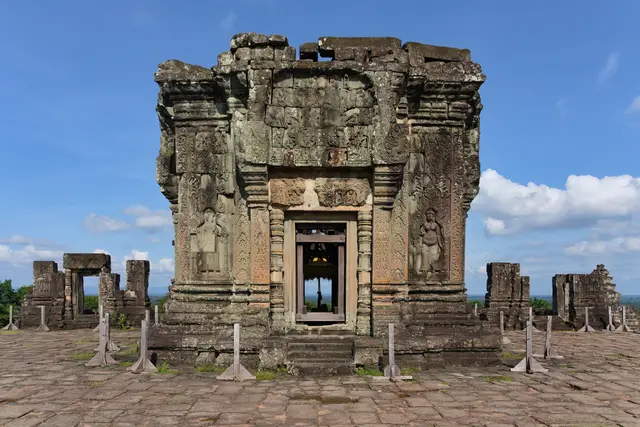 attraction
 Phnom Bakheng Temple: Siem Reap Travel Guide (4.6★)
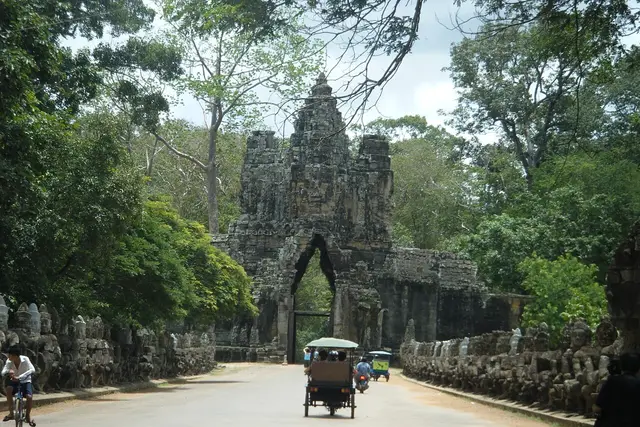 attraction
 South Gate Angkor Thom: Siem Reap Travel Guide (4.9★)
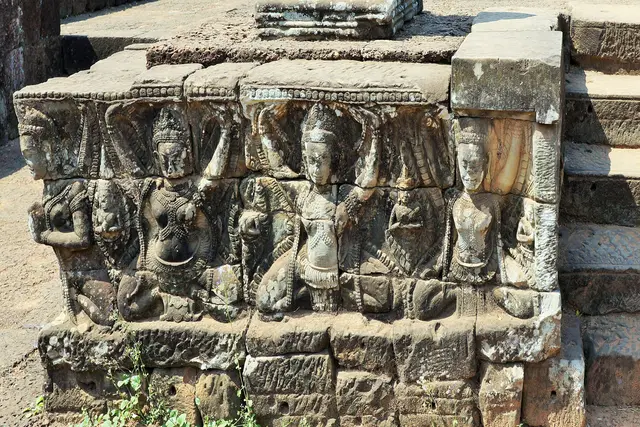 attraction
 Ta Prohm Temple: Siem Reap Travel Guide (4.8★)
 attraction