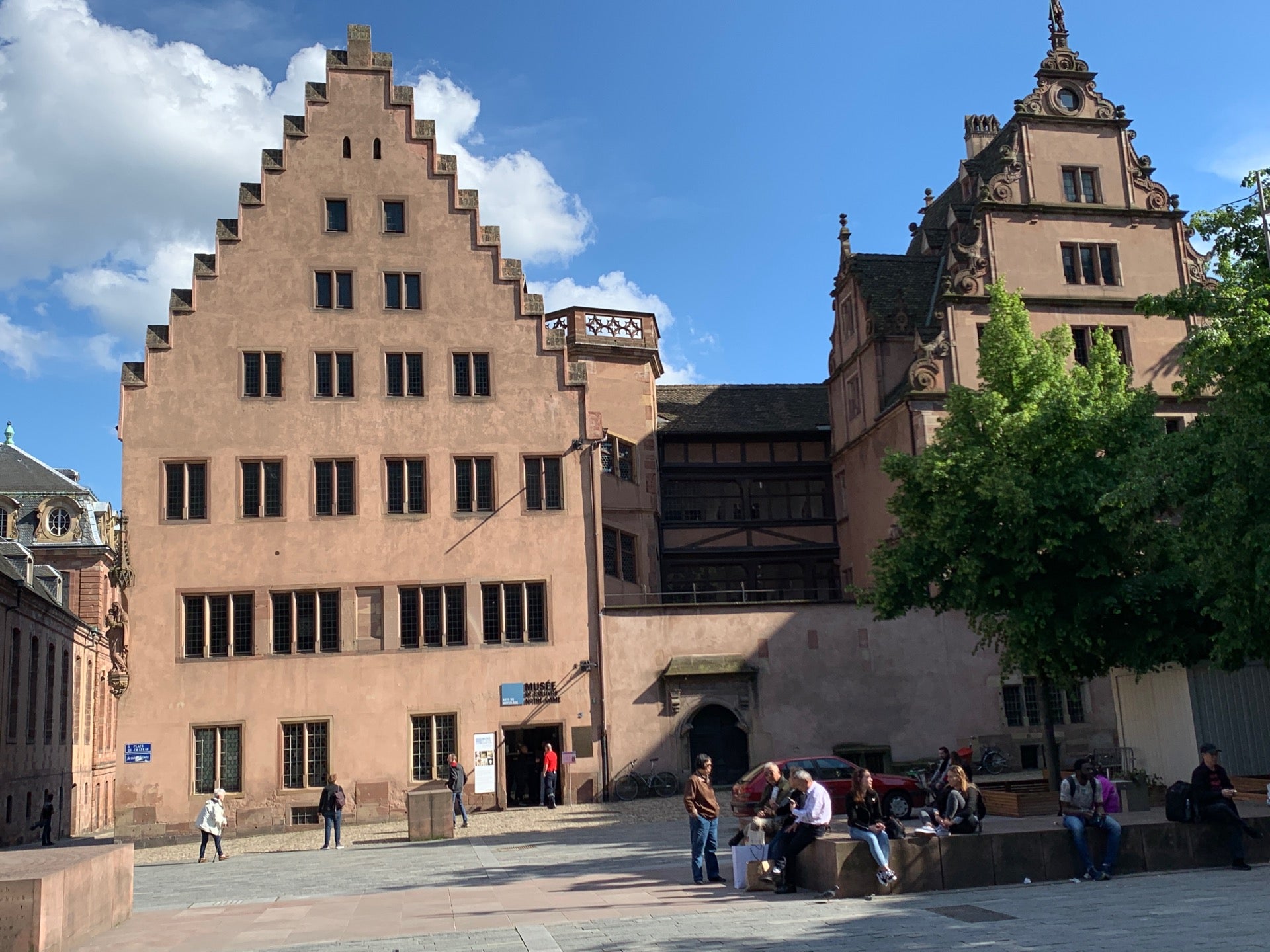
You almost walk past it. The entrance sits in the shadow of Strasbourg Cathedral’s rose-pink sandstone spire, squeezed between half-timbered gables on Place du Château, and unless you already know to look for the low wooden door and small sign, the crowds streaming toward the cathedral’s west front carry right on past it. That’s the first thing that makes this museum feel different from almost everything else in the old town: even at peak tourist season, you can stand in front of a 13th-century stained-glass window here in near silence.
Why go
The Musée de l’Œuvre-Notre-Dame exists because Strasbourg Cathedral needed somewhere to keep the things too fragile, too valuable, or too displaced to leave outside. Original stone figures pulled from the cathedral facade to protect them from weather and pollution now stand at eye level here instead of forty metres up a tower, gargoyles, tympanum carvings, and the haunting original statues of Ecclesia and Synagoga, whose blindfolded, serene faces are among the most reproduced images of medieval French sculpture.
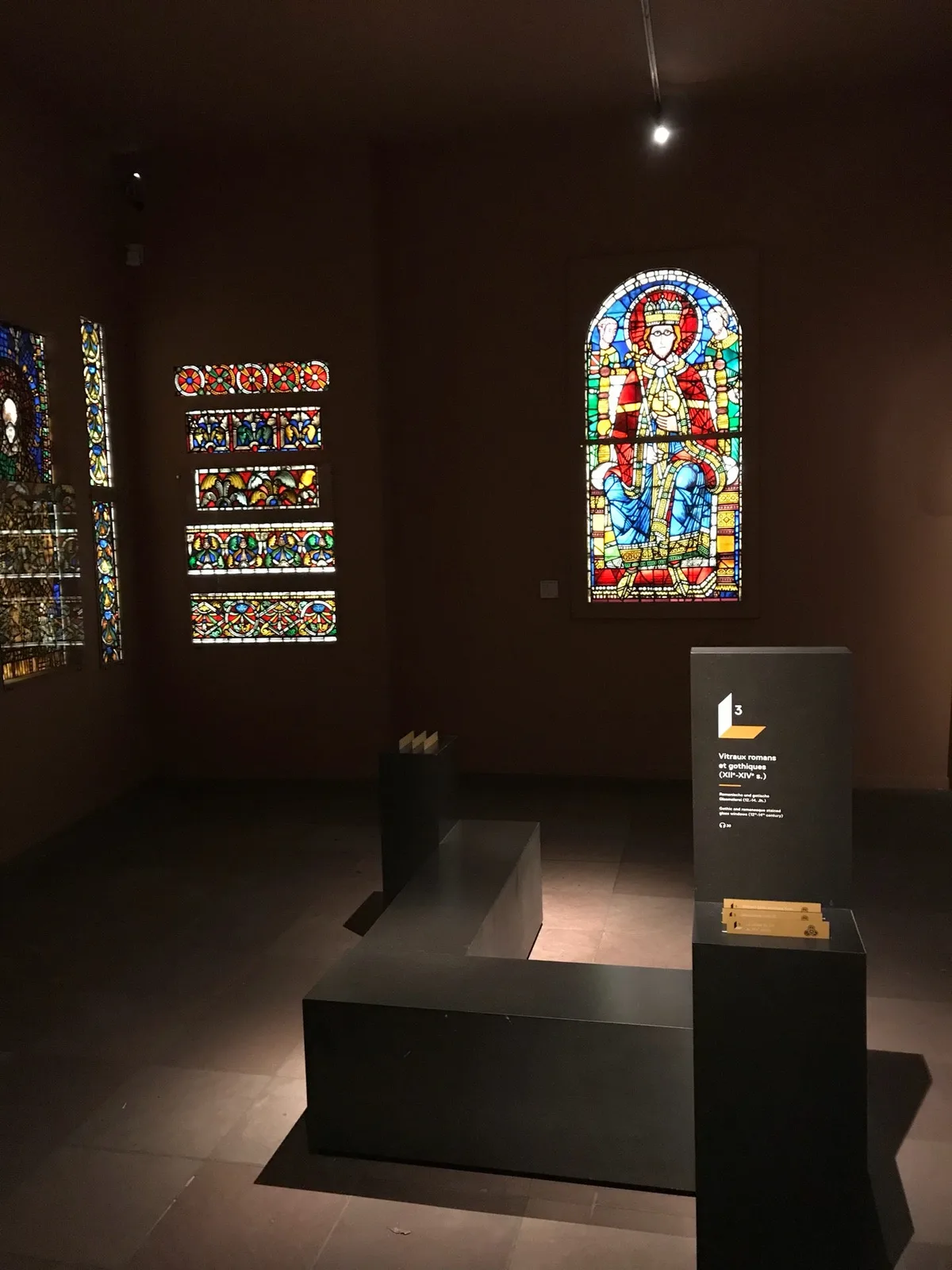
Add in luminous 12th- and 13th-century stained glass, a room of Rhineland Gothic altarpieces, and furniture and silverware tracing Strasbourg’s civic life from the Middle Ages through the French Revolution, and you get a museum that’s really a portrait of the city itself, not just a side gallery to the cathedral.
The building itself
Part of the experience is architectural. The museum occupies a row of connected medieval and Renaissance townhouses (the actual historic “Œuvre Notre-Dame,” the foundation that has managed the cathedral’s fabric and finances since the 1200s and still exists today. You move through low-ceilinged rooms, a Gothic courtyard, creaking wooden staircases, and small mullioned windows that throw slanted light across the stone carvings. It doesn’t feel like a purpose-built museum, and that’s the point) you’re inside a working piece of the cathedral’s own history.
What to see
Set aside time for the ground-floor sculpture rooms, where original cathedral statuary, including the famous 13th-century figures later replicated in stone outside, lets you see tool marks and pigment traces invisible from the street. Upstairs, the stained-glass collection includes some of the oldest figurative glass in France, predating most of what survives in the cathedral itself. Don’t skip the smaller rooms of goldsmith work and painted panels from Alsatian workshops; they’re where the “social and political history” the museum is known for really comes through, tracking guild life, religious upheaval, and revolutionary-era changes in the city.
Getting there
The museum sits at 3 Place du Château, directly behind (east of) Strasbourg Cathedral, in the heart of the pedestrianized Grande Île old town, a UNESCO World Heritage site. There’s no metro in Strasbourg, but tram lines A, D, or C to Langstross–Grand’Rue or Broglie stop you within a 10-minute walk; many visitors simply walk from Place Kléber or the train station (about 20 minutes on foot).
Because it’s wedged into the cathedral quarter, there’s no dedicated parking, use one of the Grande Île’s public car parks and walk in.
When to go
Weekday mornings, shortly after opening, are consistently the calmest time, before cathedral tour groups spill over into the surrounding streets. Afternoons and weekends bring more foot traffic to the square outside, though the museum’s popularity lags well behind the cathedral’s, so even a modest effort to avoid midday crowds pays off. Plan for 90 minutes if you’re moving briskly through the highlights, two hours if you want to read the panels on Strasbourg’s political history in detail.
How to visit like a local
Buy your ticket at the door rather than expecting long queues. This isn’t a place that sells out, and that’s exactly its appeal. Cash and card are both accepted at most Strasbourg museum counters, but carry a little cash as backup for smaller cultural sites. There’s no need to book ahead. The etiquette here is quiet and unhurried: it’s a small-scale museum, so voices carry in the stone rooms, and locals treat it as a place for slow looking rather than a checklist stop.
The mistake most visitors make is treating it as an afterthought squeezed in after the cathedral and clock, instead, go first, before the square fills up, then step outside into the cathedral crowds with the context already in your head. Ask for the free floor plan at the entrance; the layout across several joined houses is easy to get turned around in otherwise.
Frequently asked questions
How do I get to the Musée de l'Œuvre-Notre-Dame?
It's at 3 Place du Château, right behind Strasbourg Cathedral in the Grande Île old town. Take tram A, C, or D to Langstross–Grand'Rue or Broglie, then walk about 10 minutes, or walk roughly 20 minutes from the train station.
How long should I spend there?
Budget 90 minutes for the highlights — original cathedral sculpture and the stained-glass rooms — or up to two hours if you want to read through the history of Strasbourg's guilds and Revolution-era exhibits in detail.
When is the quietest time to visit?
Weekday mornings soon after opening are calmest, before cathedral tour groups spread into the surrounding square. It's a genuinely under-the-radar stop compared to the cathedral, so it rarely feels crowded even in high season.
Is it worth visiting if I'm already seeing the cathedral?
Yes — many of the cathedral's original medieval statues, removed for preservation, are displayed here at eye level, and the stained glass predates much of what's currently in the cathedral. Visiting beforehand gives helpful context.
Do I need to book tickets in advance?
No advance booking is necessary; it doesn't draw the queues the cathedral does, so you can typically buy tickets at the door and walk straight in.
Plan your trip to Strasbourg
France eSIM & staying connected →
Some links above are affiliate links — if you book through them, Wander Atlas earns a small commission at no extra cost to you. It's how we keep every guide free.
Related guides
 attraction
 Strasbourg Museum of Modern and Contemporary Art: Travel Guide
 attraction
 Parc de l'Orangerie: Strasbourg Travel Guide (4.6★)
 attraction
 Temple de l'Amour: Strasbourg Travel Guide
 hidden gem