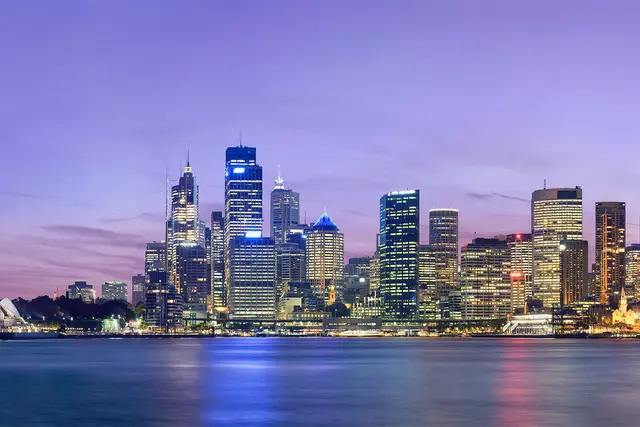
A city facing its harbour
At midnight, Sydney Harbour Bridge becomes the launch pad. Fireworks fire from the steel arch and from barges spread across the water. The Opera House sails sit in the foreground for anyone watching from the eastern shore.
The Sydney New Year’s Eve Fireworks take place on December 31, 2026, organised by the City of Sydney. It ranks among the most-watched New Year celebrations anywhere. Sydney is one of the first major cities to reach midnight, so broadcasters around the world carry its show long before their own countdowns begin.
Two displays, one long day
The night has two displays. An earlier family display goes off in the evening for children and anyone who won’t stay up. The main show comes at midnight. Between the two, the harbour has its own traffic: boats drift into position and the foreshore crowds settle in for the wait.
It is a long day spent outdoors. December is summer in Sydney, so the afternoon is usually hot and the sun on the foreshore is strong. People who stay for midnight typically bring:
- A hat, sunscreen and plenty of water
- A picnic rug or a low folding mat
- A light layer for after dark, when the breeze comes off the water
- A charged phone and a plan for meeting up if the group splits
Where the crowds gather
The view depends on the angle to the Bridge. These foreshore spots are the best known:
- Mrs Macquarie’s Chair and the Royal Botanic Garden: the classic postcard view, with the Opera House in front of the Bridge.
- Circular Quay and the Opera House forecourt: right in the middle of the noise, and the tightest crush of people.
- Milsons Point, Bradfield Park and Kirribilli: on the north shore, directly under or beside the Bridge.
- Blues Point Reserve: a long, side-on view of the Bridge from the north-west.
- Barangaroo Reserve and Observatory Hill: western angles, with the Bridge closer than the Opera House.
- Cremorne Point: further east, where the whole harbour show spreads out at once.
Some vantage points are free to enter. Others are ticketed areas with set capacities. The City of Sydney publishes which spots fall into each group, along with ticket links and entry conditions, on its official New Year’s Eve site.

How the harbour fills up
Most people go to the free areas on a first-come basis, and the popular headlands fill long before dark. Regulars typically arrive in the morning or around midday with food for the whole day. Once a vantage point reaches capacity, its gates close and staff send latecomers to other areas.
Many foreshore vantage points are alcohol-free zones, and bag checks at the entrances are standard. People generally pack light. Glass is a common thing to see confiscated.
Locals on the north shore often watch from parks closer to their own suburbs. The view is narrower, but the walk home is much shorter. Families tend to leave after the earlier display, which frees up a little space for the midnight crowd.
Getting there and back
Getting there is easy. Getting home is slow. Large parts of the CBD and the north shore close to traffic for the night, so very few people drive. Trains run to the stations closest to the water:
- Circular Quay: for the Opera House and the Botanic Garden side.
- Wynyard: for Barangaroo and Observatory Hill.
- Milsons Point: for the north shore.
Transport for NSW runs extra services across the evening. Even so, stations near the foreshore can operate under special crowd arrangements, with queues or temporary closures when the platforms fill. Opal cards and contactless bank cards both work at the gates.
After midnight, the exodus from the harbour usually takes well over an hour to clear. Many people walk a few stations inland, to Town Hall, St James or Museum, instead of queuing at Circular Quay. Some simply wait on the grass until the crush passes.
Making the night work
Plan around time rather than distance. The fireworks are short, but the waiting is what shapes the night: claiming a spot, keeping it and getting home again. Groups that hold one patch of grass usually take turns going for supplies, since getting back through a packed headland can be slow.
Families with young children often stay for the earlier display only, at a quieter vantage point. Visitors set on the full midnight view, with the Bridge and the Opera House together, usually accept the long day that comes with it.
Frequently asked questions
When are the Sydney New Year's Eve Fireworks?
They take place on December 31, 2026, over Sydney Harbour. There is an earlier family display in the evening and the main display at midnight.
Do I need a ticket to watch?
Not for every spot. Some foreshore vantage points are free on a first-come basis and others are ticketed areas with set capacities. The City of Sydney publishes the list of free and ticketed areas, with ticket links, on its official New Year's Eve site.
Where is the best place to watch?
Mrs Macquarie's Chair and the Royal Botanic Garden give the classic view of the Opera House and the Bridge together. Milsons Point, Kirribilli and Blues Point Reserve on the north shore put you close to the Bridge. Barangaroo Reserve and Observatory Hill look at it from the west.
How do people get there and home?
Most people take the train to Circular Quay, Wynyard or Milsons Point, because roads around the harbour close for the night. Transport for NSW runs extra services. After midnight, many walk to Town Hall, St James or Museum stations to avoid the crowds at Circular Quay.
How long do people usually wait for a spot?
At the popular free headlands, many people arrive in the morning or around midday and stay until midnight. Gates close once an area reaches capacity, so the most sought-after spots fill hours before dark.
Plan your trip to Sydney
Australia eSIM & staying connected →
Some links above are affiliate links — if you book through them, Wander Atlas earns a small commission at no extra cost to you. It's how we keep every guide free.