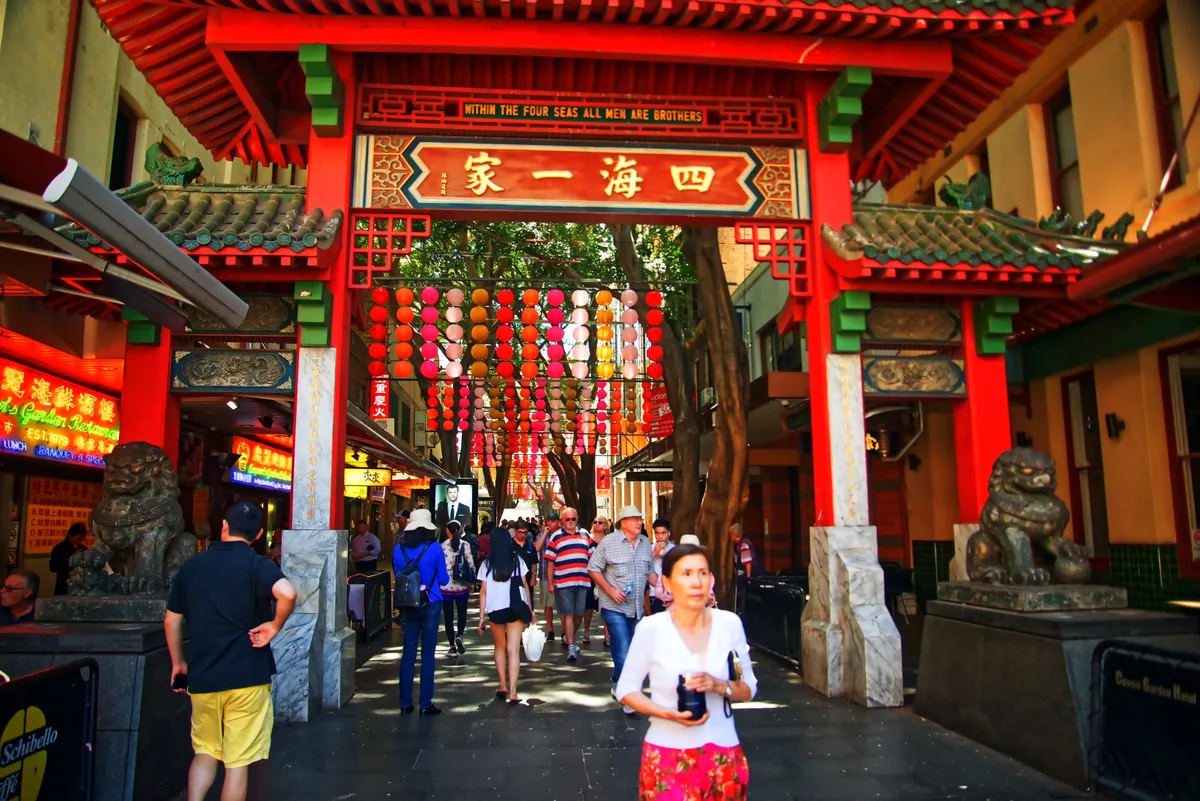
Dixon Street, gate to gate
Start under a red-and-gold gate. Dixon Street is a pedestrian mall in Haymarket, with a traditional paifang archway at each end. Between them the paving runs past glass-fronted restaurants, Chinese bakeries, grocers and souvenir shops. The listed address, 82/84 Dixon St, sits in the middle of the strip.
Roast ducks hang in rows behind shop windows. Menus in Chinese and English are taped beside the doors. Above street level, signs in hanzi stack up the facades. The strip is short enough to walk end to end in a few minutes, but the food is the reason people stay for hours.
How the neighbourhood spreads out
Chinatown is bigger than one street. Dixon Street is the core, but the area spills onto Sussex, Goulburn and Hay streets and George Street. Thai restaurants cluster around Campbell Street, and Korean and Malaysian places are mixed in nearby.
Things to fit in nearby:
- Paddy’s Markets on Hay Street, a long-running covered market under the Market City building
- Chinese Garden of Friendship at Darling Harbour, a walled garden opened for the 1988 bicentenary and designed with Sydney’s sister city Guangzhou
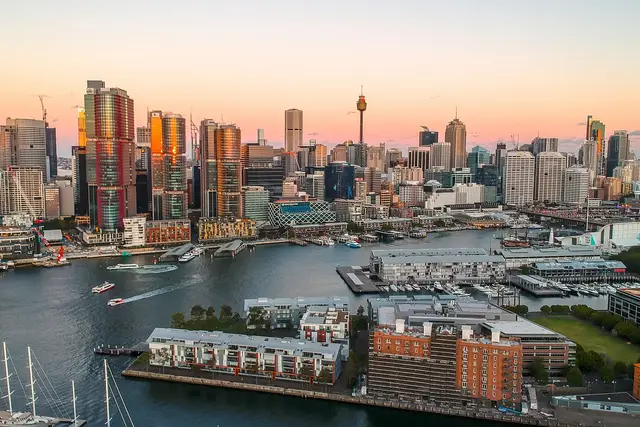
- Darling Harbour waterfront, a few minutes west on foot
- Capitol Theatre on Campbell Street, for musicals
Getting to Haymarket
You can reach Chinatown by foot, train or tram. Central Station is about a ten-minute walk south and serves both Sydney Trains and regional lines. Town Hall Station is a similar walk from the north if you’re coming from the CBD.
The light rail gets you closest. The L1 Dulwich Hill Line stops at Chinatown and Paddy’s Markets, and the L2 and L3 lines on George Street stop at Haymarket. Tap on and off with a contactless card or an Opal card. Parking is scarce, so leave the car behind.

Timing your visit around the crowds
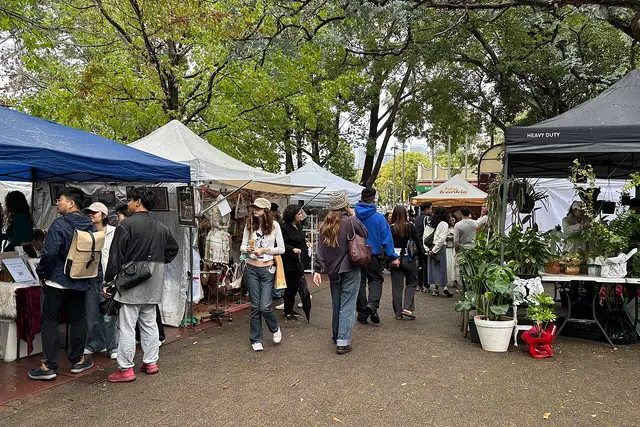
This area is one of Sydney’s most-visited, and the busiest hours are long. On weekends crowds peak from 12pm–11pm, nearly the whole day. If you show up for weekend lunch, expect queues spilling onto the footpath outside the most popular yum cha halls and dumpling shops.
The calmest window is 7am–9am, on weekdays and weekends alike. Bakeries are already selling buns and egg tarts, and you can photograph the gates without anyone in the frame. A weekday dinner usually beats a weekend one.
Friday nights have long meant a night market on Dixon Street, with food stalls lining the mall. Check the current schedule before you plan around it. Lunar New Year, usually in late January or February, brings lion dances and the city-wide Sydney Lunar Festival, along with the biggest crowds of the year.
Eating your way down Dixon Street
Come with an appetite and a loose plan. The range of Chinese regional cooking here is the draw: Cantonese barbecue, Sichuan heat, Shanghainese dumplings, northern noodles, Hong Kong-style cafés and bubbling hot pot. Food courts tucked into the buildings serve quick, budget-friendly plates.
What to look for:
- Yum cha at lunch: har gow, siu mai, cheung fun and custard buns
- Roast meats over rice: duck, char siu, crispy pork belly
- Bakery stops: egg tarts, pineapple buns, BBQ pork buns
- Dessert: bubble tea, mango pancakes and late-night sweet shops
Ordering at the yum cha table
A few habits will smooth your meal. At busy restaurants you give your name or take a number at the door, then wait outside until your number is called. Big groups wait longer, so splitting into tables of four helps.
At traditional yum cha, staff push trolleys or carry trays between tables. Point at what you want, and they stamp or mark the card on your table. You pay with that card at the counter on your way out. Pour tea for others before yourself. Tapping your fingers on the table is a quiet thank-you.
Most places take contactless cards, though a few small bakeries and stalls prefer cash or set a card minimum. Tipping isn’t expected in Australia. Leave something for great service if you like, but nobody will chase you for it. Some restaurants add a weekend or public-holiday surcharge, and it will be printed on the menu.
Frequently asked questions
When is the quietest time to visit Chinatown Sydney?
From 7am–9am, on both weekdays and weekends. On weekends, avoid 12pm–11pm: that's when crowds are heaviest and restaurant queues are longest.
How do I get to Chinatown Sydney?
Take the L1 light rail to the Chinatown or Paddy's Markets stop, or the L2/L3 to Haymarket on George Street. Central and Town Hall stations are each about a ten-minute walk away.
Is Chinatown Sydney open all day?
The street is public and open 24 hours. Restaurants and shops each keep their own hours, so check the venue before a late-night trip.
How long should I spend in Chinatown?
One to two hours covers a walk along Dixon Street and a meal. Allow half a day if you add Paddy's Markets, the Chinese Garden of Friendship and Darling Harbour.
What's nearby?
Paddy's Markets on Hay Street, the Chinese Garden of Friendship and the Darling Harbour waterfront are all within a short walk. So are the Thai restaurants around Campbell Street and the Capitol Theatre.
Plan your trip to Sydney
Australia eSIM & staying connected →
Some links above are affiliate links — if you book through them, Wander Atlas earns a small commission at no extra cost to you. It's how we keep every guide free.