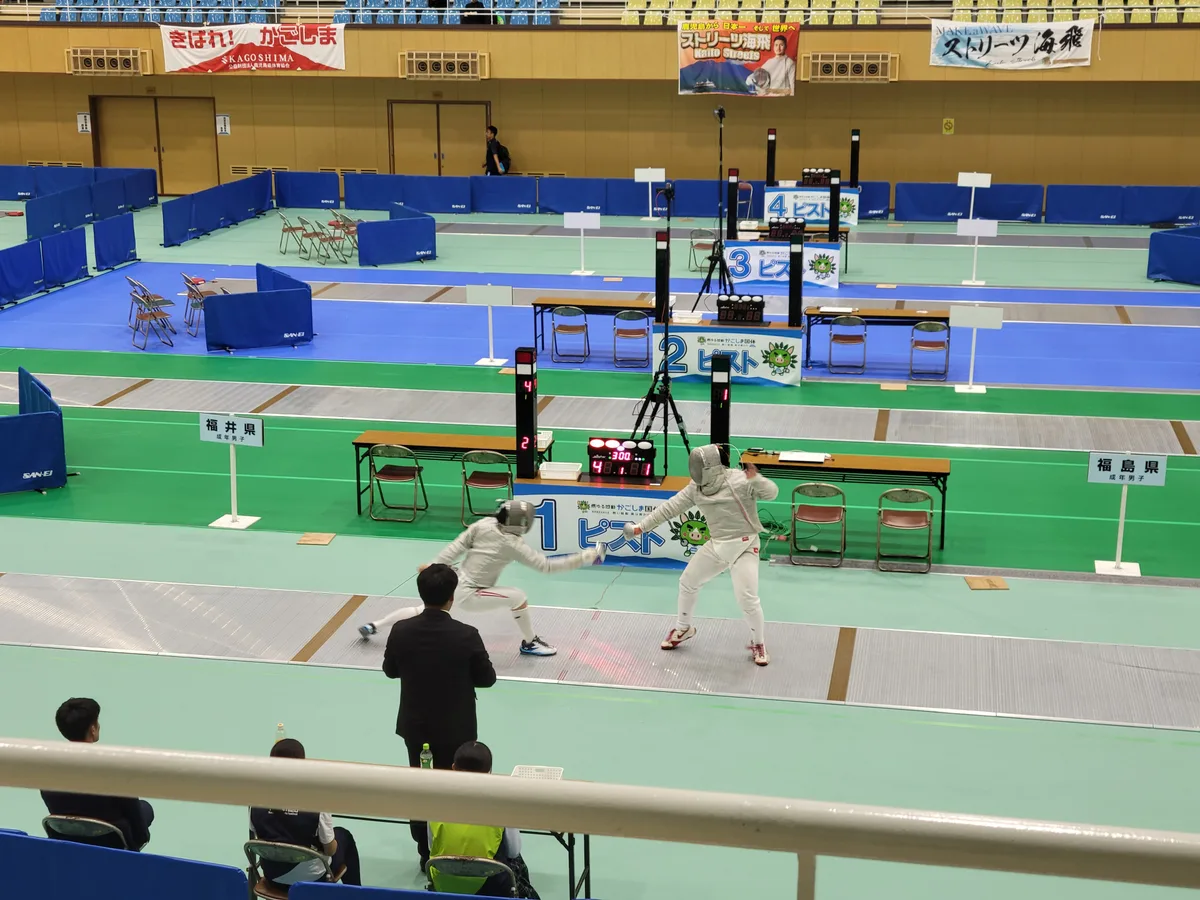
Four days of the fastest blade
Sabre is fencing at full sprint. Touches count with the edge or point anywhere above the waist, and many exchanges finish in under two seconds.
From January 28 to 31, 2027, Tashkent hosts a World Cup leg on the FIE circuit. These events feed the world rankings, so fencers come with points at stake as well as medals.
World Cups usually follow a set rhythm:
- Early rounds: pools of round-robin bouts to 5 touches across many strips at once.
- Direct elimination: knockout bouts to 15, with the field narrowing strip by strip.
- Finals: the last bouts move to a single lit piste, usually on the closing days.
Dates, tickets and the venue
The FIE publishes the venue, timetable and entry details for every World Cup on its competition calendar, alongside the national federation hosting the leg. Ticket arrangements are not part of the facts behind this guide, so it names no price or hall.
Early-round days at World Cups are often lightly attended, with coaches and teammates filling the stands. Spectators wanting atmosphere generally aim for the medal bouts, when one strip gets the lights and the hall’s full attention.
Watching sabre in a Tashkent hall
Each fencer wears a body cord wired to a scoring box. A red or green lamp lights on a hit, but when both lamps light, the referee decides the point under “right of way”, the rule that rewards the fencer who attacked first.
- Listen for French. The referee starts each bout with “En garde, prêts, allez”.
- Cheer after the call. Crowds hold still during the action and erupt once the referee awards the touch.
- Watch the hand signal. The referee’s raised arm points to the fencer who scored.
- Stay off the strip. Spectators keep clear of the run-off zones behind each piste.
Fans of a particular fencer usually watch the pool and elimination draws posted in the hall, since a single bout can end a fencer’s tournament within minutes.
Tashkent in late January
Daytime temperatures hover around freezing, and snow is possible. Visitors typically dress in layers that come off indoors, where halls are heated.
Getting around is straightforward:
- Metro: the Tashkent Metro is cheap and frequent. Its Soviet-era stations are sights in themselves, especially Kosmonavtlar with its blue space-themed medallions.
- Taxis: most visitors hail rides through the Yandex Go app rather than flagging cars on the street.
- Airport: Tashkent International Airport sits just south of the centre, a short taxi ride away.
- Money: Uzbek som is the currency. Cards work in hotels and larger restaurants, while bazaar stalls and small cafés mostly take cash.
Between sessions, the old city sits a short ride from the centre:
- Chorsu Bazaar is under its huge turquoise dome, with bread, dried fruit and spices.
- The Khast Imam complex has madrasas and the library holding an early Quran manuscript.
- Amir Timur Square anchors the modern centre.
For lunch, the Central Asian Plov Centre, known locally as Besh Qozon, cooks plov in enormous cauldrons. Locals eat it at midday, and the best of each batch tends to go well before evening.
Frequently asked questions
When is the 2027 Sabre Fencing World Cup in Tashkent?
It runs from January 28 to 31, 2027, in Tashkent, Uzbekistan.
Where are the venue and schedule published?
The International Fencing Federation (FIE) publishes the venue, timetable and entry details for each World Cup leg on its competition calendar.
Which day is best for spectators?
At World Cups, the closing days usually carry the finals on a single lit piste, which draws the biggest crowds. Early rounds run across many strips at once and are quieter.
What is the weather like in Tashkent in late January?
Cold, with daytime temperatures around freezing and occasional snow. Venues are heated, so layers that come off indoors are useful.
How do visitors get around Tashkent during the event?
Most use the Tashkent Metro and the Yandex Go taxi app. Tashkent International Airport is a short taxi ride south of the centre.
Plan your trip to Tashkent
Uzbekistan eSIM & staying connected →
Some links above are affiliate links — if you book through them, Wander Atlas earns a small commission at no extra cost to you. It's how we keep every guide free.
Related guides
 Ended
2026 Asian Table Tennis Championships: Dates, Tickets & Venue (Tashkent)
 event
5th President Cup (Chess): Dates, Tickets & Venue (Tashkent)
 event
Abzal Uteshov Tashkent Concert: Dates, Tickets & Venue (Tashkent)
 event