Why go
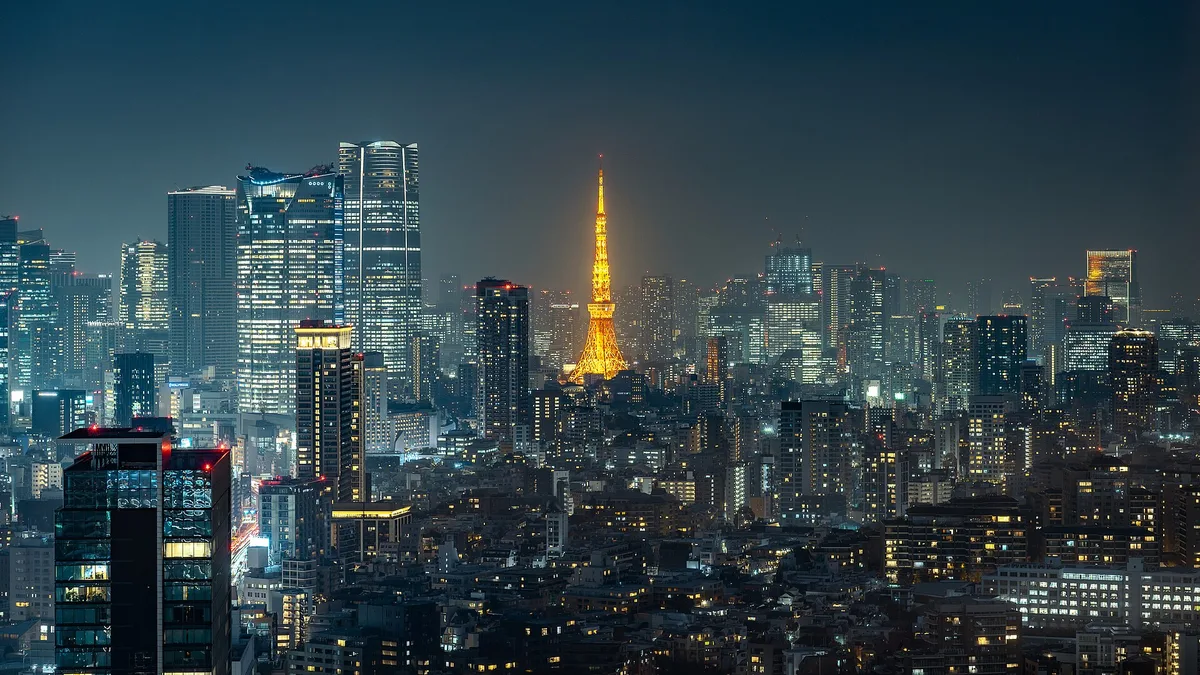
Tokyo Tower has watched over the city since 1958, when it was built as a broadcasting tower and briefly stood as the tallest structure in Japan. At 333 meters, painted in “Tokyo Tower White” and international orange (a color scheme required by aviation law), it’s an obvious visual cousin of the Eiffel Tower, sleeker legs, same era of steel-lattice optimism.
Unlike the more modern, commercially slick Tokyo Skytree across town, Tokyo Tower feels like a mid-century icon that Tokyo grew up around rather than a purpose-built tourist machine. With a 4.5 rating across nearly 100,000 reviews, it remains one of the city’s most consistently beloved landmarks, prized as much for the retro atmosphere and skyline framing (Mount Fuji is visible on clear winter days) as for the views themselves.
Getting there
The tower sits at 4-chōme-2-8 Shibakōen, Minato City, in the Shiba Park area, a low-key neighborhood of temples and green space rather than neon. The closest station is Akabanebashi on the Toei Oedo Line, about a 5-minute walk via the Akabanebashi exit. Onarimon and Kamiyacho stations, both on the Toei Mita/Hibiya lines, are roughly 6-8 minutes on foot. Shiba-koen Station (Toei Mita Line) also works and drops you near Zojoji Temple, which sits directly at the tower’s base and is worth pairing with your visit.
If arriving from central Tokyo, a taxi from Roppongi or Shimbashi takes about 10-15 minutes depending on traffic. There’s no direct JR line, so factor in one subway transfer from most hotel areas.

What to see and do
The tower has two observation levels. The Main Deck at 150 meters is the standard experience, glass floor panels for a slightly vertigo-inducing look straight down, café seating, and gift shops selling tower-shaped everything. The Top Deck at 150m-plus (topping out near 250m) requires a separate, pricier ticket and includes a short guided/digital experience before you reach the platform, with sweeping views toward Tokyo Bay, Roppongi, and on clear days, Mount Fuji to the southwest.
Give yourself 60-90 minutes total; longer if you linger for photos at golden hour. At the base, FootTown houses restaurants, a small aquarium, and rotating character-collaboration attractions (One Piece and other anime tie-ins have run here for years), good options if traveling with kids or waiting out a rain delay.
When to go
Late afternoon into early evening is the sweet spot: you get daylight views transitioning into the tower’s nightly illumination, which changes seasonally and for special events (look for pink lighting around cherry blossom season and warm orange year-round as the default scheme). Weekday mornings right at opening are the quietest if crowds bother you more than lighting. Winter is genuinely the best season for visibility, cold, dry air makes Fuji sightings far more likely than in summer’s haze. Avoid weekend evenings and national holidays if you want breathing room on the Main Deck.
Nearby & tips
Zojoji Temple, a major Jodo-shu Buddhist temple with a striking main gate (Sanmon, one of Tokyo’s oldest wooden structures), sits right beside the tower and makes a natural combined stop, especially for the classic photo of the temple’s pagoda framed against the tower. Shiba Park itself offers walking paths and a quieter, greener contrast to the tower’s crowds. For tickets, buying Top Deck admission online in advance is worth it, it comes with a timed entry slot and bypasses a chunk of the line that forms for walk-up Main Deck tickets.
Prices and hours shift periodically, so confirm current rates on the official site before your trip rather than relying on older guidebooks. If budget-conscious, note the Main Deck alone is considerably cheaper and still delivers a strong panoramic view of central Tokyo.
Frequently asked questions
How do I get to Tokyo Tower by train?
Take the Toei Oedo Line to Akabanebashi Station and walk about 5 minutes, or use Onarimon/Kamiyacho on the Toei Mita/Hibiya lines, roughly 6-8 minutes on foot.
How much time should I plan for a visit?
Allow 60-90 minutes for the Main Deck or both decks combined; add extra time at golden hour if you want daytime and night photos.
Is Tokyo Tower or Tokyo Skytree better to visit?
Tokyo Tower is more central, older, and cheaper with a retro charm and easy pairing with Zojoji Temple; Skytree is taller and more modern with panoramic views further from the city center. Many visitors pick one based on which fits their itinerary rather than visiting both.
What's the best time of day and year to go?
Late afternoon into evening for the daylight-to-illumination transition, and winter for the best odds of seeing Mount Fuji thanks to clearer, drier air.
Should I buy tickets in advance?
Yes, especially for the Top Deck, which uses timed-entry tickets sold online and helps you skip part of the walk-up queue; check the official Tokyo Tower website for current prices and hours.
Plan your trip to Tokyo
Japan eSIM & staying connected →
Some links above are affiliate links — if you book through them, Wander Atlas earns a small commission at no extra cost to you. It's how we keep every guide free.
Related guides


This spot is Day 1 of our Tokyo 5-day itinerary