Ueno Park: Tokyo Travel Guide (4.4★)
When to visit Japan: month-by-month weather, crowds and holidays →
✓ Facts verified via Google Places · Sep 22, 2026
At a glance
Opening hours
- Monday: 5:00 AM – 11:00 PM
- Tuesday: 5:00 AM – 11:00 PM
- Wednesday: 5:00 AM – 11:00 PM
- Thursday: 5:00 AM – 11:00 PM
- Friday: 5:00 AM – 11:00 PM
- Saturday: 5:00 AM – 11:00 PM
- Sunday: 5:00 AM – 11:00 PM
Live foot-traffic data via BestTime.app
How this guide is made
Produced with AI assistance and reviewed against live data sources. Facts such as hours, ratings, and location come from Google Places; images are licensed or public domain. Details can change — please verify before visiting. Editorial policy
Ueno Park sits directly above Ueno Station, which means most visitors arrive by accident on their way to somewhere else and end up staying for hours. The park spreads across a former Kan’ei-ji temple estate, and that history is still visible in the scattered pagodas, stone lanterns, and shrine gates tucked between the museum buildings. At 4.4 stars from close to 35,000 reviews, it’s one of the most reviewed green spaces in the country, and on any given Saturday it feels like it.
The museum cluster nobody warns you about
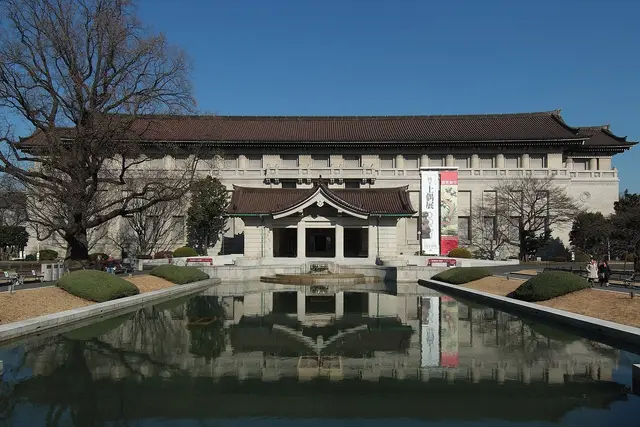
Four major institutions ring the park’s central lawn: the Tokyo National Museum, the National Museum of Nature and Science, the National Museum of Western Art, and the Tokyo Metropolitan Art Museum. Each is a separate ticketed building with its own hours, so “visiting Ueno Park” and “visiting a Ueno museum” are two different trips that happen to share an entrance gate.
Most first-timers pick one. The Tokyo National Museum rewards the time investment most, with its Honkan building alone covering armor, ceramics, and scroll painting across two floors. If you only have an hour, walk the grounds and skip the queues entirely; the buildings’ exteriors and surrounding gardens are visible without a ticket.
Shinobazu Pond and the boats
At the park’s southern edge, Shinobazu Pond splits into three sections: one thick with lotus that dies back in winter and fills the air with a green, muddy smell by August, one reserved for waterfowl, and one for rented rowboats and swan-shaped pedal boats. The pond has a small island shrine, Bentendo, reachable by a footbridge, dedicated to the goddess Benzaiten.
Renting a boat is first-come, first-served at the boathouse on the pond’s edge. Go on a weekday morning if you want the water to yourself; by early afternoon on weekends the boats are mostly out and the paths around the pond fill with strollers and tour groups.
Cherry blossom season, and why it’s different here
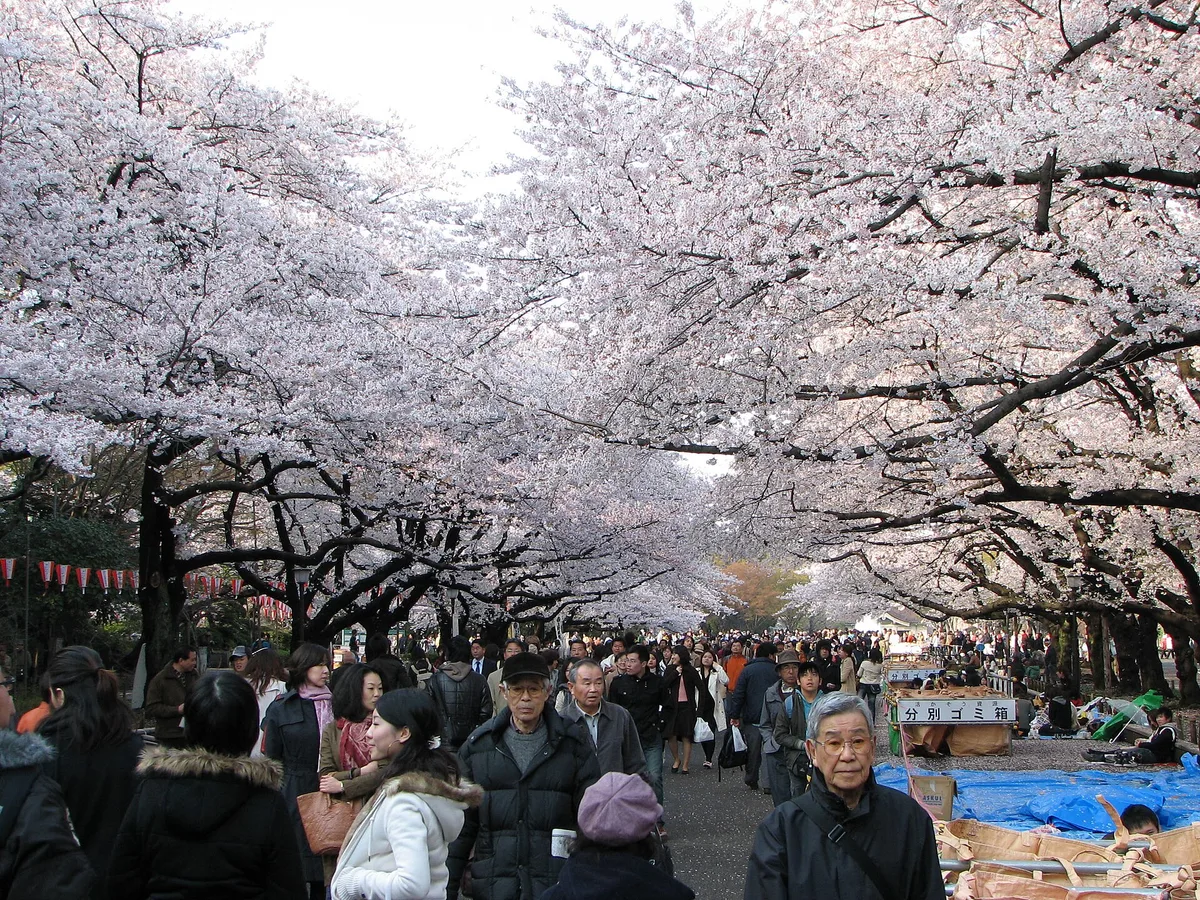
Ueno Park is lined with over a thousand cherry trees along its main pedestrian boulevard, and this is the single biggest driver of the park’s crowds. For roughly two weeks in late March to early April, the walkway becomes a tunnel of blossom with blue tarps spread beneath the trees for hanami parties that run from lunchtime into the evening.
If you want the trees without the density of people, come right at opening. The park’s gates function from 5am, well before the museums or the zoo open, so early risers get a quiet, mist-lit boulevard that looks nothing like the photos taken at 2pm. By late morning on a weekend during peak bloom, this same path is shoulder to shoulder.

Ueno Zoo and the giant pandas
Japan’s oldest zoo occupies the park’s northwestern section, split into east and west grounds connected by a monorail. The zoo’s giant pandas are the main draw and the reason lines form at the panda enclosure well before the rest of the zoo fills up. Elephants, tigers, and a nocturnal house round out the collection.
If pandas are the priority, head there directly after the zoo opens rather than saving it for later; the enclosure draws a crowd that only grows across the day, especially on weekends.
Beating the 10am–6pm weekend crush
The park’s own foot traffic pattern is consistent: weekends stay comparatively calm from 7am until crowds build toward the 10am to 6pm window, when paths, the museum forecourts, and the pond boathouse all reach peak density. Weekdays follow a similar shape but with a gentler peak.
Practical moves that work here:
- Arrive before 9am if cherry blossoms or pandas are the goal
- Save museum visits for early afternoon on weekdays, when tour groups have thinned
- Eat lunch away from the main boulevard; food stalls near the central fountain get long lines exactly when the park is busiest
- If you’re doing both zoo and a museum, do the zoo first since panda lines only lengthen
Ameyoko, right outside the south exit
Walk out of the park’s southern edge toward Ueno Station and you hit Ameyoko, a covered market street that grew out of a black-market district after the war. It’s not part of the park, but it’s the natural next stop: narrow lanes packed with dried seafood stalls, cheap sneaker shops, and street food stands selling grilled skewers and fresh fruit. Most visitors combine a morning in the park with an afternoon browsing here, or flip the order and start with breakfast among the market’s fishmongers before the park’s museums open.
Getting there and moving around
Ueno Station serves the park directly, with the Park Exit (Kōen-guchi) putting you right at the main entrance within a couple of minutes’ walk. The station is a major hub for JR lines including the Yamanote Line, plus the Tokyo Metro Ginza and Hibiya lines, so it’s reachable from almost anywhere in the city without a transfer.
Inside, the park is flat and walkable, with paved paths connecting every major sight. Renting a bicycle isn’t necessary; even covering the pond, the zoo, and the museum cluster in one visit is comfortably done on foot in three to four hours.
Frequently asked questions
What's the quietest time to visit Ueno Park?
Early morning works best on both weekdays and weekends, roughly from opening at 7am, before the weekend crowd builds toward its 10am–6pm peak.
How do I get to Ueno Park from Ueno Station?
Take the Park Exit (Kōen-guchi) from Ueno Station, served by the JR Yamanote Line and the Tokyo Metro Ginza and Hibiya lines; the park entrance is a couple of minutes' walk from the exit.
How long should I spend at Ueno Park?
Plan on three to four hours to walk the park, pond, and museum exteriors. Add a museum visit or the zoo and it easily becomes a half-day or full-day outing.
When is cherry blossom season at Ueno Park?
Typically late March into early April, when the main boulevard's cherry trees bloom. This is the park's busiest and most photographed stretch of the year.
Is Ueno Park good for visiting with the zoo and museums in one day?
Yes, but plan the order: hit the zoo first for the pandas since their lines only grow through the day, then use early afternoon on a weekday for museums to avoid tour groups.
What's near Ueno Park worth combining with a visit?
Ameyoko market sits just outside the park's south exit toward Ueno Station, a covered street of food stalls, dried seafood shops, and cheap retail worth an hour or two.
Plan your trip to Tokyo
Some links above are affiliate links — if you book through them, Wander Atlas earns a small commission at no extra cost to you. It's how we keep every guide free.