
What you’re actually walking into
This is a monastery before it’s a museum, and it shows. The Augustins order built the complex from the 14th century onward, and when the Revolution emptied it of monks, Toulouse turned the cloisters and refectory into a repository for art rescued from churches being torn down across the city.
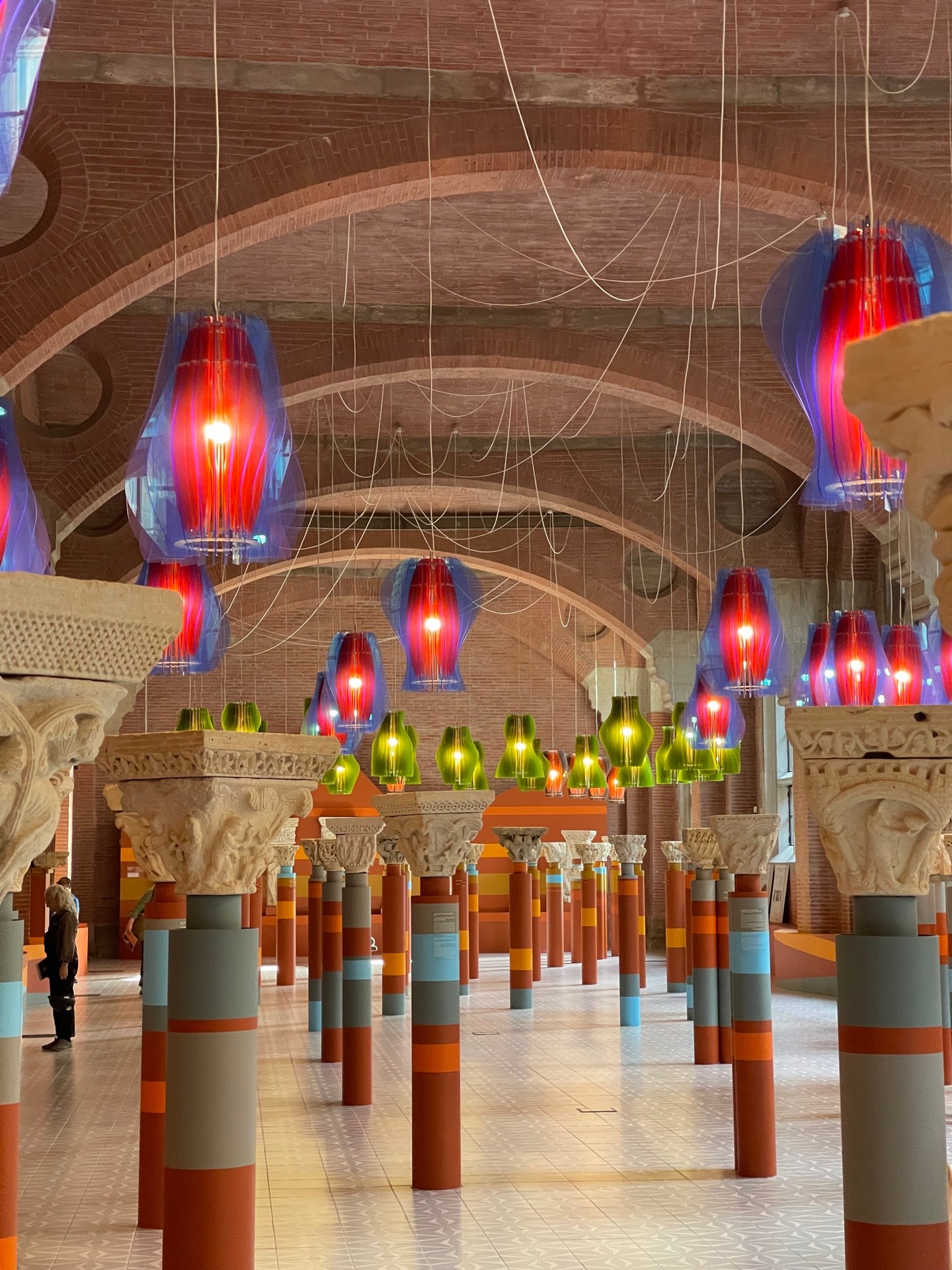
That origin story explains the collection’s real strength: it isn’t paintings, though there are good ones. It’s stone. Capitals, gargoyles, tomb effigies and whole carved portals, salvaged rather than commissioned, fill room after room.
The Romanesque sculpture, room by room
Walk the ground floor cloister first. The arcades still hold their original 14th-century capitals, carved with foliage and biting animal heads, set around a garden with a fig tree and a pool that’s original to the site.
From there, the refectory (the monks’ old dining hall, a long vaulted space) holds the museum’s signature pieces: capitals and column fragments from Romanesque churches and cloisters that were dismantled in the 19th century, including material from the old Saint-Étienne cathedral cloister and La Daurade. Nowhere else assembles this much Toulouse Romanesque stonework under one roof.
Upstairs, the painting galleries move through French and European works from the 17th to the 19th century, with a strong regional section on Toulouse’s own painters. It’s solid but secondary; most visitors spend more time downstairs among the stone.
Getting there and getting in
The museum sits at 21 Rue de Metz, close enough to Place du Capitole to fold into the same walk.
- Metro: Esquirol (Line A), about 5 minutes on foot
- On foot: 3-4 minutes from Place du Capitole
- Nearby: Église des Jacobins and the Capitole are both within 10 minutes, easy to combine into one morning
Opening hours are specific and worth checking before you go:
- Monday, Thursday, Friday: noon to 6pm
- Saturday and Sunday: 10am to 6pm
- Closed Tuesday and Wednesday
Timing your visit
Weekends draw the steadiest crowds, staying busy from the 10am opening straight through to close, so don’t expect a quiet Saturday morning here. A weekday afternoon slot, arriving shortly after the noon opening on Monday, Thursday or Friday, is the more comfortable option if your schedule allows it.
The museum is well known in Toulouse and gets a steady stream of visitors year-round rather than sudden tour-bus surges, so there’s no single secret hour that empties it out. Arriving close to opening on any of the weekday afternoons is still your best bet for having the cloister to yourself for a few minutes.
Making sense of the layout
Buy your ticket at the entrance desk just inside from Rue de Metz; there’s rarely a long line given the museum’s size relative to its visitor numbers.
- Start in the cloister garden, then the refectory, before heading upstairs to the paintings
- Free audio guides or information panels (check current availability) help decode which church a given capital came from
- The stone floors and uneven medieval steps mean flat shoes are genuinely the practical choice here, not just travel-guide advice
- Photography is generally allowed without flash; a placard near the entrance will confirm current rules
Plan on 90 minutes for a focused visit, closer to two hours if you read the didactic panels on the sculpture’s origins, which are some of the most detailed you’ll find on Romanesque carving anywhere in France.
Pairing it with the rest of the neighborhood
Because it sits so close to both the Capitole and the Jacobins convent, the Augustins works well as the quieter, indoor middle of a day that starts at one and ends at the other.
Come here after the Capitole’s morning light has faded and before you want to sit down for lunch nearby on Rue de Metz or around Place Esquirol. The pace inside, cloister first, refectory next, is naturally unhurried and gives your legs a break between two more walking-heavy stops.
Frequently asked questions
How do I get to the Musée des Augustins by metro?
Take Line A to Esquirol station, then walk about 5 minutes to 21 Rue de Metz. It's also a 3-4 minute walk from Place du Capitole.
What are the opening hours?
Monday, Thursday and Friday it's open noon to 6pm; Saturday and Sunday 10am to 6pm. It's closed all day Tuesday and Wednesday, so plan around that.
When is the best time to visit to avoid crowds?
Weekends stay busy from the 10am opening straight through to closing. A weekday afternoon, arriving close to the noon opening on Monday, Thursday or Friday, is a calmer option.
How long should I plan for a visit?
Around 90 minutes for a focused look at the cloister and refectory sculpture, up to two hours if you also want to read the panels and see the upstairs painting galleries.
What's the museum actually known for?
Its Romanesque and Gothic sculpture, especially capitals and carved fragments salvaged from Toulouse churches and cloisters demolished after the Revolution. The painting collection upstairs is secondary but worthwhile.
Plan your trip to Toulouse
France eSIM & staying connected →
Some links above are affiliate links — if you book through them, Wander Atlas earns a small commission at no extra cost to you. It's how we keep every guide free.
Related guides
 attraction
 Couvent des Jacobins: Toulouse Travel Guide (4.6★)
 attraction
 Jardin Royal: Toulouse Travel Guide (4.6★)
 attraction
 Muséum de Toulouse: Travel Guide (4.5★)
 hidden gem