Why Eklingji Temple matters
This isn’t a ruin or a photo backdrop (it’s a living temple the Mewar royal family has worshipped at for over a thousand years. Eklingji, a four-faced black marble form of Shiva, is considered the ruling deity of Udaipur. Even today, the Maharana of Udaipur traditionally visits every Monday, and locals still call him a “diwan”) a mere custodian ruling on the god’s behalf.
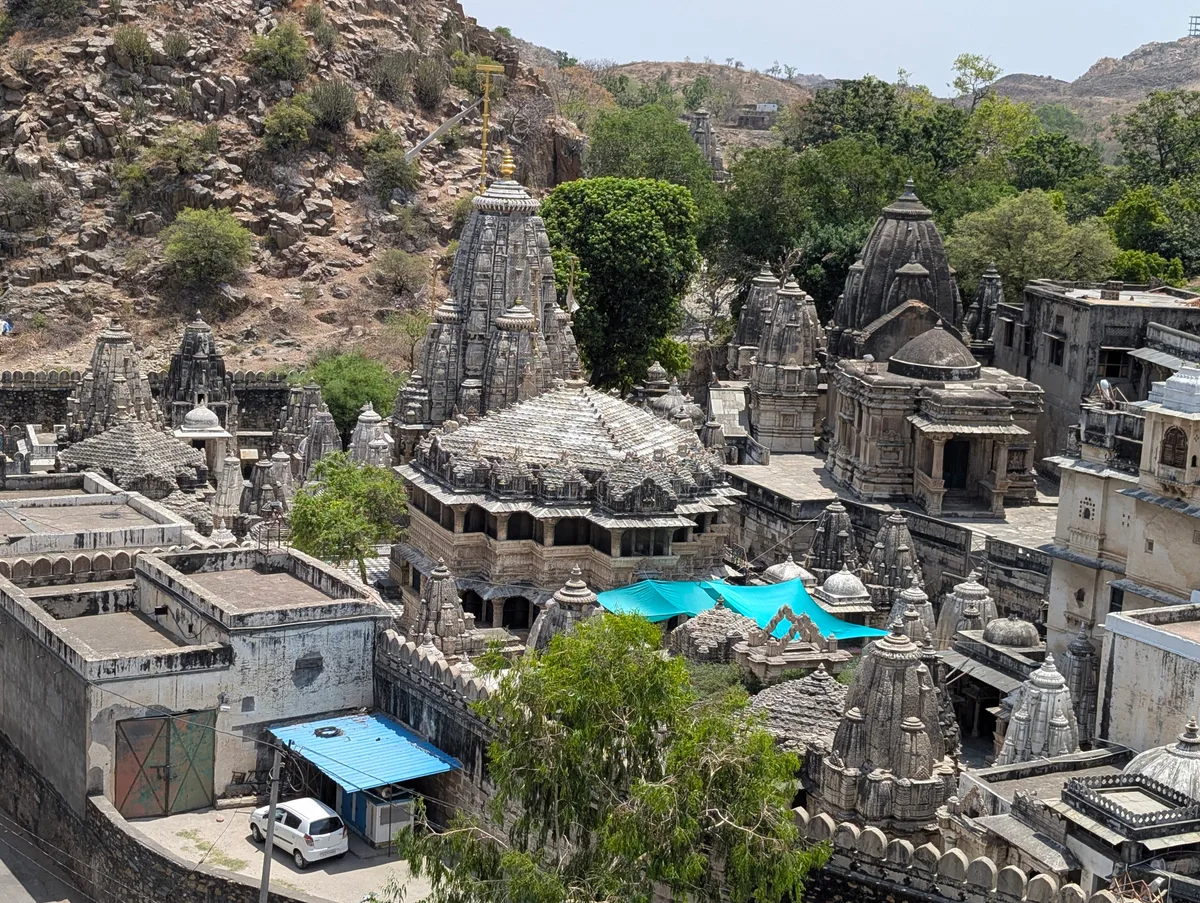
That history gives the place a weight you don’t get at typical tourist sites. The complex holds over 100 temples within its walled courtyard, some dating to the 8th century, though most of what stands now was rebuilt in the 15th century under Maharana Kumbha.
Getting there from Udaipur
The temple sits roughly 22km north of the city in Kailashpuri, on the road toward Nathdwara. A taxi or auto-rickshaw from central Udaipur takes about 45 minutes each way.
- Hire a taxi for a half-day round trip, ideally combined with nearby Nagda’s ruined temples
- Shared jeeps and local buses run from Udaipur’s main bus stand, though schedules are irregular
- Many visitors pair it with a stop at Sas-Bahu temples or Haldighati, both along the same route
Because the temple only opens in three narrow windows, build your Udaipur day around its hours rather than the other way around.

What you’ll see inside
You enter through a heavy silver-plated door into a courtyard paved in pale stone, ringed by dozens of smaller shrines to other deities. The main sanctum is carved entirely from black marble, and the four-faced Eklingji idol sits under a silver canopy, lit by oil lamps that catch the carved ceiling above.
During aarti, priests move around the idol with brass lamps while bells ring in a steady rhythm and the courtyard fills with incense smoke. It’s loud, close, and unmistakably a working shrine rather than a preserved monument.
Set aside 45 minutes to an hour to walk the courtyard’s smaller shrines after the main ceremony. Look for the Nandi bull statue facing the sanctum and the carved pillars in the surrounding mandapa, some showing centuries of wear from oil and incense.
When to go
Arrive for the 5–9am window if you can manage an early start. The light is soft, the courtyard is cooler, and the morning aarti tends to be less rushed than the evening one. The 5–7:30pm slot is the other main option, and it’s when the temple feels most alive, timed to coincide with sunset.
Avoid trying to visit during the 1–5pm gap. The temple is simply closed, and there’s nowhere shaded nearby to wait it out comfortably. Mondays can draw a slightly larger crowd given the temple’s royal association, so if you want a calmer visit, aim for a weekday morning instead.
How to visit like a local
Dress the way you would for any working Hindu temple: shoulders and knees covered, and be ready to remove your shoes before entering the courtyard.
Leather items (belts, wallets, bags) are typically not allowed inside, so leave them in your vehicle rather than at the gate. There’s no formal ticket booth for tourists; entry is free, though a small donation at the shrine is customary and appreciated rather than expected.
Photography rules are strict around the inner sanctum, and phones are often required to be left with security or in your vehicle. This is a well-known pilgrimage site, not an undiscovered spot, so the aarti times do draw genuine devotees, stand toward the back of the courtyard rather than pushing forward, and follow the lead of people around you rather than photographing the ceremony itself.
If you only have one visit in you, make it the evening aarti, the transition from daylight to lamp-lit dark inside the black marble sanctum is the single most memorable stretch of time you’ll spend here.
Frequently asked questions
How far is Eklingji Temple from Udaipur city?
About 22km, roughly a 45-minute drive by taxi or auto-rickshaw along the road toward Nathdwara.
What are the opening hours?
The temple opens daily in three windows: 5–9am, 11am–1pm, and 5–7:30pm. It's closed outside these times, so plan your visit around one of them.
Is there an entry fee?
No formal ticket is required for general entry; a small donation at the shrine is customary but not mandatory.
How long should I spend there?
Plan for 45 minutes to an hour to see the main sanctum and walk the courtyard's smaller shrines, plus travel time from Udaipur.
Can I visit nearby sites on the same trip?
Yes — Nagda's ruined temples and the Sas-Bahu temples are close by and commonly combined with an Eklingji visit.
Plan your trip to Udaipur
Some links above are affiliate links — if you book through them, Wander Atlas earns a small commission at no extra cost to you. It's how we keep every guide free.