A winter road race on the Álava plain
This is a race of cold air and stone streets. Vitoria-Gasteiz sits on an inland plain at roughly 500 metres above sea level. That makes it one of the chillier cities in northern Spain, and a December half marathon here feels like it.
The race is an annual 21.1km road event through the Basque capital. Vitoria is compact and flat by Basque standards. It was European Green Capital in 2012, and the Anillo Verde, its ring of parks and wetlands, wraps around the city.
Date, bibs and where the details live
The 2026 edition takes place on Sunday, December 20. In Spanish the event is the Media Maratón de Vitoria-Gasteiz. In Basque, the city’s other official language, a half marathon is an erdi maratoia.
For a road race, “tickets” means a bib, the dorsal. Spectators don’t need anything to watch from the pavement. The organiser publishes registration, the course map and start-area information on its official race site. Prices aren’t given here, and none is quoted.
What runners collect before the start:
- the race bib with its timing chip
- any pack items the organiser includes
- start-corral or wave information, where the race uses it
Getting to Vitoria-Gasteiz for race weekend
Most visitors come by train or road. Vitoria-Gasteiz station sits on the Madrid–Irun railway, a short walk south of the old town. Runners from Madrid, Burgos or San Sebastián usually take Renfe services straight into the centre.
Bilbao is the usual way in by air. Its airport is about an hour away by road, and buses link Bilbao and Vitoria throughout the day. Vitoria’s own airport at Foronda has a much thinner passenger schedule.
In the city, a tram line crosses the centre. Most of central Vitoria is easy to walk, and many runners stay close enough to reach the start area on foot.
Running 21km in a Basque December
Here, the weather is the race. Winter mornings on the Álava plain are often close to freezing. Fog and drizzle are common, and the wind can cut across the open avenues.
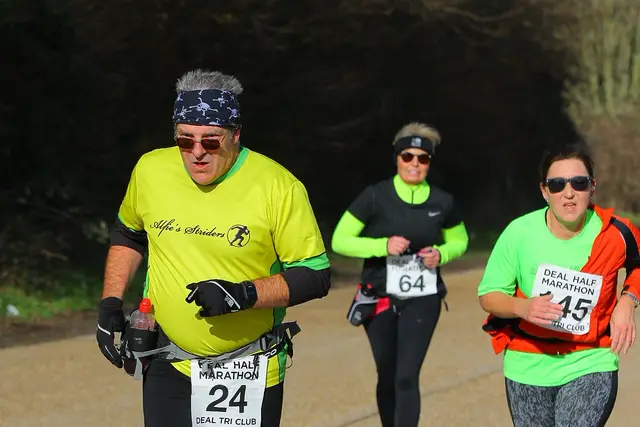
Runners who know this race usually start in layers they can drop. They also carry gloves and a hat they’re happy to lose. Spectators wear proper winter coats, because standing still on a pavement for an hour gets colder than people expect.
The upside is clean, cool running air. Flat stretches and low temperatures suit a steady pace. That’s partly why December half marathons draw runners chasing a personal best.
Cheering, eating and paying in Gasteiz
A few local habits make race day easier.
- Cheering: you’ll hear “¡Ánimo!” in Spanish and “Aupa!” in Basque from the kerb. Shouting either at a passing runner is normal and welcome.
- Pintxos after the finish: order at the bar and point at what’s on the counter. You pay at the end, and the bartender often asks what you had.
- Paying: cards and contactless work almost everywhere. Tipping is light: people round up or leave small change, never a percentage.
- Sunday hours: December 20 is a Sunday, and many shops in Spain close. Bars and cafés in the old town stay busy, but a pharmacy or sports shop may not be open.
- Meal times: lunch in the Basque Country starts around 2pm and runs long. A post-race meal at noon puts you ahead of the local rush, not behind it.
Calle Cuchillería and the streets around Plaza de España are where pintxo crawls usually happen. The Basque word for that crawl is txikiteo.
The rest of the weekend
Vitoria rewards a slow recovery walk. The Casco Medieval is the old town, an almond-shaped grid of streets on a low hill. At its top stands the Catedral de Santa María, whose “open for works” guided tours are well known.
Below the hill, Plaza de la Virgen Blanca is the city’s main square, framed by glassed-in balconies. Nearby Parque de la Florida is a leafy nineteenth-century garden and a pleasant spot to loosen tired legs.
Christmas decorations are usually up across the centre by late December, and that gives the weekend a festive feel. Runners with an extra day often add the Artium contemporary art museum. Others take a short bus ride to the Salburua wetlands on the Anillo Verde.
Frequently asked questions
When is the Vitoria-Gasteiz Half Marathon 2026?
It takes place on Sunday, December 20, 2026, in Vitoria-Gasteiz, Basque Country, Spain.
How do I get a bib for the race?
Bibs (dorsales) are the race's tickets. The organiser publishes registration and course details on its official race site. Spectators can watch from the pavement and need nothing to do so.
How do I get to Vitoria-Gasteiz?
Vitoria-Gasteiz station is on the Madrid–Irun railway, a short walk from the old town. Most international visitors fly into Bilbao, about an hour away by road, and take a bus from there.
What is the weather like for a December race in Vitoria?
The city sits at roughly 500 metres on an inland plain, so winter mornings are often near freezing, with fog, drizzle or wind. Runners usually start in layers they can drop, and spectators dress for standing still in the cold.
What else is there to do nearby on race weekend?
You can walk the Casco Medieval up to the Catedral de Santa María, visit Plaza de la Virgen Blanca and Parque de la Florida, or go for pintxos on Calle Cuchillería. Many shops close on Sunday, but old-town bars stay busy.
Plan your trip to Vitoria-Gasteiz
Spain eSIM & staying connected →
Some links above are affiliate links — if you book through them, Wander Atlas earns a small commission at no extra cost to you. It's how we keep every guide free.