Yokohama Mazu Miao: Travel Guide (4.2★)
When to visit Japan: month-by-month weather, crowds and holidays →
✓ Facts verified via Google Places · Aug 5, 2026
At a glance
Live foot-traffic data via BestTime.app
How this guide is made
Produced with AI assistance and reviewed against live data sources. Facts such as hours, ratings, and location come from Google Places; images are licensed or public domain. Details can change — please verify before visiting. Editorial policy
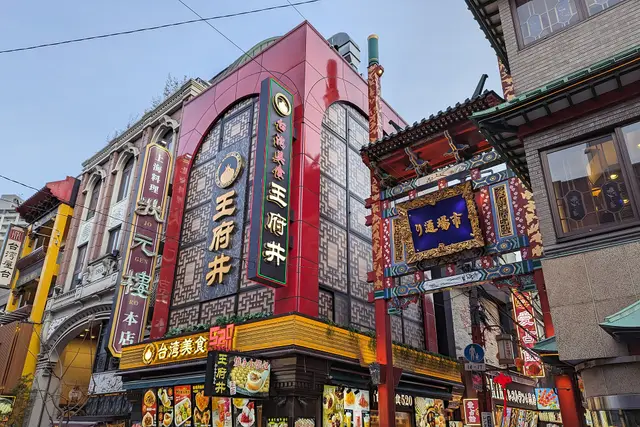
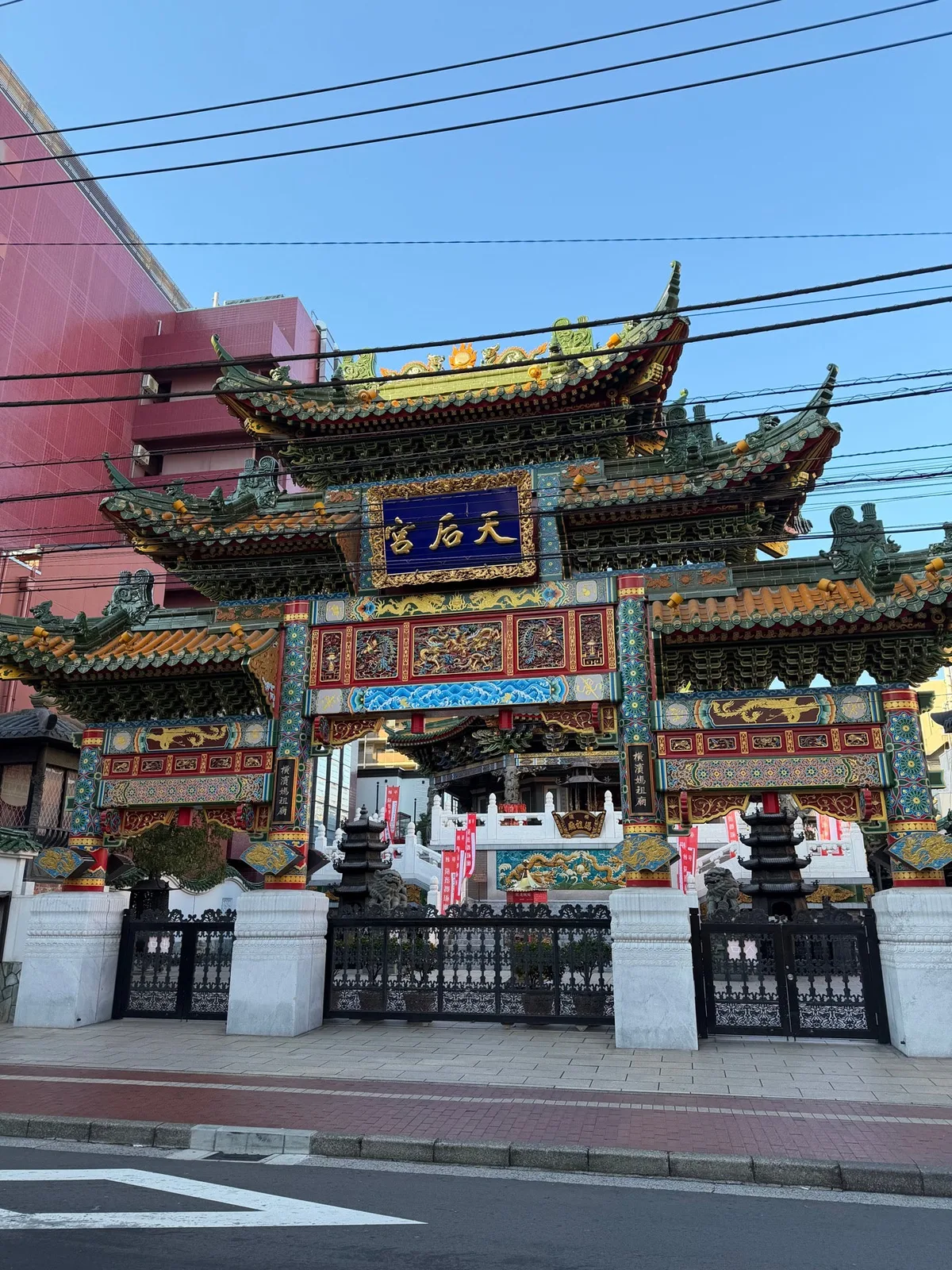
You smell the incense before you see the gate. Somewhere between the steamed-bun stalls and the souvenir shops selling plastic pandas, the street narrows and the colors shift, reds get deeper, golds get brighter, and suddenly you’re standing under a towering ceremonial archway carved with dragons, phoenixes, and gilded lions that look like they’ve been lifted straight out of a Fujian temple courtyard and dropped into the middle of Yokohama.
That’s Yokohama Mazu Miao, and it doesn’t announce itself the way you’d expect a landmark to. It sits at 136 Yamashitachō in Naka Ward, folded into the grid of Chinatown’s residential-feeling backstreets, a few minutes’ walk from the neighborhood’s main gates. The building itself is compact, this isn’t a sprawling temple complex, but every surface is worked over with an intensity that makes you slow down.
Roof tiles curl upward in tiers. Stone lions guard the entrance. Look up at the beams inside and you’ll find layer upon layer of carved and painted detail: clouds, waves, mythical creatures, all rendered in the deep vermilion, jade green, and gold leaf typical of southern Chinese temple architecture.
Who is Mazu, and why here
Mazu is the Taoist goddess of the sea, venerated for centuries by sailors and coastal communities across southern China and Taiwan as a protector against storms and shipwreck. It makes sense that a maritime port city like Yokohama, whose Chinatown grew from Qing-dynasty traders who settled here after the port opened in the 1850s, would eventually build her a proper home.
The current temple, rebuilt in the 2000s with support from Yokohama’s Chinese community, replaced an older shrine and was constructed with materials and craftsmen brought over specifically to get the details right. Inside, the main altar holds a statue of Mazu flanked by attendant deities, with offerings, incense coils, and paper lanterns strung overhead.

What you’ll actually see
Step through the gate and you’re in a small open courtyard before the main hall. You don’t need a ticket or a guide to appreciate it. You can look into the hall from the doorway, watch worshippers light incense and bow, and take in the woodwork at close range. The scale is intimate: give it twenty to thirty minutes, unless you’re the type who wants to photograph every carved panel, in which case budget closer to an hour.
The roofline and the gate itself are worth walking around from the street to see from different angles. The layered eaves and ridge ornaments are easiest to appreciate from a slight distance.
Best time to go
Crowds here track pretty predictably with the rest of Chinatown. On both weekdays and weekends, the temple tends to be quieter outside the midday rush, but weekends see a real crush between noon and 5pm, when day-trippers pour in for lunch and the surrounding streets fill up. If you can, go in the morning or later in the evening, especially on a Saturday or Sunday.
The single busiest stretch of the year is Lunar New Year, usually late January or February, when the temple and the streets around it host lion dances, drumming, and crowds that spill well beyond the temple gate. A spectacular time to visit if you don’t mind the density, and worth avoiding if you want a quiet look at the architecture.
How to visit like a local
Treat it as a working place of worship, not a photo backdrop. Keep your voice down near the altar, and if you see people bowing or lighting incense, give them space and wait rather than stepping in front. You’re welcome to look around the courtyard and hall doorway; if you want to make an offering or light incense, small donation boxes are typically on hand, and cash is the only currency that makes sense here.
There’s no reservation system and no queue to speak of outside Lunar New Year, you simply walk in. The mistake most visitors make is treating it as a two-minute photo stop on the way to lunch; slow down instead and look at the roof ridge and the gate carvings, which are the real reason this small temple has such a devoted following among Chinatown regulars.
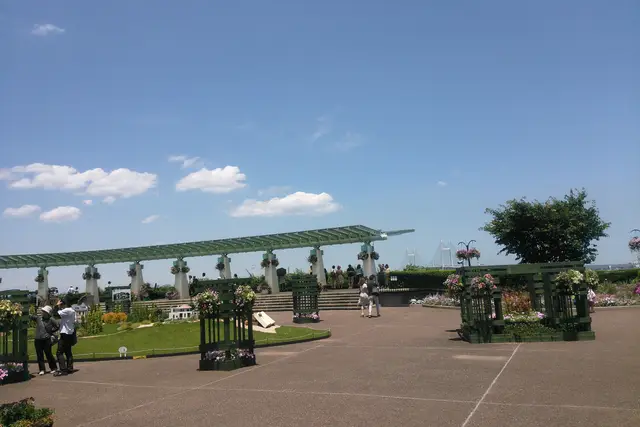
Pair the visit with a walk to nearby Yamashita Park and the harborfront, both a short stroll east, to round out a couple of hours in the area.
Getting there
The temple sits within Yokohama’s Chinatown, walkable from Ishikawachō Station on the JR Negishi Line (about 5-8 minutes on foot) or from Motomachi-Chūkagai Station on the Minatomirai Line, which drops you closer to the neighborhood’s main gates. Either way, once you’re inside Chinatown’s grid of lanes, the temple’s gate and rooftop are visible above the shopfronts well before you reach the entrance.
Frequently asked questions
Is there an entrance fee?
No admission fee is charged to enter the courtyard and view the main hall; if you wish to light incense or make an offering, a small donation is customary.
How long should I plan to spend here?
Most visitors spend 20-30 minutes; if you want to study the carvings and roof details closely, an hour is more comfortable.
When is the quietest time to visit?
Mornings are calmest — the temple is open and quiet from 9am, on both weekdays and weekends. Weekends get busy specifically between 12pm and 5pm, so aim to arrive before noon.
How do I get there by train?
Walk from Ishikawachō Station (JR Negishi Line) or Motomachi-Chūkagai Station (Minatomirai Line), both a few minutes from Chinatown's gates.
Is it worth visiting during Lunar New Year?
Yes, if you don't mind crowds — Yokohama Chinatown's Lunar New Year celebrations (typically late January or February) bring lion dances and drumming right around the temple, though it's the busiest possible time to see it.
Plan your trip to Yokohama
Some links above are affiliate links — if you book through them, Wander Atlas earns a small commission at no extra cost to you. It's how we keep every guide free.