Yokohama Red Brick Warehouse: Travel Guide (4.1★)
When to visit Japan: month-by-month weather, crowds and holidays →
✓ Facts verified via Google Places · Sep 22, 2026
At a glance
Opening hours
- Monday: 11:00 AM – 8:00 PM
- Tuesday: 11:00 AM – 8:00 PM
- Wednesday: 11:00 AM – 8:00 PM
- Thursday: 11:00 AM – 8:00 PM
- Friday: 11:00 AM – 8:00 PM
- Saturday: 11:00 AM – 8:00 PM
- Sunday: 11:00 AM – 8:00 PM
How this guide is made
Produced with AI assistance and reviewed against live data sources. Facts such as hours, ratings, and location come from Google Places; images are licensed or public domain. Details can change — please verify before visiting. Editorial policy
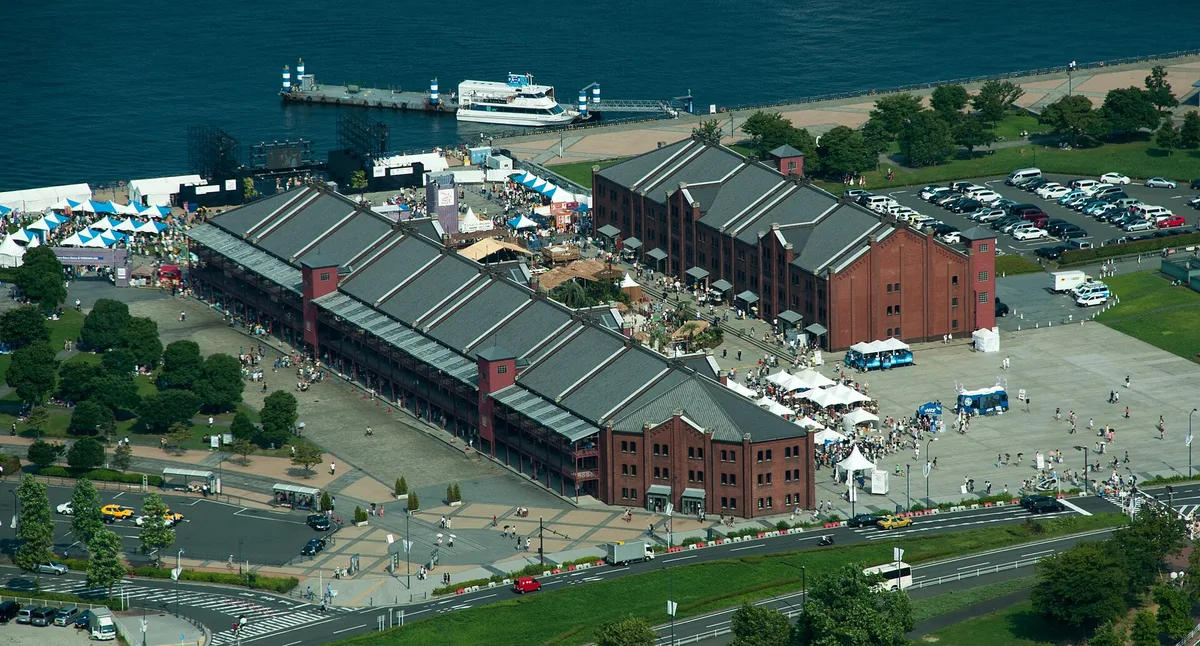
Two long brick buildings sit end to end on a pier in Yokohama’s Shinko district, facing the harbor where cargo ships once tied up. That’s the whole premise: this was a customs warehouse for the Port of Yokohama, built in the early twentieth century, and it’s now a shopping and event space without having lost the shape of what it was.
You can still see the bones of the original structure inside. Exposed brick walls, iron support beams, and the narrow window bays of a working warehouse frame the shops and cafes that now occupy the space. Building 1 is smaller, leaning toward galleries and event space; Building 2 is the larger retail block, with two floors of shops selling housewares, Japanese crafts, and snacks, plus a food hall on the ground floor.
Getting there and getting oriented
The warehouse sits on the waterfront in Naka Ward, walkable from Minato Mirai. The closest stations are Bashamichi (Minatomirai Line) and Nihon-odori (also Minatomirai Line), each roughly a 10-minute walk along the harborside promenade.
- From Bashamichi Station: exit and head toward the water, following signs for Akarenga Soko.
- From Minato Mirai Station: it’s a longer walk, about 15-20 minutes, but it takes you past the Cosmo World ferris wheel and Yokohama’s grain elevator silos.
- Landmark Tower and Cup Noodles Museum are both within a 15-minute walk, so this fits naturally into a half-day loop of the waterfront.
What’s actually inside
Building 2 is where most people spend their time. Two floors hold a mix of homeware stores, apparel, stationery, and Japanese regional specialty shops, the kind of place where you can pick up a box of local sweets or a well-made kitchen knife in the same ten minutes.
The ground-floor food area has a handful of counters and small restaurants rather than one big food court. It’s a reasonable stop for a snack or a light meal, not a destination dinner spot. Building 1 rotates between small exhibitions, pop-up shops, and event installations, so what you find there depends entirely on the week you visit.

The plaza and the harbor view
Outside, the open plaza between the warehouses and the water is arguably the best reason to come, even more than the shops. It’s used for seasonal markets and festivals: a Christmas market with mulled wine stalls in winter, beer gardens in summer, and craft fairs scattered through the year.
Even with nothing scheduled, the plaza gives you a clean, unobstructed view across the harbor toward the Yokohama Bay Bridge and the ships anchored offshore. It’s a good spot to sit on the steps facing the water for a few minutes before or after the shops.
Handling the crowds
This is one of the most visited attractions on the Yokohama waterfront, not a quiet find, and weekends bring real crowds, especially when a seasonal market is running on the plaza. If you want the buildings closer to empty, go on a weekday morning shortly after the 11am opening.
Evenings after 6pm get busier again as the harbor lights come on and the plaza fills with people out for a walk after dinner. If your priority is photos of the brick facade lit up at night, accept the crowd as part of the scene rather than fighting it.
Both buildings close at 8pm every day of the week, with no early or late exceptions, so don’t plan a post-dinner browse expecting the shops to still be open. Check any specific store’s hours separately since some close earlier than the building itself.
Pairing it with the rest of the waterfront
Akarenga Soko works best as one stop on a longer Minato Mirai walk rather than a standalone trip. Rinko Park, just north along the water, gives you a quieter green stretch with benches facing the bay. Yamashita Park, to the south past Osanbashi Pier, is another easy add if you’re spending a full day tracing the harbor on foot.
If you’re visiting during a festival weekend, arrive early and expect to circle the plaza before finding a spot to sit. Outside of event dates, the pace here is unhurried, closer to a neighborhood shopping stroll than a tourist rush.
Frequently asked questions
What's the nearest station to the Red Brick Warehouse?
Bashamichi Station on the Minatomirai Line is closest, about a 10-minute walk toward the harbor. Nihon-odori Station on the same line is a similar distance.
What are the opening hours?
Both buildings are open daily from 11am to 8pm, with no variation by day of the week.
How long should I plan to spend there?
Around 90 minutes covers both buildings and the plaza at a normal pace. Add extra time if a seasonal market or festival is running outside.
Is it crowded?
Yes, it's one of the most-visited spots on the Yokohama waterfront. Weekday late mornings are noticeably calmer than weekends or evenings after 6pm.
What else is nearby?
Landmark Tower, Cup Noodles Museum, and the Cosmo World ferris wheel are all within a 15-20 minute walk, and Yamashita Park is an easy add to the south.
Plan your trip to Yokohama
Some links above are affiliate links — if you book through them, Wander Atlas earns a small commission at no extra cost to you. It's how we keep every guide free.