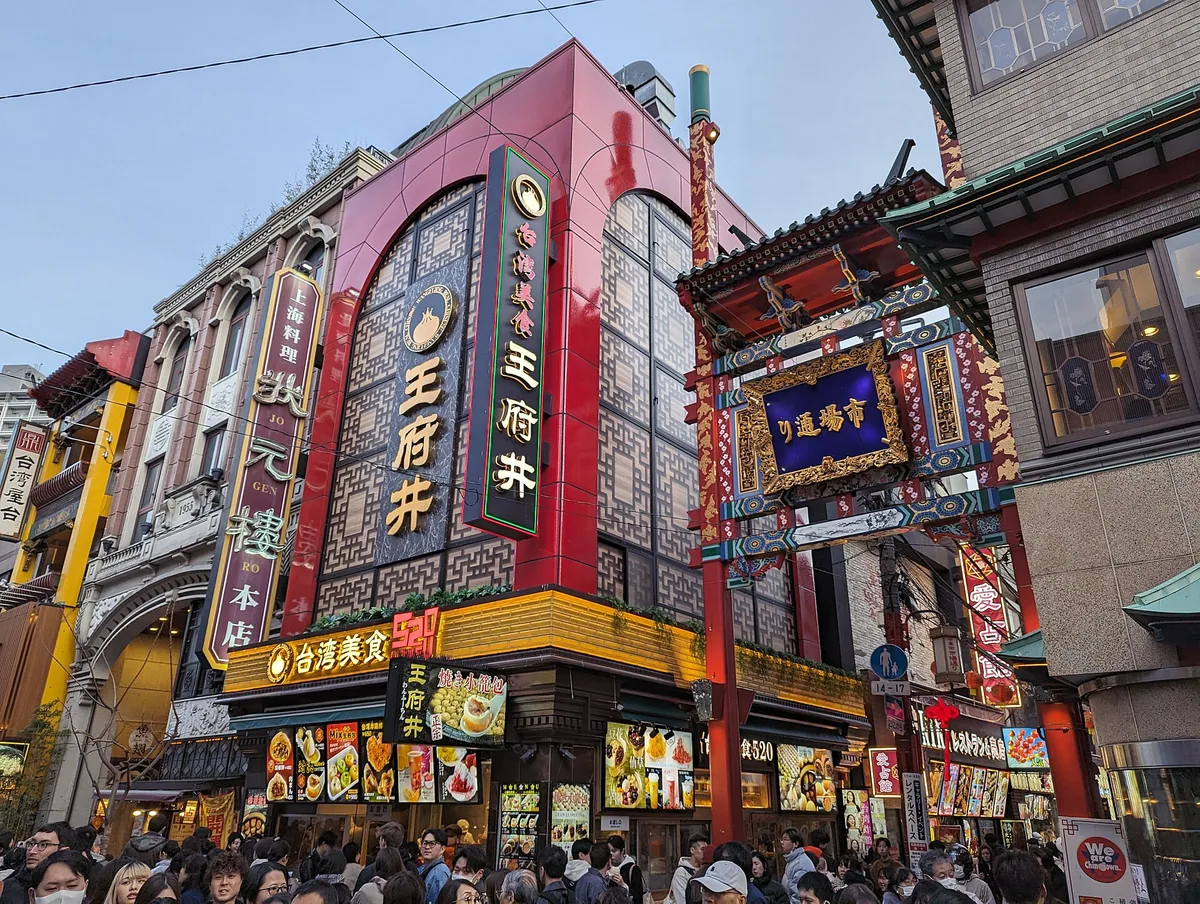
Why go
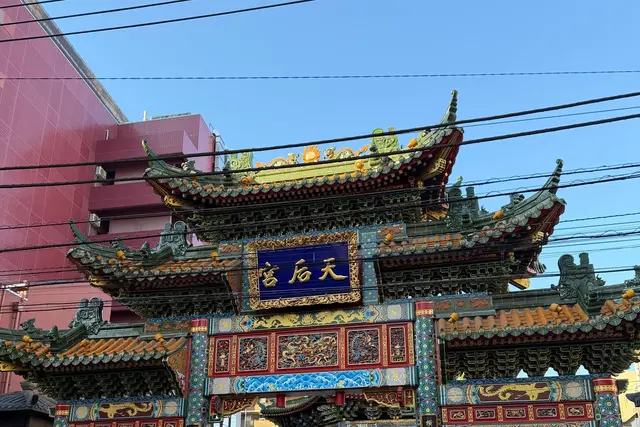
You come to Yokohama Chinatown for the sheer density of it, ten city blocks where nearly every storefront is a steamer basket, a butcher’s window hung with glazed ducks, or a doorway perfumed with five-spice and hot oil. It’s Japan’s largest Chinatown by a wide margin, and it doesn’t try to be subtle about it: vermilion columns, gold dragons, and ornate paifang gates mark the district’s edges, so you always know exactly when you’ve crossed the threshold.
This is a well-trodden tourist attraction, not a quiet corner of the city, and that’s part of what makes it work. The energy is the point.
Getting there
Chinatown sits in Naka Ward, wedged between Yamashita Park and Kannai, and it’s reachable on foot from three different stations. Minatomirai Line’s Motomachi-Chukagai Station puts you almost directly at the Zenrinmon Gate. This is the fastest option if you’re coming from Shibuya or central Tokyo via the through-service trains. Alternatively, JR Ishikawacho Station on the Negishi Line is about a 5-minute walk to the Zenrinmon or Gakushamon gates and is convenient if you’re already on a JR pass route from Yokohama Station (roughly 8 minutes by train).
Either way, you’ll pass under one of the district’s decorative gates before you’ve properly arrived, a small but satisfying threshold moment.
What to see and eat
The whole district is really one long grazing route. Look for the towering red-and-gold Zenrinmon Gate on the western edge and the Chosoyo (Kanteibyo) Temple, dedicated to Guan Yu, tucked mid-district with incense smoke curling up past its carved eaves. It’s worth ten quiet minutes even amid the bustle outside. Street food is the main event: buta-man and other steamed buns sold straight from bamboo baskets stacked shoulder-high, fist-sized xiaolongbao, sesame balls, and stalls doing brisk business in fried takoyaki-style snacks alongside more distinctly Cantonese and Shanghainese fare.
Sit-down restaurants range from no-frills noodle counters to multi-floor banquet halls with lazy Susans built for groups (portions and formality vary wildly street to street, so it pays to peek at a few menus posted outside before committing. Many kitchens specialize by region) Sichuan, Cantonese, Shanghainese, Taiwanese, so if you know what you’re craving, look at the signage rather than just following the crowd.

When to go
Given how popular this place is, timing your visit matters more than almost anything else. Weekday late mornings, before the lunch rush fully builds, are noticeably calmer than weekend afternoons, when the main pedestrian streets can turn into a slow shuffle between snack stalls. Evenings bring their own rhythm, lanterns come on, restaurant frontages glow red and gold, and the crowd shifts from day-trippers to people settling in for a proper sit-down dinner.
If you’re combining Chinatown with Yamashita Park or the Minato Mirai waterfront, doing Chinatown first thing and the park afterward avoids the worst of the midday crush.
How to visit like a local
Skip the impulse to eat the first bun you see at the gate (prices and quality vary block to block, and the stalls immediately at the entrances see the heaviest footfall and priciest snacks. Walk one loop of the main streets first, then double back to whichever stall actually had a line of regulars rather than tour groups. Most food stalls and casual counters expect cash, though larger restaurants increasingly take cards and IC transit cards (Suica/Pasmo) for payment) don’t assume every stall does.
Tipping isn’t expected anywhere in Japan, Chinatown included. If you want a sit-down meal without a wait, arrive right at opening rather than during the busiest lunch hours. The single biggest mistake visitors make is trying to see it all in one rushed pass, better to pick two or three specific dishes you actually want, and let the alleys off the main strip surprise you rather than sticking only to the widest, busiest street.
Nearby
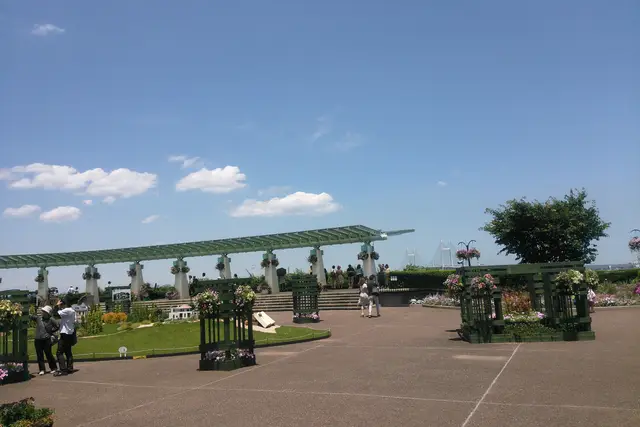
Yamashita Park runs along the harbor just steps from Chinatown’s eastern edge, with views toward the Hikawa Maru ship-museum and Yokohama Bay Bridge. Motomachi shopping street and the Minato Mirai 21 waterfront, with the Cosmo Clock 21 Ferris wheel and Landmark Tower, are both within easy walking or one-stop-train distance, making Chinatown a natural anchor for a full day in this part of Yokohama.
Frequently asked questions
What's the best way to get to Yokohama Chinatown?
Take the Minatomirai Line to Motomachi-Chukagai Station, which exits almost directly at the Zenrinmon Gate, or JR Ishikawacho Station on the Negishi Line, about a 5-minute walk away.
How long should I spend there?
Two to three hours is enough to walk the main streets, snack at a few stalls, and duck into Kanteibyo Temple; add more time if you plan a full sit-down meal.
When is it least crowded?
Weekday late mornings, before the lunch rush, are calmer than weekend afternoons, which get very congested on the main pedestrian streets.
Is Yokohama Chinatown a hidden gem?
No — it's Japan's largest Chinatown and one of Yokohama's most-visited attractions, so it's worth planning around peak hours rather than expecting a quiet, undiscovered spot.
What should I eat there?
Steamed buta-man buns, xiaolongbao, and sesame balls from stalls are the classic street snacks; for a sit-down meal, look at signage to find restaurants specializing in Cantonese, Sichuan, Shanghainese, or Taiwanese cooking.
Plan your trip to Yokohama
Japan eSIM & staying connected →
Some links above are affiliate links — if you book through them, Wander Atlas earns a small commission at no extra cost to you. It's how we keep every guide free.