
Argentina · Region
Purmamarca
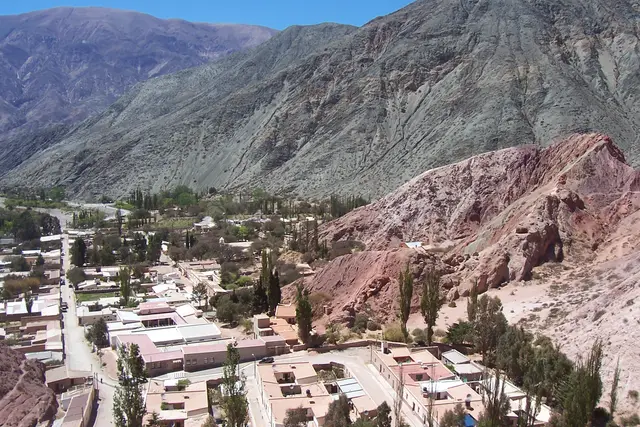
Purmamarca sits at the foot of the Cerro de los Siete Colores, a striated hillside whose bands of red, ochre and green rock have made this tiny adobe village one of the most photographed spots in the Argentine Andes. Its cobbled streets, artisan market and colonial chapel retain a strong Quechua character, even as day trippers pour in from across the Quebrada de Humahuaca.
Top-rated things to do in Purmamarca
Booking links are affiliate links — booking through them supports our free guides at no extra cost to you.
Where to stay in Purmamarca
Compare Purmamarca hotels and stays at the lowest price — deals, ratings, and real traveler reviews.
Search hotels in Purmamarca →Booking links are affiliate links — booking through them supports our free guides at no extra cost to you.
Plan your trip to Purmamarca
Argentina eSIM & staying connected →
Some links above are affiliate links — if you book through them, Wander Atlas earns a small commission at no extra cost to you. It's how we keep every guide free.
When to visit Argentina: month-by-month weather, crowds and holidays →
Frequently asked questions about Purmamarca
How do I get to Purmamarca?
The nearest airport is Jujuy (JUJ), roughly ~60 miles away, from which travellers typically take a taxi, rideshare or transfer (~1 to 1.5 hours) into San Salvador de Jujuy before connecting onward. From the regional bus hub in San Salvador de Jujuy, regular buses to Purmamarca take ~1 to 1.5 hours.
How many days should I spend in Purmamarca?
Most visitors base here for ~1 to 2 days, enough time to walk the circuit around the Cerro de los Siete Colores, browse the market square and use Purmamarca as a springboard for day trips to Salinas Grandes and the wider Quebrada de Humahuaca.
What is Purmamarca known for?
Purmamarca sits at the foot of the Cerro de los Siete Colores, a striated hillside whose bands of red, ochre and green rock have made this tiny adobe village one of the most photographed spots in the Argentine Andes. Its cobbled streets, artisan market and colonial chapel retain a strong Quechua character, even as day trippers pour in from across the Quebrada de Humahuaca.