
Peru · Region
Vinicunca
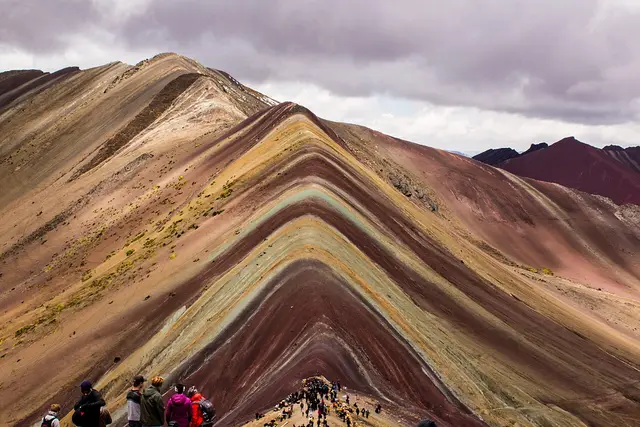
Photo: Diego Aldrin Abanto Ricce / Wikimedia Commons (CC BY-SA 4.0)
Vinicunca, better known as Rainbow Mountain, is a high-altitude ridge in the Cusco region streaked with naturally coloured mineral bands of red, yellow, turquoise and green. Sitting above 5,000 metres in the Vilcanota range near the Ausangate glacier, it has become one of Peru's most photographed natural landmarks after Machu Picchu.
Top-rated things to do in Vinicunca
Booking links are affiliate links — booking through them supports our free guides at no extra cost to you.
Where to stay in Vinicunca
Compare Vinicunca hotels and stays at the lowest price — deals, ratings, and real traveler reviews.
Search hotels in Vinicunca →Booking links are affiliate links — booking through them supports our free guides at no extra cost to you.
Plan your trip to Vinicunca
Peru eSIM & staying connected →
Some links above are affiliate links — if you book through them, Wander Atlas earns a small commission at no extra cost to you. It's how we keep every guide free.
When to visit Peru: month-by-month weather, crowds and holidays →
Frequently asked questions about Vinicunca
How do I get to Vinicunca?
Almost all travellers reach Vinicunca by road from Cusco, usually on an organised day tour that departs before dawn and drives ~3 hours to a trailhead near Cusipata or Pitumarca before the final hike on foot. Independent travel is possible using public minivans from Cusco's regional transport hub to these villages, followed by a local taxi to the trailhead, though logistics are more complex and timings less reliable.
How many days should I spend in Vinicunca?
Vinicunca is typically visited as a single long day trip of ~12 to 16 hours door to door from Cusco, which covers the drive, the ~2 to 3 hour hike to the viewpoint and back, and time to acclimatise beforehand, ideally 2 to 3 days in Cusco first.
What is Vinicunca known for?
Vinicunca, better known as Rainbow Mountain, is a high-altitude ridge in the Cusco region streaked with naturally coloured mineral bands of red, yellow, turquoise and green. Sitting above 5,000 metres in the Vilcanota range near the Ausangate glacier, it has become one of Peru's most photographed natural landmarks after Machu Picchu.