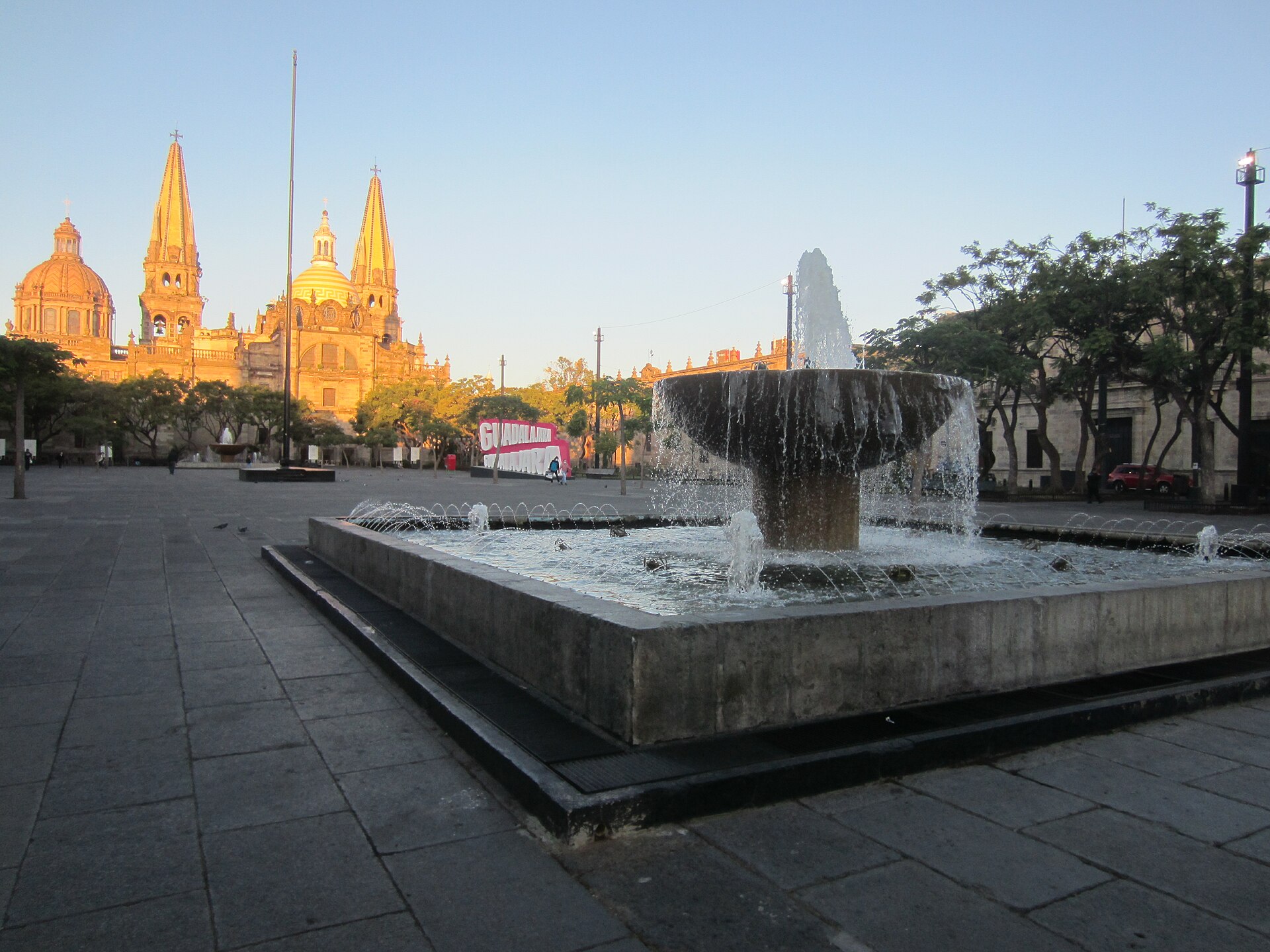
Most Western passport holders can enter Mexico visa-free for tourism and receive an FMM tourist permit on arrival, the peso (MXN) is the only currency that matters day-to-day, and the national emergency number is 911; always double-check current entry rules on the official INM and SRE sites before you fly, since policy details change.
This is a plain-English summary, not legal or medical advice. Entry and visa rules change — always confirm on the official sources linked below before you book or fly.
Climate at a glance
Monthly highs, lows and rainfall in Mexico City · NASA POWER 10-year average
Temperature range Rain Best months
| Month | High °C | Low °C | Rain (mm) |
|---|---|---|---|
| Jan | 20 | 5 | 8 |
| Feb | 23 | 6 | 8 |
| Mar | 25 | 7 | 14 |
| Apr | 27 | 9 | 26 |
| May | 27 | 11 | 58 |
| Jun | 24 | 11 | 139 |
| Jul | 22 | 11 | 152 |
| Aug | 21 | 11 | 170 |
| Sep | 21 | 10 | 148 |
| Oct | 21 | 8 | 65 |
| Nov | 20 | 6 | 24 |
| Dec | 20 | 5 | 6 |
Public holidays
Expect crowds, closures and pricier rooms around these dates.
- Jan1 New Year's DayAño Nuevo
- Feb1 Constitution DayDía de la Constitución
- Mar15 Benito Juárez's birthdayNatalicio de Benito Juárez
- May1 Labor DayDía del Trabajo
- Sep16 Independence DayDía de la Independencia
- Nov16 Revolution DayDía de la Revolución
- Dec25 Christmas DayNavidad
Visa & entry
Mexico’s tourist entry document is the Forma Migratoria Múltiple (FMM), issued by the Instituto Nacional de Migración (INM).
FMM (air arrival)
Airline provides the form; always check stamp/digital record before leaving counter
Stay length varies. The immigration officer decides how many days to grant, from 30 up to the full 180, so check your stamp before leaving the counter.
Rules change often. Rules on nationalities, fees, and permitted stays shift periodically, so confirm with INM or a consulate before booking.
Read the full section
Mexico’s tourist entry document is the Forma Migratoria Múltiple (FMM), issued by the Instituto Nacional de Migración (INM). Citizens of approximately 65 countries can enter Mexico with just the FMM and a valid passport, including nationals of the US, Canada, UK, all EU and EFTA countries, Japan, South Korea, Australia, New Zealand, Singapore, Malaysia, and the UAE. The FMM permits a maximum stay of 180 days, but the immigration officer at the port of entry decides how many days to grant; it could be 30, 90, or the full 180, so always check your stamp or digital record before leaving the counter.
If you arrive by air, the airline includes the fee in the ticket and provides the form to the passenger. By land, stays of seven days or fewer are free, though you still need to process the form at the INM office, while longer land stays cost roughly 983 MXN (about 57 USD).
Even if your nationality normally requires a Mexican visa, holding a valid visa from the US, Canada, the UK, Japan, or any Schengen country lets you enter Mexico visa-free for up to 180 days, and you will still receive the FMM on arrival. A valid passport with at least six months of remaining validity is standard practice to carry.
Rules on nationalities, fees, and permitted stays shift periodically, so confirm your specific situation directly with the Instituto Nacional de Migración (INM) or your nearest Mexican consulate before booking, rather than relying solely on third-party blogs.
Getting around
Mexico City’s public transport is cheap and extensive. The Metro runs on a flat ride cost of MXN 5.00, including transfers that stay inside the Metro paid area.
The Metro runs on a flat ride cost of MXN 5.00, including transfers within the paid area.
Transfers are free between Metrobús Lines 1 through 7 within the first two hours in a single direction; Metro to Metrobús transfers are not free.
Reach downtown via Metro Línea 5 near Terminal 1 arrivals, or Metrobús Línea 4 from Terminal 1 gate 7 or Terminal 2 gate 2.
Read the full section
Mexico City’s public transport is cheap and extensive. The Metro runs on a flat ride cost of MXN 5.00, including transfers that stay inside the Metro paid area. Payment now runs almost entirely on the Tarjeta de Movilidad Integrada (MI card), which costs MXN 15.00 before stored value is added and is sold at ticket windows. The same card offers interoperability with the Metro, Metrobús, Ecobici, Cablebús, Light train, RTP, and Trolebús systems. Metrobús (the bus rapid transit network) charges about 6 pesos a ride, and transfers are free between Metrobús Lines 1 through 7 if completed within the first two hours of entering the system and in a single direction, though Metro to Metrobús transfers are not free; you pay each system separately.
Landing at Mexico City’s airport, you can reach downtown via Metro Línea 5 from a station a short walk from the Terminal 1 arrivals hall, at the same flat fare as anywhere else on the network, or via Metrobús Línea 4, boarding at Terminal 1 gate 7 or Terminal 2 gate 2, running toward the Centro Histórico and Paseo de la Reforma.
Outside the capital, intercity travel relies heavily on comfortable long-distance buses, domestic flights between major cities, and ride-hailing apps such as Uber and Cabify, which operate widely in cities and resort zones. On toll highways, a free roadside-assistance patrol (the “Green Angels”) is available if you break down; see the Emergencies section below.
Money & costs
Stick to bank-affiliated machines like Citibanamex, HSBC, BBVA, Banorte, or Santander, ideally during the day and attached to a branch.
Selecting your home currency lets the ATM's bank choose the exchange rate, which increases fees; always pay in MXN for better rates.
Smaller shops, markets, taxis, and rural areas still run largely on cash, so keep pesos on hand.
Debit cards are widely accepted in urban/tourist areas, but American Express is accepted noticeably less than Visa or Mastercard.
Read the full section
The Mexican peso (MXN) is the national currency, shown with the $ symbol. Card acceptance has grown steadily: debit cards are widely accepted in urban areas and tourist destinations, with restaurants, hotels, and retail stores commonly taking Visa and Mastercard, though American Express is accepted noticeably less than Visa or Mastercard. Smaller shops, markets, taxis, and rural areas still run largely on cash, so keep pesos on hand.
For withdrawals, stick to bank-affiliated machines. Use bank ATMs like Citibanamex, HSBC, BBVA, Banorte, or Santander, ideally during the day and attached to a branch. At the machine, selecting your home currency lets the ATM’s bank choose the exchange rate, which increases fees; to get better rates, always pay in Mexican pesos (MXN). Typical bank ATM fees run roughly 30 to 55 pesos per withdrawal, with standalone kiosk machines charging considerably more. As a rough guide, as of August 2026, one US dollar buys around 17 pesos, with the rate moving between roughly 17 and 18.8 over the preceding twelve months, so check the current rate before you budget. US dollars are not a reliable substitute for pesos outside a few heavily touristed strips, so plan to spend in local currency.
Best time to visit
The best time to travel to Mexico is during the dry season between November and April, when the weather is at its sunniest and driest, making it ideal for beaches, colonial towns, and archaeological sites.
Dry seasonBeaches, colonial towns, archaeological sites
- Jan · Best
- Feb · Best
- Mar · Best
- Apr · Best
- May
- Jun
- Jul
- Aug
- Sep
- Oct
- Nov · Best
- Dec · Best
Shoulder seasonLower prices, fewer crowds, possible afternoon showers
- Jan
- Feb
- Mar
- Apr
- May · Best
- Jun
- Jul
- Aug
- Sep
- Oct · Best
- Nov · Best
- Dec
Best
Read the full section
The best time to travel to Mexico is during the dry season between November and April, when the weather is at its sunniest and driest, making it ideal for beaches, colonial towns, and archaeological sites. This is also peak season, so expect soaring prices and hectic crowds, especially during the holidays in December and February.
September marks the start of the peak hurricane season in Mexico and is also the wettest month, with average humidity above 80% and frequent rain, particularly on the Gulf, Caribbean, and Pacific coasts. If you want lower prices and fewer crowds and can tolerate afternoon showers, the shoulder months of May and late October to early November offer a reasonable compromise, and early November also brings Día de los Muertos celebrations around the country.
Emergencies & safety
Fastest response for police, fire, or medical situations anywhere in the country
Roadside issues or tourist assistance, English-speaking operators
For non-emergency, non life-threatening situations
Carry travel medical insuranceKeep embassy contact details handyWrite hotel address in SpanishCare isn't automatically free
Read the full section
911 is Mexico’s national emergency number and will give you the fastest response for police, fire, or medical situations anywhere in the country. For roadside issues or tourist assistance, you can also dial 078 to reach The Green Angels, a service with English-speaking operators, funded by Mexico’s tourism authority to help travelers on highways.
For non-emergency help in the capital, LOCATEL is Mexico City’s information and help line, with operators prepared to address any non-emergency, non life-threatening situation. Be aware that emergency care is not automatically free for everyone; uninsured travellers and short-term visitors are typically billed, frequently before treatment begins, so travel medical insurance is strongly recommended. Keep your embassy’s contact details and your hotel address written in Spanish in case you need to describe your location by phone.
Official sources
- Instituto Nacional de Migración (INM), entry rules and FMM
- Secretaría de Relaciones Exteriores (SRE), Mexican visas and consulates
- VisitMexico, official national tourism board
- Sistema de Transporte Colectivo Metro, Mexico City
- Mexico City Government, emergency numbers and services
- Banco de México (Banxico), official exchange rates
AI-assisted and web-researched, reviewed against official sources on October 4, 2026. Rules and prices change — verify on the official links above. See our Editorial policy.