Parador de Alcañiz: Travel Guide
✓ Facts verified via Google Places · Aug 9, 2026
At a glance
How this guide is made
Produced with AI assistance and reviewed against live data sources. Facts such as hours, ratings, and location come from Google Places; images are licensed or public domain. Details can change — please verify before visiting. Editorial policy
Why go
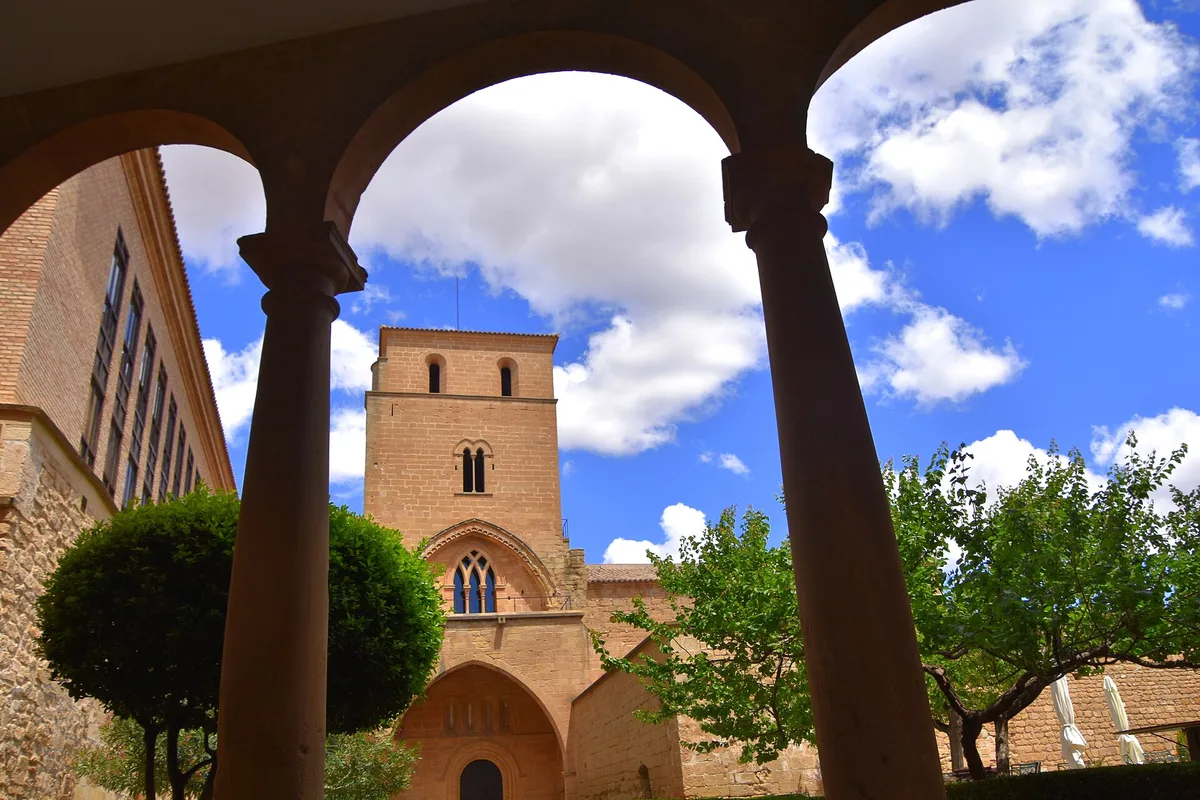
You see it long before you reach it: a squared-off tower and crenellated walls rising off a bare hill above the Guadalope river valley, visible from the highway approach into Alcañiz like something dropped out of a history book. This is the old castle of the Order of Calatrava, built on the bones of a Muslim fortress and later reworked with a Renaissance palace wing and a Gothic-Mudéjar church tower, and since the mid-20th century, it’s been one of Spain’s state-run Parador hotels.
You don’t need to be a guest to feel the pull of the place; you can simply walk the ramparts at dusk. But staying inside the thick stone walls, in a room that was once a monastic cell or a knight’s quarters, is the real reason people detour here on the way between Zaragoza and the Mediterranean coast.
Getting there
Alcañiz sits in Teruel province, roughly 90 minutes by car from Zaragoza and about the same from Tarragona on the coast, via the A-222 and N-232 roads. There’s no train station in town with direct high-speed service, so almost everyone arrives by car. A rented one is genuinely the practical choice here, since the Parador sits on La Almunia hill on the edge of town, a steep, signposted climb up from the old quarter that isn’t realistic on foot with luggage.
If you’re coming by intercity bus from Zaragoza or Teruel city, you’ll land in the town center and need a short taxi ride up to the castle. Once you’re up there, the panorama does the convincing: red-tiled rooftops, the Baroque collegiate church of Santa María la Mayor, and the dry, ochre hills of the Bajo Aragón stretching out below.

What to see and do
The building itself is the attraction. Wander the courtyard where the old cloister arches still stand, and look up at the octagonal Torre del Homenaje, the keep that dominates the skyline for miles. Inside, the hotel has kept coffered ceilings, heavy wooden beams, and thick stone archways rather than smoothing them into anonymous luxury, the lobby and social rooms read more like a small museum you’re allowed to sit in.
The restaurant serves regional Aragonese cooking, served in a dining room with those same vaulted ceilings. There’s a garden terrace for a slower coffee or drink, with views over the valley that are worth timing for the last hour of daylight. Down in Alcañiz proper, a 15–20 minute walk or short drive away, the Plaza de España is anchored by the Lonja (old exchange) and the Ayuntamiento, both worth an hour of wandering before or after your stay.
When to go
Spring (April–June) and early autumn (September–October) are the most comfortable stretches, summer in this part of Aragón gets properly hot, with the stone hill offering little shade, while winter can be sharply cold and foggy in the valley below. Because the hotel operates year-round, there’s no risk of arriving to closed doors, but restaurant service hours are narrower than the front desk’s, so confirm dinner timing when you book rather than assuming you can walk in late.
How to visit like a local
This is a well-known Parador, not an undiscovered find, so the way to make it feel personal is in timing, not secrecy. Reserve your room and your dinner table in advance, especially around weekends and any local festival dates, since Paradores in smaller towns fill up fast with both tourists and regional visitors marking anniversaries or celebrations. Payment and check-in run exactly like any international hotel, card is standard, and a modest tip for restaurant staff is appreciated but not obligatory in Spain.
The mistake most visitors make is treating the Parador purely as a drive-through photo stop: instead, walk down into Alcañiz itself at least once, since the town’s medieval streets and the Lonja are easy to overlook if you never leave the hill. Ask staff to point you to the terrace or ramparts around sunset. That’s when the stone changes color and the valley below empties of the day’s heat, and it costs nothing beyond a few minutes of your evening.
Frequently asked questions
How do I get to Parador de Alcañiz without a car?
It's difficult — the hotel sits on a hill outside town, so if you arrive by bus in central Alcañiz, take a short taxi ride up rather than walking with luggage.
Is it worth visiting if I'm not staying overnight?
Yes — non-guests can walk the exterior grounds and ramparts, and the bar and restaurant are open to visitors, though a table is best booked ahead.
What's the best time of day to visit?
Late afternoon into sunset, when the stone tower catches the light and the valley view from the terrace is at its best.
How far is it from Zaragoza or the coast?
About 90 minutes' drive from Zaragoza and a similar distance from the Tarragona coastline, making it a natural stopover between the two.
What else is nearby worth combining with a stay?
The old town of Alcañiz, a 15–20 minute walk or short drive downhill, has the Plaza de España, the Lonja exchange building, and the Ayuntamiento worth an hour or two of exploring.
Plan your trip to Alcañiz
Some links above are affiliate links — if you book through them, Wander Atlas earns a small commission at no extra cost to you. It's how we keep every guide free.