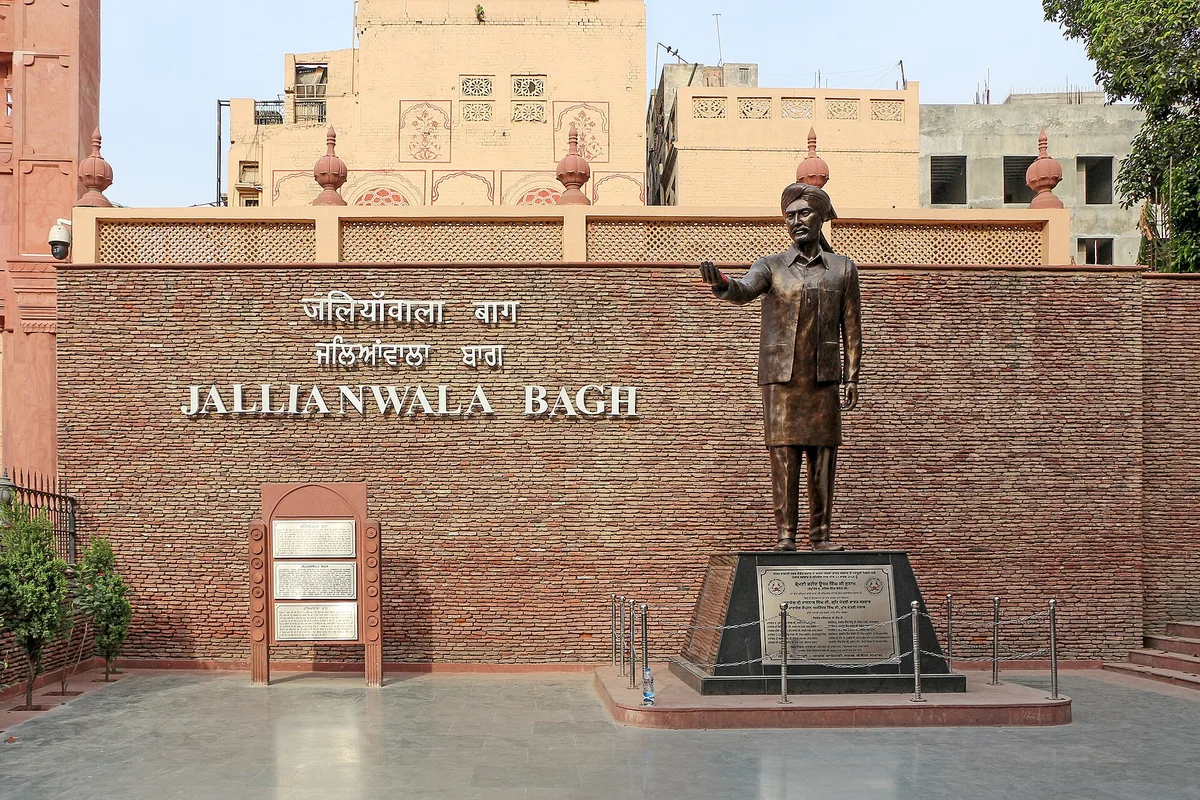
You enter through a narrow brick passage, the same lane thousands walked through in 1919, and the noise of the bazaar behind you drops away almost instantly. That corridor is the point: it’s still too tight for more than a few people abreast, and standing in it is the first thing that makes this place land differently than a typical city park.
Inside, the garden opens up green and quiet, bounded by the original brick walls of the old city. Bullet marks are still visible in the brickwork, fenced off and labeled. A well on the grounds marks where many fleeing the gunfire jumped to escape and drowned. None of this is dressed up or dramatized. It’s plain, preserved, and left to speak for itself.
Why it matters
On April 13, 1919, British troops under General Reginald Dyer opened fire on an unarmed crowd gathered here for a peaceful protest and Baisakhi celebrations, killing hundreds in a walled space with almost no exits. It’s remembered as a turning point in India’s independence movement. The eternal flame memorial and a museum documenting the events sit within the same grounds.
Getting there
Jallianwala Bagh sits just off Golden Temple Road in the Katra Ahluwalia area, close enough to the Golden Temple that most visitors walk between the two in a few minutes. If you’re coming from further out, an auto-rickshaw to the Golden Temple complex drops you within easy walking distance. The old-city lanes here are pedestrian and cycle-rickshaw only, so budget a short walk regardless of how you arrive.
What to see inside
Give yourself 45 minutes to an hour to walk the full grounds without rushing.
- The narrow entry lane, kept in its original width
- The bullet-marked wall, glassed and signposted
- The Martyrs’ Well
- The eternal flame and central memorial structure
- A gallery/museum space with photographs and documentation of the events
Entry to the garden itself is free. It’s a well-maintained public memorial, not a commercial attraction, so don’t expect ticket booths or gift shops pushing you through.
When to go
The garden is open daily from 9am to 5pm. Crowds build steadily through the morning and stay heavy from 11am until closing, especially on weekends, so if you want space to actually read the plaques and sit with the place, arrive right at opening. Weekday mornings between 9am and 11am are consistently the quietest window. Late afternoon light through the trees is worth seeing too, but you’ll be sharing it with far more people.
Pair the visit with the Golden Temple, either just before or after. Many people do both in one loop through the old city, and the contrast between the two sites is part of what makes the walk memorable.
How to visit like a local
This is one of the most-visited memorial sites in India, so the etiquette here is less about being unnoticed and more about being respectful in a crowd.
- Keep your voice down; it’s a memorial, not a photo backdrop, even though photos are allowed
- Skip the busy 11am–5pm stretch if you can, especially on weekends when it’s at its fullest
- Wear shoes you don’t mind walking in, paths are uneven brick and gravel in places
- There’s no entry fee, so you don’t need cash for a ticket, though small donations or purchases at the museum shop are sometimes card-only, so carry some rupees anyway
- Read the informational plaques rather than just the well and flame, the museum section gives context most visitors skip
- The biggest mistake tourists make is treating it as a five-minute stop between Golden Temple photos. Slow down here; it rewards a proper hour, not a quick pass-through.
Combine the visit with nearby Partition Museum at Town Hall, a ten-minute walk away, if you want the fuller historical picture of Amritsar’s role in India’s 20th-century history before or after seeing the Golden Temple itself.
Frequently asked questions
Is there an entry fee for Jallianwala Bagh?
No, entry to the memorial garden is free for all visitors.
How long should I spend there?
Plan on 45 minutes to an hour to see the well, bullet-marked wall, eternal flame, and museum gallery without rushing.
When is it least crowded?
Weekdays between 9am and 11am are the quietest; try to avoid 11am to 5pm, especially on weekends, when it's busiest.
How close is it to the Golden Temple?
It's about a 2-3 minute walk away, off Golden Temple Road in the old city, and most visitors combine both in one trip.
What are the opening hours?
Jallianwala Bagh is open daily from 9:00 AM to 5:00 PM, with no weekly closing day.
Plan your trip to Amritsar
Some links above are affiliate links — if you book through them, Wander Atlas earns a small commission at no extra cost to you. It's how we keep every guide free.
Related guides
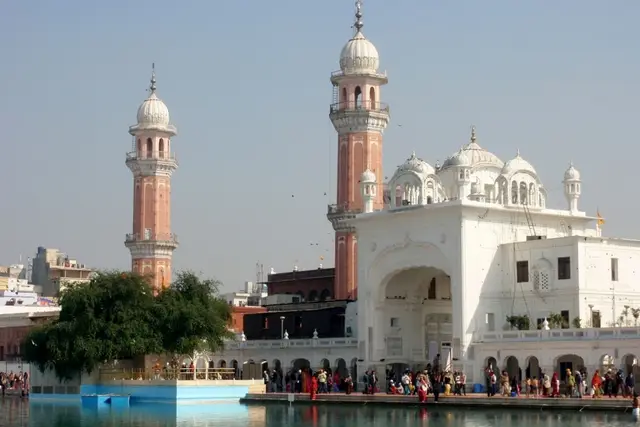 attraction
 Ramgarhia Bunga: Amritsar Travel Guide
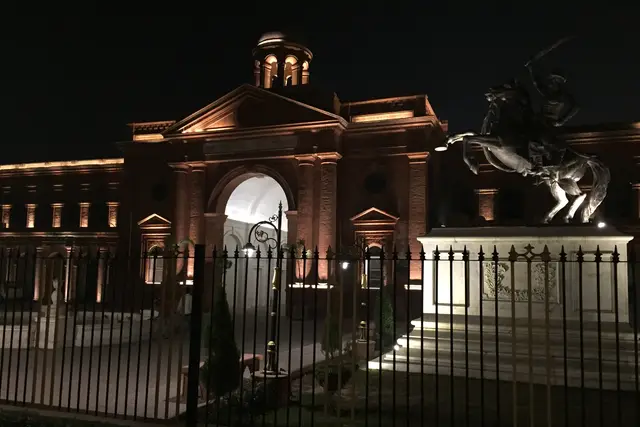 attraction
 The Partition Museum: Amritsar Travel Guide (4.6★)
 hidden gem
 Sri Harmandir Sahib: Amritsar Travel Guide (4.9★)
 attraction