Aomori Nebuta Matsuri: What to Know (Aomori)
How this guide is made
Produced with AI assistance and reviewed against live data sources. Facts such as hours, ratings, and location come from Google Places; images are licensed or public domain. Details can change — please verify before visiting. Editorial policy
Why go
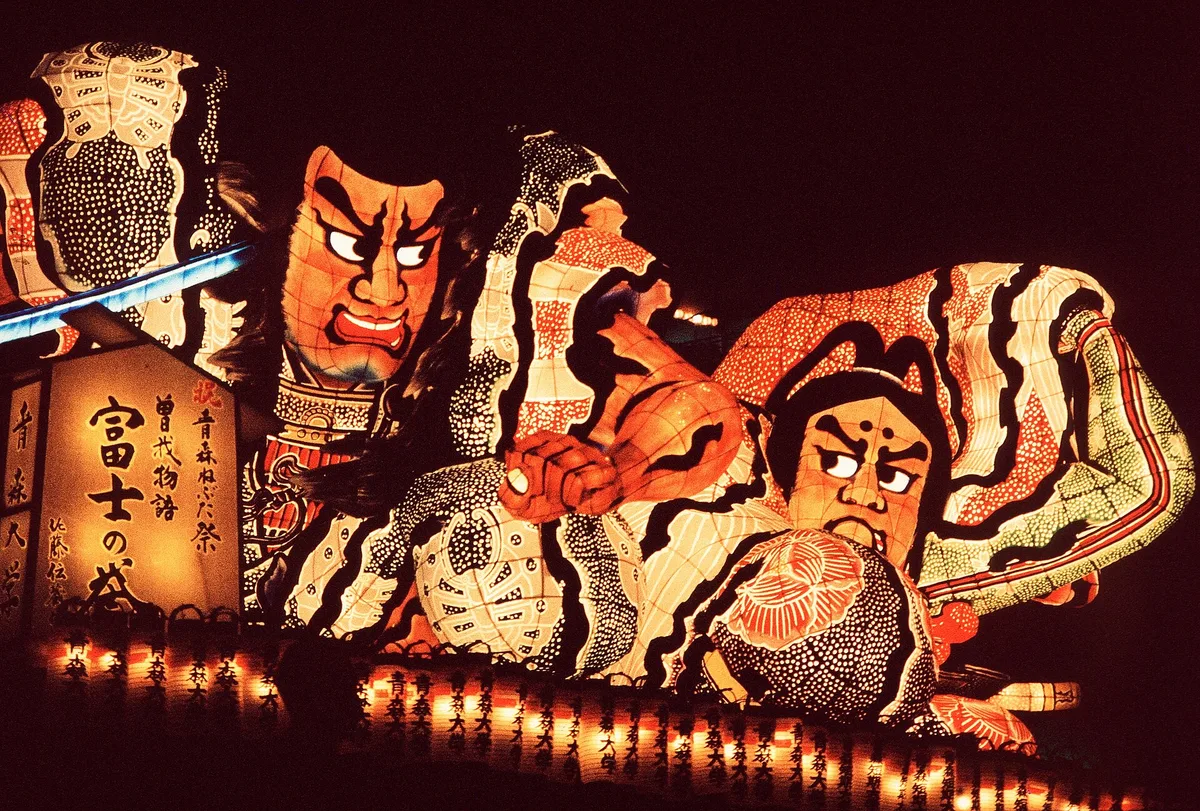
Nothing else in Japan’s summer festival calendar quite matches the scale of the nebuta floats. These are not paper lanterns. They’re room-sized, wire-framed, washi-paper sculptures of snarling warriors, deities, and kabuki figures, lit from within and rolled through the streets after dark so the whole thing glows like a lantern the size of a bus. Add a few thousand haneto dancers in bright orange-and-gold costumes hopping and chanting “rassera, rassera,” plus taiko drums and flutes bouncing off the buildings, and you get one of the loudest, most physically overwhelming festival nights in the country.
It’s the kind of event that makes sense of why Aomori’s tourism identity is built almost entirely around one week in August.
Getting there
Aomori City sits at the northern tip of Honshu, reachable by Tohoku/Hokkaido Shinkansen to Shin-Aomori Station, then a short local train ride into central Aomori Station. The festival’s parade route runs right through downtown, an easy walk from the station. From Tokyo, the shinkansen trip runs roughly 3–3.5 hours. During festival week, trains and hotels in and around Aomori fill up fast, and rooms and shinkansen seats go early; some visitors base themselves in nearby Hirosaki or on Aomori’s outskirts and day-trip in.
What to see
The floats themselves are the headline: each one is built by a local team over months, often depicting a scene from mythology or classical theater, with articulated jaws, rolling eyes, and layers of pigment that seem to shift color as the light inside moves. During the evening parades they’re pulled through a set route in central Aomori, rotated by handlers so the crowd sees every angle, while haneto dancers weave around them.
Beyond the parade, there’s the Nebuta Warasse museum near the waterfront, which displays prize-winning floats from past years and lets you get close enough to appreciate the papercraft and lacquer-like painting that’s impossible to see properly from a packed sidewalk at night. The daytime version of the festival, when floats are shown lit but stationary, shows off the artistry without the crowd crush of the night parade.
When to go
The festival was set for August 2–7, 2026. Early evenings in the first few days of the run tend to be a touch less packed than the final nights and the closing awards parade, which typically draws the biggest crowds of the week. Exact parade start times, the route map, and the closing-night details can shift slightly year to year, and the festival organisers set them for each edition.
How to visit like a local
Free standing-room viewing is possible along much of the parade route, but locals who want a guaranteed spot stake out curbside space well before the parade start. Many bring something to sit on, since it means a long stretch on the pavement. Paid seating exists in bleacher sections and goes early; for anyone who wants to sit rather than stand, that’s the piece to sort out first.
Cash still gets used heavily at festival food stalls (yatai) lining the streets, and card payment isn’t a given. Haneto costumes can typically be rented on the day and anyone is allowed to dance in the parade. It’s one of the few big Japanese festivals where spectators are actively invited to jump in.
The etiquette mistake first-timers make is treating it like a static show: floats and dancers move continuously and crowds shift with them, and blocking a handler’s sightline near a float can get you moved along by staff. Evenings are hot and humid, and the crowds are dense enough that small children or anyone uncomfortable in tight spaces do better at the edges of the route than in the center near the floats.
Nearby to pair with your trip
Aomori City makes a natural base for exploring Aomori Prefecture beyond the festival, Hirosaki, roughly 40 minutes away by train, has its own castle park and a quieter, more traditional feel, while Lake Towada and the Oirase Gorge are popular half-day or full-day trips for travelers extending a stay around the festival dates.
Frequently asked questions
What are the exact dates for the 2026 festival?
August 2–7, 2026. That gave six evenings of parades in central Aomori, with the closing awards parade on the last night.
How do I get to the festival from Tokyo?
Take the Tohoku/Hokkaido Shinkansen to Shin-Aomori Station (about 3–3.5 hours from Tokyo), then a short local train to Aomori Station, which is within walking distance of the parade route.
Do I need tickets to watch the parade?
No ticket is needed for the free curbside viewing along much of the route. Paid grandstand seating is also part of the festival, sold in bleacher sections, and it typically goes early.
Which night is least crowded?
The earlier evenings in the run (closer to August 2–3) tend to be somewhat less packed than the final nights, especially the closing awards parade, which draws the largest crowds of the week.
Can I dance in the parade as a visitor?
Yes — haneto dancer costumes are typically available to rent on the day, and joining the dance line is open to visitors, not just locals, making it one of the more participatory major festivals in Japan.
Plan your trip to Aomori
Some links above are affiliate links — if you book through them, Wander Atlas earns a small commission at no extra cost to you. It's how we keep every guide free.