A colonial village on a suburban park
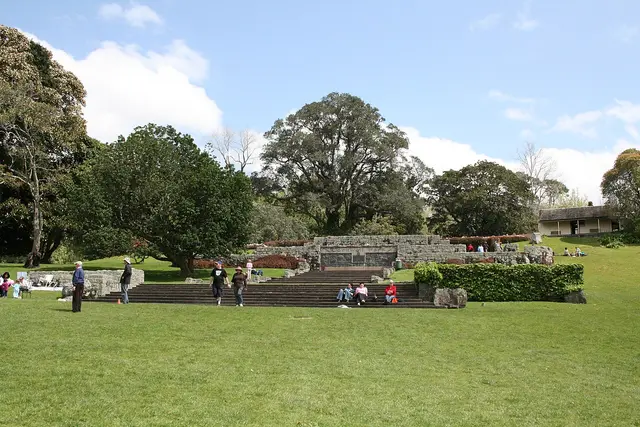
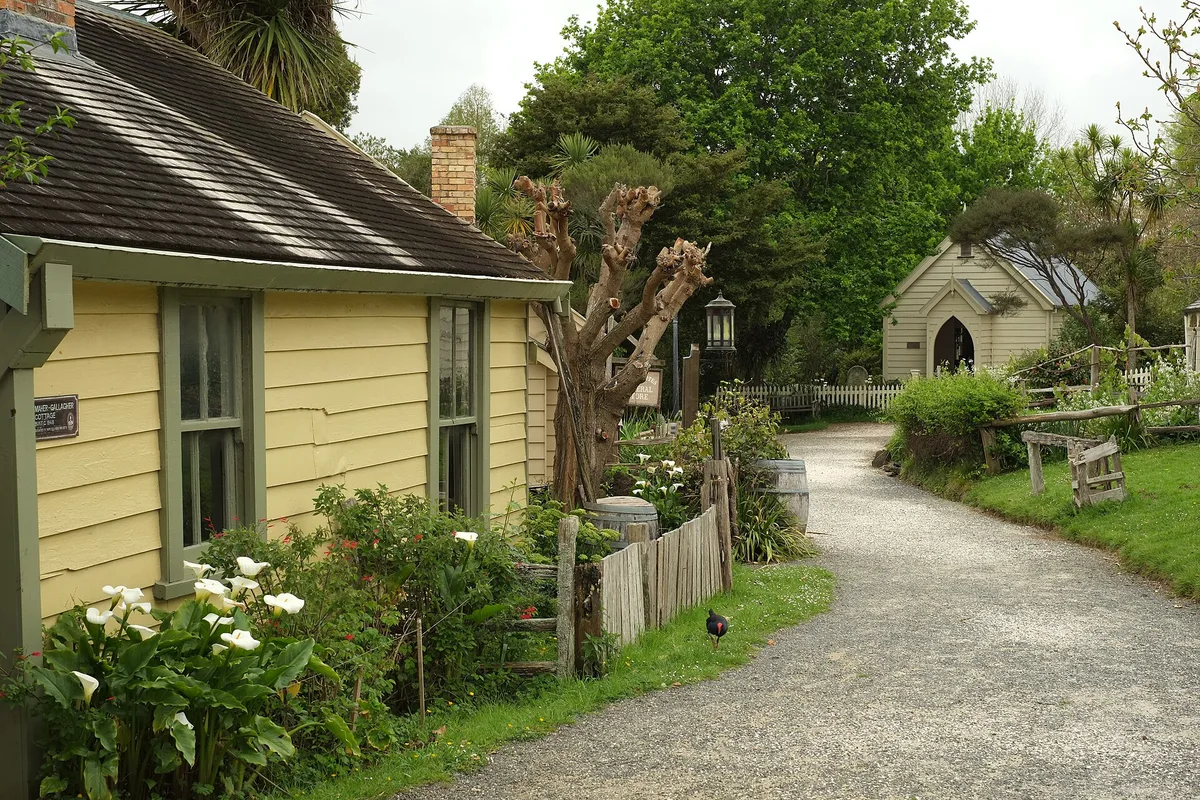
Sports fields surround it on every side. You reach Howick Historical Village through Lloyd Elsmore Park in Pakuranga, past the playing fields and car parks of ordinary east Auckland. Then a gate opens onto gravel paths, timber buildings and picket fences. These are the buildings of a settlement that would have stood here in the mid-1800s.
The village is a recreation built from real buildings. They are period cottages, a schoolhouse and stores, gathered and arranged so you can walk from one doorway to the next. Inside, the rooms hold what colonial households and shopkeepers actually used, and display cases show period clothing and everyday artefacts.
It stays under the radar for most visitors to Auckland, who head for the waterfront and the volcanic cones instead. That is part of the appeal. Visitors consistently rate it highly, and it never gets the coach-tour traffic of the city’s big attractions.
Why the cottages belong to soldiers
Howick began as a military settlement. From 1847, retired British soldiers of the Royal New Zealand Fencible Corps were settled with their families around Auckland: at Howick, Onehunga, Panmure and Otahuhu. They formed a defensive ring for the young town. In return they got a cottage and a plot of land.
The village tells that story through its buildings. It covers roughly the decades from the 1840s to the 1880s. You can see how a Fencible family lived in a couple of small rooms, what children learned in the colonial classroom, and what a settler could buy at the store.
Read the interpretation panels as you go. They connect each building to the families who arrived on the Fencible ships. Without them, the village is a pretty set. With them, it becomes a social history of the eastern suburbs you drove through to get here.
The Friday and Saturday evening switch
The current schedule has a quirk worth planning around. At the moment the village opens 10am to 4pm on Tuesday, Wednesday, Thursday and Sunday. On Friday and Saturday it opens only in the evening, from 5pm to 9pm, and on Monday it is closed.
That means you cannot turn up on a Saturday morning expecting to get in. The evening sessions suggest special events, which the village runs through the year. They also suit a visit after work or after a day elsewhere in Auckland.
Museums like this change their hours with the season and around public holidays, so treat this week’s pattern as a snapshot. Check the official Howick Historical Village website for this month’s hours and any event bookings before you set off.

Getting to Lloyd Elsmore Park
The address is Lloyd Elsmore Park, Bells Road, Pakuranga. Driving is the simplest option. The park has parking, and depending on traffic the trip from central Auckland usually takes around half an hour via the south-eastern routes.
On public transport, head for Pakuranga. The Eastern Busway links Panmure train station with Pakuranga town centre. From there, local buses run through the surrounding streets, or it is a manageable walk if you don’t mind suburban footpaths. Check Auckland Transport’s journey planner for the current connection to Bells Road.
Pacing a visit
Allow two to three hours. That is enough to step inside most buildings, read the panels and spend time in the classroom and store without rushing. Families with younger children often take longer, because the open green and the buildings you can enter keep kids moving rather than queueing.
What to bring:
- A hat and water for summer, as you spend much of the visit outdoors moving between buildings
- A layer for evening sessions, when the park cools quickly
- Shoes that handle gravel and grass after rain
The busiest measured window is weekends from 10am to 4pm. Try not to arrive in the middle of a Sunday if you want the cottages to yourself. A Tuesday, Wednesday or Thursday visit avoids that weekend peak entirely.
Moving through the village with the volunteers
Much of the village runs on volunteers, and on event days some appear in period dress. Ask them questions. They usually know the history of individual buildings and the families attached to them, and that knowledge is the best thing the village offers.
A few habits help:
- Treat the interiors as museum rooms, even where they look lived-in: look, don’t handle, unless a volunteer invites you to
- Pay by card or EFTPOS as you would anywhere in New Zealand; tipping is not expected
- Check whether evening and special events need booking ahead, since numbers can be limited
- Current admission is posted on the official website and at the entrance
If you visit with children, the colonial classroom is the room to linger in. The bench seating and slates make the gap between their school day and an 1850s one obvious without anyone needing to explain it.
After the gate: Howick and the eastern bays
The Fencible story continues a short drive east in Howick itself, the township the soldiers settled. Its main street sits close to the water. Beyond it are the sheltered beaches of Cockle Bay and Mellons Bay, a good place to end the afternoon after a morning in the village.
Lloyd Elsmore Park is worth a wander too. Its wide open fields are where east Auckland plays weekend sport, and they make the timber village beside them feel even more like a step sideways in time.
Frequently asked questions
When is the quietest time to visit Howick Historical Village?
No quiet window has been measured, but the busiest one has: weekends from 10am to 4pm. To avoid it, visit Tuesday to Thursday during the current 10am to 4pm opening.
What days is Howick Historical Village open?
This week it opens Tuesday, Wednesday, Thursday and Sunday from 10am to 4pm, and Friday and Saturday evenings from 5pm to 9pm. It is closed Monday. Hours change seasonally and for events, so check the official website first.
How do I get to Howick Historical Village?
It is in Lloyd Elsmore Park on Bells Road, Pakuranga, east Auckland, and has parking. By public transport, take the Eastern Busway from Panmure station to Pakuranga, then use a local bus or walk.
How long should I spend there?
Allow two to three hours to enter the cottages, schoolhouse and stores and read the displays. Families with children often stay longer.
What is nearby?
Howick township, settled by the Fencible soldiers, is a short drive east. So are the beaches of Cockle Bay and Mellons Bay.
Plan your trip to Auckland
New Zealand eSIM & staying connected →
Some links above are affiliate links — if you book through them, Wander Atlas earns a small commission at no extra cost to you. It's how we keep every guide free.