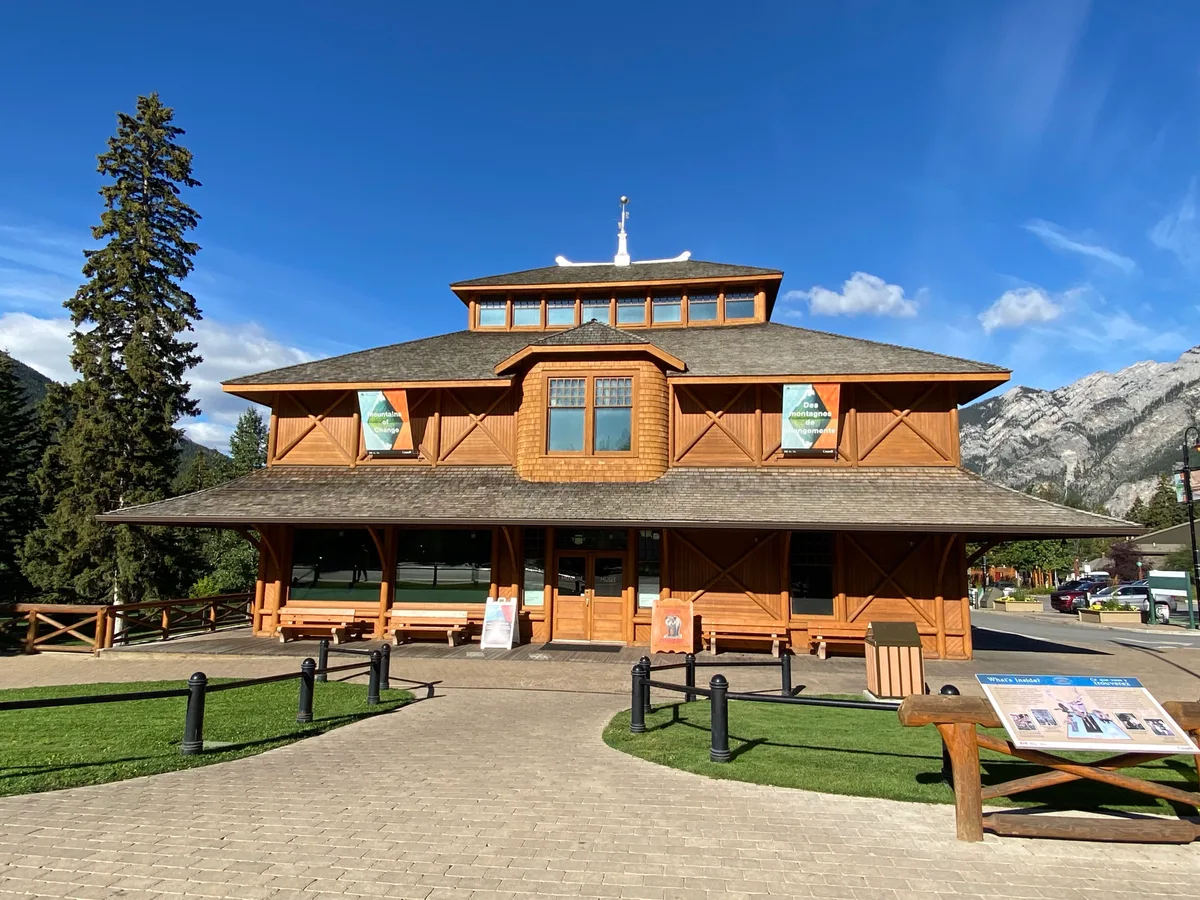
Two painters and a block off Banff Avenue
Banff Avenue sells fudge and fleece. Walk one block west to Bear Street and the town starts telling you how it got here.
The Whyte is the museum Peter and Catharine Whyte left behind. Both were painters. Peter grew up in Banff and Catharine came from New England. They met at art school in Boston and spent their working lives painting, photographing and collecting the Rockies. Their foundation became the Whyte Museum of the Canadian Rockies, and it still sits on the land where they lived.
It’s a small museum, and the scale is the point. You get a few galleries of mountain art, a run of exhibits about the people who opened this valley, and the actual houses they lived in. It’s under the radar compared with the gondola and the hot springs. Most visitors stroll past on their way to the river without ever going in.
Paint, glaciers and the people who climbed them
The galleries come first. Expect landscape painting of the Rockies: peaks, lakes and glaciers painted by artists who knew these mountains well. The rotating exhibitions change through the year, so what hangs on the walls on your visit may not be what a friend saw last summer.
The heritage side covers the human story of the range:
- early guides, outfitters and mountaineers
- the arrival of the railway and the first tourists
- Indigenous presence in the Bow Valley
- the town’s growth from a railway stop into a resort
Behind the public rooms sit the Archives of the Canadian Rockies. This is one of the deepest collections of photographs and papers on the region. Researchers use it by arrangement. If you’re tracing a family link to early Banff, ask at the front desk how access works.
The log homes on the Whyte’s own ground
This is what sets the Whyte apart from a standard regional museum. Preserved on the property are early Banff homes and cabins. They include the log house Peter and Catharine built and lived in for decades.
Walking through a lived-in pioneer-era home tells you more about mountain life than a display case can. You see how small the rooms are and how the windows frame the view. You see what it took to stay warm here through a Rockies winter. The cabins show the simpler end of the same story.
Access to the heritage homes is usually by guided tour. Tours run on a schedule that changes with the season. Check the museum’s official website or ask at the desk when you arrive, and book your gallery visit around the next tour time rather than the other way round.

Beating Banff’s weekend afternoon crush
Timing matters more here than the museum’s size suggests. Banff town fills fast on weekends, and the Whyte gets its share.
On weekdays it’s calmest from 10am to 12pm. On weekends the quiet window is short, just 10am to 11am. Try not to arrive between 12pm and 5pm on a Saturday or Sunday; that’s when the galleries are busiest and tour spots go first.
At the moment, the museum is open 10am to 5pm every day of the week. Museum hours in Banff shift through the year and around holidays, so check the official site for this month’s schedule. Plan for 1.5 to 2 hours if you’re doing the galleries and a heritage home tour. An hour covers the galleries alone.
Getting to Bear Street
The address is 111 Bear St, a parallel street one block west of Banff Avenue. Bear Street is the quieter of the two, with the Banff Public Library right beside the museum.
- On foot: from the central stretch of Banff Avenue, turn west at Caribou Street or Buffalo Street and you’re there in a few minutes.
- By bus: Roam Transit, Banff’s local bus network, stops along Banff Avenue in the town centre, a short walk away.
- By car: downtown parking is limited and paid in much of the core. The posted signs and the Town of Banff website have the current rules. Many visitors leave the car at their hotel and walk.
Walking in: tickets, tours and manners
Admission is paid at the front desk. The current price is posted there and on the museum’s website. Card payment is standard in Banff, so you won’t need cash.
A few habits make the visit go smoother:
- Ask about the tour first. Before you head into the galleries, find out when the next heritage home tour leaves and whether you need to sign up.
- Treat the homes as homes. They’re preserved interiors, not exhibits behind glass. Keep bags close, don’t touch furnishings, and follow your guide’s lead on where to stand.
- Ask before photographing. Rules can differ between the galleries, the archives and the historic houses.
- Pair it with weather. On a day of low cloud or rain, when the peaks vanish, the Whyte is where you see them anyway, on canvas and in archival photographs.
Within ten minutes of the door
The Whyte sits close to the Bow River, so it slots easily into a walking loop. Head south a block or two and you reach the riverside paths and the Bow River Bridge at the end of Banff Avenue.
Across the bridge are the Cascade of Time Garden and the Parks Canada administration building, with a framed view back up Banff Avenue to Cascade Mountain. Farther along the same side is the Cave and Basin National Historic Site, where Banff National Park began. It’s a longer walk, or a short drive.
Going in the other direction, Banff Avenue’s shops and restaurants are a block east. That makes the Whyte an easy morning stop before lunch in town, and lets you dodge the weekend afternoon rush at the same time.
Frequently asked questions
When is the quietest time to visit The Whyte?
Weekdays from 10am to 12pm are calmest. On weekends the quiet window is only 10am to 11am. Avoid weekend afternoons between 12pm and 5pm, which are the busiest hours.
Where is The Whyte and how do I get there?
It's at 111 Bear St in downtown Banff, one block west of Banff Avenue and next to the Banff Public Library. It's a few minutes' walk from central Banff Avenue, where Roam Transit buses stop.
How long should I spend at the Whyte Museum?
Allow about an hour for the galleries alone, or 1.5 to 2 hours if you add a guided tour of the heritage homes and cabins.
Can I go inside the historic homes?
Yes, usually on a guided tour. Tour schedules change with the season, so check the museum's official website or ask at the front desk when you arrive.
What is there to do nearby?
The Bow River paths and the Bow River Bridge are a short walk south. Across the river are the Cascade of Time Garden and, a bit farther, the Cave and Basin National Historic Site. Banff Avenue's shops and restaurants are one block east.
Plan your trip to Banff
Canada eSIM & staying connected →
Some links above are affiliate links — if you book through them, Wander Atlas earns a small commission at no extra cost to you. It's how we keep every guide free.