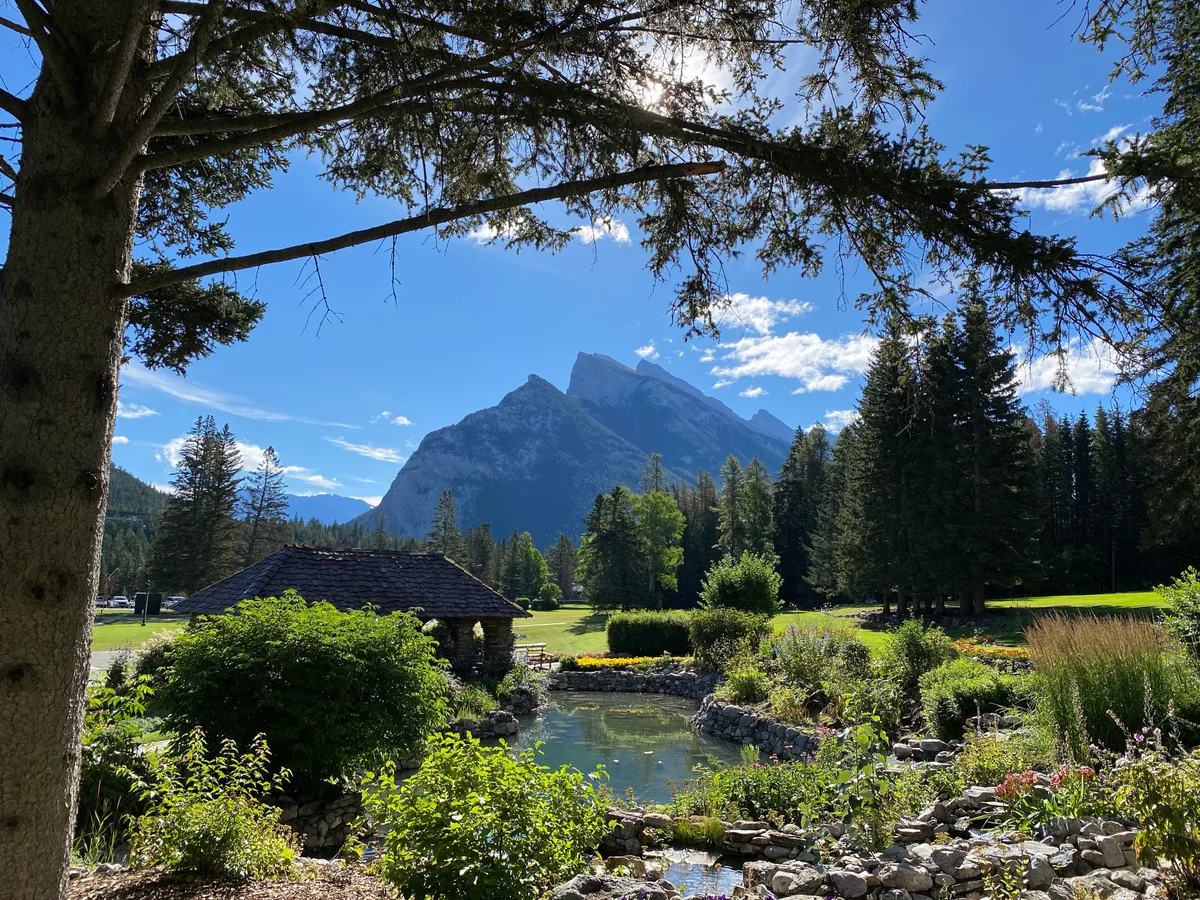
Banff Avenue’s other end
Walk south down Banff Avenue and keep going past the shops. You cross the Bow River Bridge, and the street ends at a stone building with a lawn and terraces falling away around it. That building is the Banff Park Administration Building. The terraced slopes around it are Cascade of Time Garden.
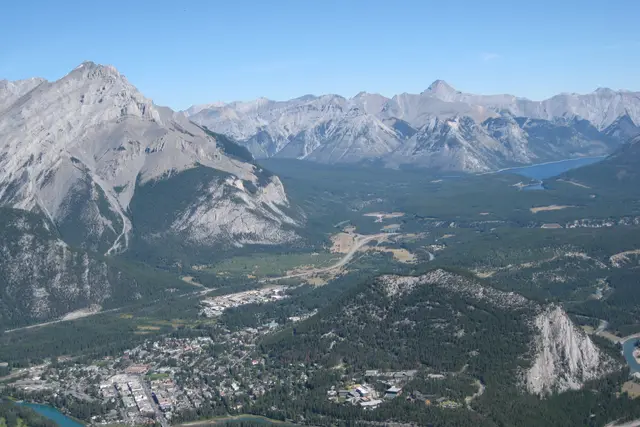
Look back the way you came. Banff Avenue runs straight to Cascade Mountain, which fills the far end of the street. The garden’s name comes from that view, and from the stone paths that show how the landscape was shaped over time.
How the garden is laid out
The garden steps down the hillside in terraces. Rockwork holds each level, and paths, small bridges and stairs link them. Water runs through it in little channels and pools. Benches and covered sitting areas are tucked between the beds, so you can stop out of the sun whenever you like.
Planting changes from one terrace to the next. Flower beds sit beside mature trees, and conifers are mixed in with shrubs and seasonal colour. The garden was built in the 1930s along with the administration building. Its stonework and layout come from that era, not from a modern resort.
Things to look for as you wander:
- The view straight up Banff Avenue to Cascade Mountain from the upper lawn
- The small pavilions and shelters, popular spots for photos
- Stream channels and pools running between the levels
- The administration building’s stone facade from the lower paths
Getting there on foot
From central Banff, the walk is the simplest way in. Head south on Banff Avenue, cross the Bow River Bridge, and the garden is directly in front of you. From most downtown hotels it takes about 10–15 minutes.
Downtown parking in summer can be hard to find, so walking or Roam Transit usually beats driving the short hop. Parking rules and fees around town change, and the current details are posted on the Town of Banff website and on signs at each lot. You need a valid Parks Canada pass to stop anywhere in Banff National Park, and that includes this garden.

Moving through the garden respectfully
People often hold weddings and portrait shoots here, especially on summer weekends. If you find a ceremony in one of the pavilions, take a different path. Stay out of the photographer’s frame, and come back to that terrace later.
The beds are tended and the slopes are steep. Keep to the paths, and don’t climb on the rockwork or pick anything. This is a national park, so if elk or deer wander through, which happens all over town, give them plenty of room. Don’t feed them.
Some timing tips, based on how the town works:
- Early morning: the garden opens at 8am at the moment, before most day-trippers from Calgary have arrived. It’s the best time for clean photos of the terraces.
- Evening: the current late closing makes it an easy after-dinner stroll from Banff Avenue restaurants. Hours can change through the year, so check the Parks Canada site for this month’s times.
- Benches: they’re shared. Sit a while, then let the next people have a turn.
When the terraces look their best
Summer is the main season. Beds are usually planted out from early summer, and colour peaks in July and August. In September the trees start to turn, and on a clear day the light on Cascade Mountain makes it a good time for the Banff Avenue view.
In winter the garden is under snow. There’s little colour then, but the stone terraces and the mountain view are still there. It’s a quiet stop on a cold walk, and you can pair it with the river paths nearby. Watch for ice on the stairs.
Pairing it with nearby Banff sights
The garden fits easily into a half-day loop at the south end of town. Nearby stops include:
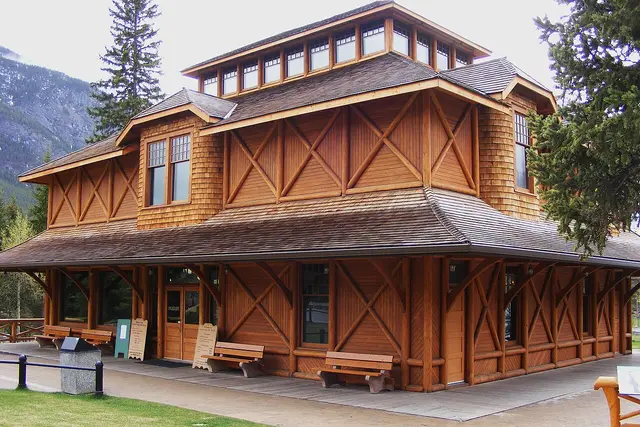
- Banff Park Museum National Historic Site, a log building full of natural-history displays, just across the bridge by the river
- Bow River trail, which runs along the bank from below the bridge for a flat riverside walk
- Bow Falls, reached on the riverside path heading southeast towards the Fairmont Banff Springs
- Cave and Basin National Historic Site, at the far end of Cave Avenue, where the park began around its hot springs
- Whyte Museum of the Canadian Rockies, a short walk back over the bridge on Bear Street
A good sequence is Cave and Basin first, then a walk back along Cave Avenue to the garden, then over the bridge into town for lunch.
Frequently asked questions
Where exactly is Cascade of Time Garden in Banff?
It's on Cave Avenue at the south end of Banff Avenue, just across the Bow River Bridge. It surrounds the stone Banff Park Administration Building, about a 10–15 minute walk from downtown.
What are the opening hours?
Right now it's listed as open 8am–11pm daily. Garden hours can change with the season, so check the Parks Canada site before planning a very early or late visit.
How long should I spend there?
Most visitors spend 30–60 minutes walking the terraces and sitting by the water. Leave more time if you're adding Cave and Basin or the Bow River trail nearby.
When is the best time of year to visit?
July and August are best for flowers, and September brings autumn colour and clear mountain views. In winter the garden is under snow, though the stone terraces and Cascade Mountain view are still there.
Can I park near the garden?
Parking near downtown Banff is limited in summer, and the rules change, so check the Town of Banff website or the signs at each lot. Walking from Banff Avenue or taking Roam Transit is usually easier. You need a Parks Canada pass to stop anywhere in the park.
Plan your trip to Banff
Canada eSIM & staying connected →
Some links above are affiliate links — if you book through them, Wander Atlas earns a small commission at no extra cost to you. It's how we keep every guide free.