What Chambacú actually is
Chambacú takes its name from a former waterfront barrio of Cartagena, and that reference tells you where the kitchen’s head is pointed. This isn’t a generic “Latin fusion” menu.
Chef Santiago Sánchez Arango built the place around Colombian cooking specifically, then widened the lens to Peru, Mexico and Venezuela. The result reads as one country’s food in conversation with its neighbours, not a blur of all four.
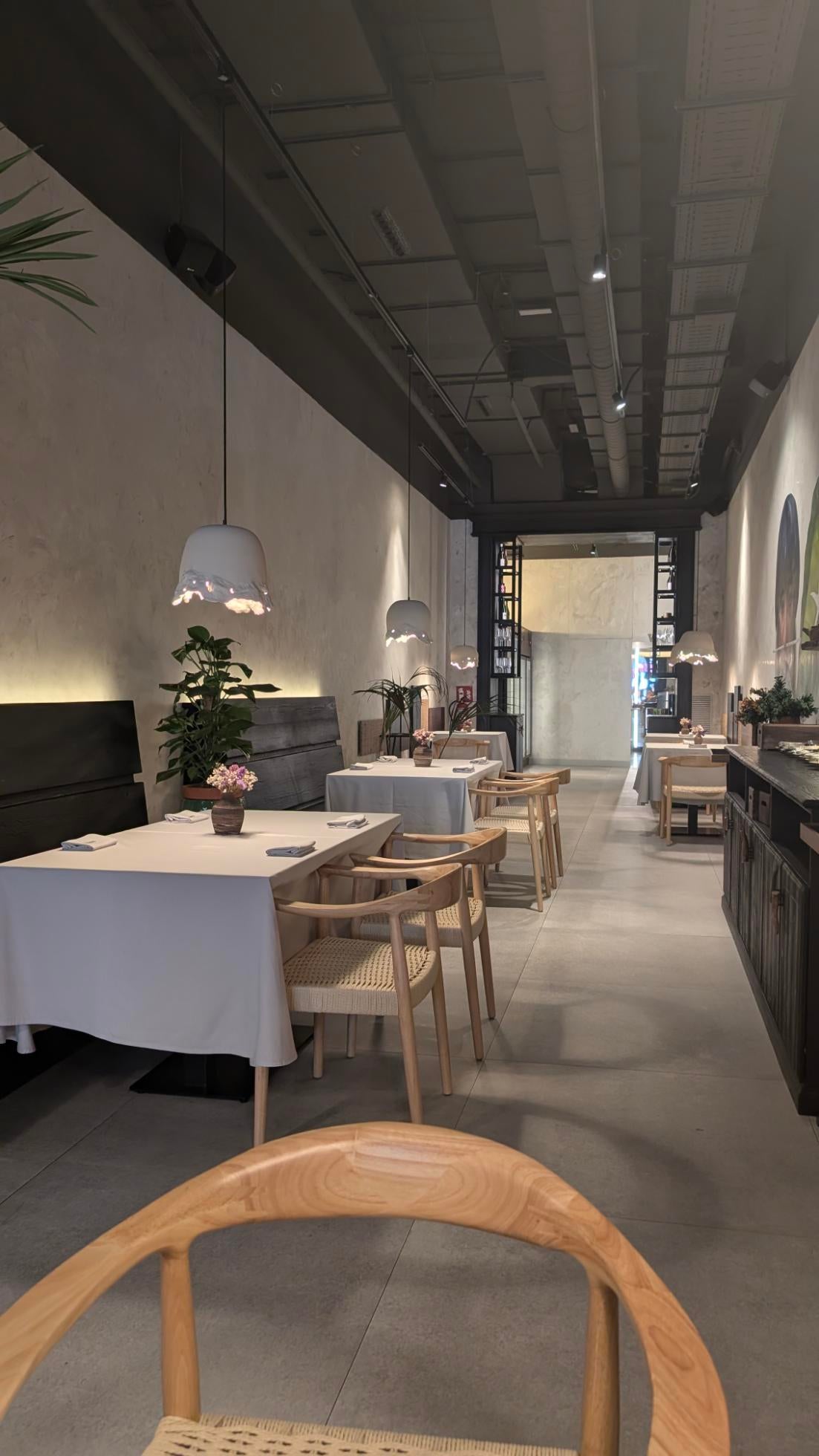
The layout: three rooms, three moods
Walk in and Chambacú doesn’t hand you one dining room, it hands you three.
- A courtyard, likely the most relaxed spot for a first drink or a lighter meal
- A cocktail counter, built for pre-dinner drinks or a solo seat at the bar
- A dedicated tasting-menu room, separated from the rest of the space
That separation matters for planning. If you want the full tasting menu experience, you likely need to specify that room when you book rather than just requesting “a table.”
Carrer de Muntaner and the Eixample grid
The address puts Chambacú on Carrer de Muntaner, one of the long north-south streets that cut through Barcelona’s Eixample, the grid-planned district of wide diagonal-cornered blocks north of Plaça de Catalunya. Muntaner runs for a couple of kilometers, threading past Sant Gervasi and down toward the Universitat area, so knowing the cross street or block number before you head out will save you a long walk in the wrong direction.
The Eixample is dense with restaurants and modernist facades, so Chambacú sits in a neighbourhood built for an evening of wandering before or after your meal.
Reading a menu built from four countries
The kitchen’s stated inspirations are Colombian, Peruvian, Mexican and Venezuelan, which as a group share a pantry: corn, plantain, native chilies, citrus-cured fish, slow-built stews. What differs is technique and emphasis.
Expect the Colombian thread to be the spine, given the restaurant’s name and the chef’s background, with the other three cuisines used to season and expand rather than dilute it. Since no set menu has been published here, treat any dish names you see online as a snapshot, not a guarantee. Ask your server which country a dish is drawing from if it isn’t obvious. It’s a useful way into a menu that’s deliberately cross-referencing four culinary traditions rather than sticking to one.
Choosing courtyard, counter or tasting room
This is the decision that shapes your whole visit, and it’s specific to how Chambacú is built.
- Short on time or want a casual bite: the courtyard is your best bet for something lighter without committing to a full seating.
- Solo, or want to watch drinks being made: the cocktail counter suits a shorter visit or a pre-dinner stop.
- Marking an occasion, or want the full range of the kitchen: book the tasting-menu room specifically, since it’s structured as its own experience apart from the à la carte spaces.
Because the restaurant is newly opened and already drawing attention, whichever room you want, reserve ahead rather than walking in and hoping.
Booking before you go
Given that Chambacú is a recently opened, trending spot, treat the practical details as fluid until you check them yourself.
Opening hours, reservation policy and whether walk-ins are accepted for the courtyard or counter can all shift in a restaurant’s first months of service. Call or check the restaurant’s official channels the same day or day before, especially if you want the tasting-menu room, since that space likely runs on a more fixed seating schedule than the courtyard or bar.
Ordering and paying like you would at any serious Barcelona kitchen
A few general habits carry over from dining anywhere in this city and are worth carrying into Chambacú.
Card payment is standard across Barcelona restaurants at this level, so don’t worry about carrying cash specifically for this visit. Tipping isn’t obligatory in Spain, but rounding up or leaving a small amount for good service is normal practice and won’t be refused. If you’re unsure whether a dish is meant to be shared, tasting-menu-style, or eaten solo, ask; a kitchen working across four national cuisines will have dishes built for both styles on the same menu.
And if Spanish isn’t your first language, most Eixample restaurants serving an international crowd will have English-speaking staff, but confirming a reservation in simple Spanish (a name, a time, a number of people) rarely goes wrong.
Frequently asked questions
Where exactly is Chambacú located?
It's on Carrer de Muntaner in Barcelona's Eixample district, the grid-planned area north of Plaça de Catalunya. Confirm the exact block number before you go, since Muntaner is a long street running through several neighbourhoods.
Do I need a reservation?
Given it's a newly opened, trending restaurant, booking ahead is strongly recommended, particularly if you want the dedicated tasting-menu room rather than the courtyard or cocktail counter.
What kind of food does Chambacú serve?
It's rooted in Colombian cooking from chef Santiago Sánchez Arango, drawing additional inspiration from Peruvian, Mexican and Venezuelan cuisines. Expect shared pantry ingredients like corn, plantain and citrus-cured fish reworked across different national techniques.
What's the difference between the three spaces?
The courtyard suits a casual or lighter visit, the cocktail counter is built for drinks and shorter stays, and the tasting-menu room is a separate, more structured dining experience. Each likely has its own reservation approach, so specify which one you want when booking.
What's nearby if I want to make an evening of it?
Carrer de Muntaner sits within easy walking distance of Sant Gervasi and the wider Eixample, a district known for modernist architecture and a dense concentration of restaurants and bars, so it's easy to pair dinner with a walk before or after.
Plan your trip to Barcelona
Some links above are affiliate links — if you book through them, Wander Atlas earns a small commission at no extra cost to you. It's how we keep every guide free.