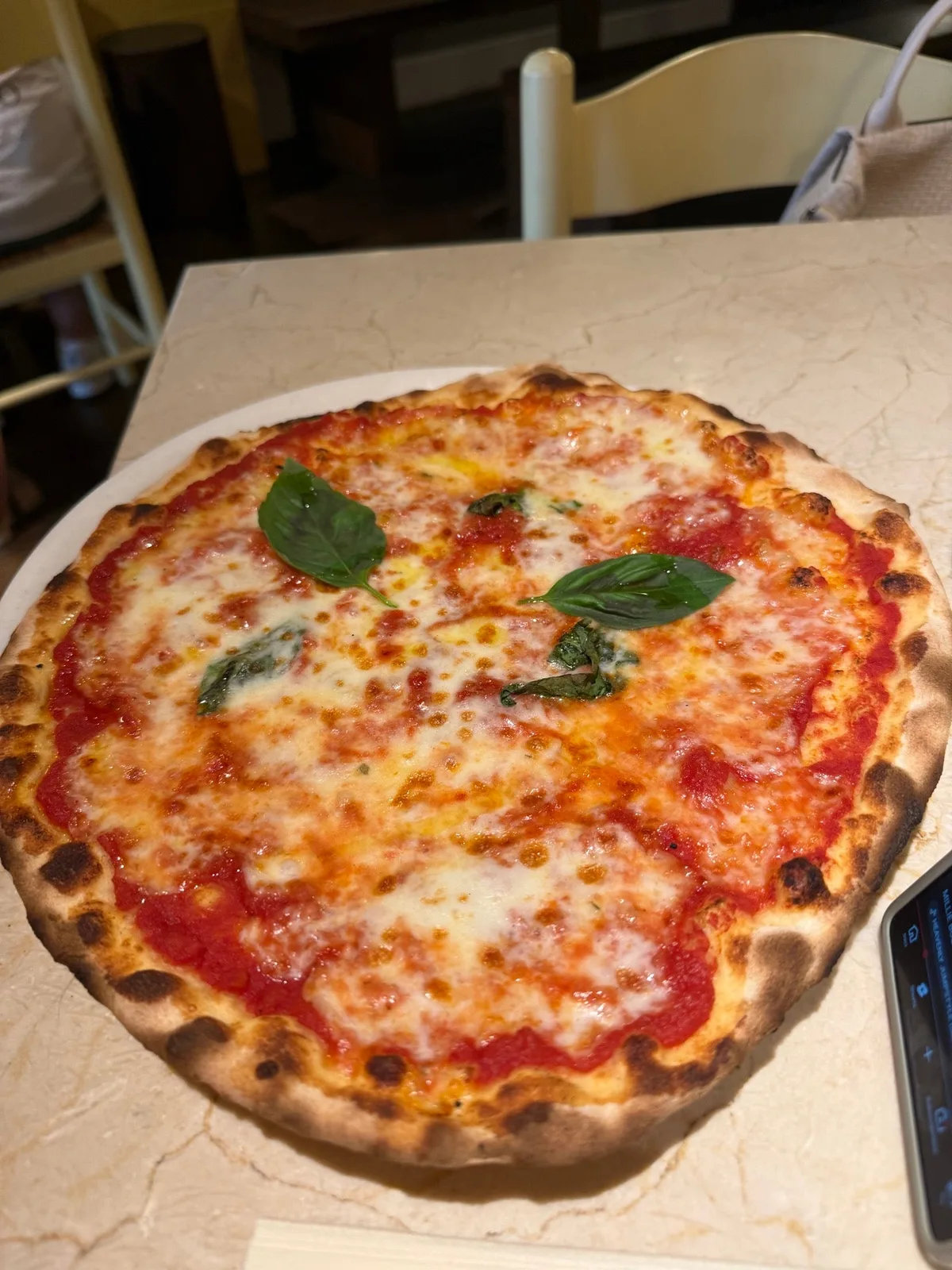
Eixample Esquerra isn’t the part of Barcelona people think of first for pizza. It’s grid-plan blocks, modernist facades, small design studios and neighbourhood bakeries, not the tourist-heavy lanes around the Sagrada Familia. Romo landed here quietly and has been getting louder ever since.
Who’s behind the dough
Romo comes from the same team that runs Sartorial Panatieri, a bakery already well regarded in Barcelona for its bread program. That pedigree matters here: this isn’t a pizza concept bolted onto a kitchen that’s never thought about fermentation.
The focus is Roman-style pizza, which means a base that’s different from the puffy-rimmed Neapolitan pies most visitors know. Roman dough is typically flatter, crisper at the edge, and built for a longer, slower rise.
The dough is the whole point
Romo makes a point of slow fermentation, using organic flours rather than the fast commercial dough that dominates most casual pizza counters. That process takes time, which is exactly why it tastes different: more digestible crust, a deeper flavour in the base itself, less reliance on toppings to carry the slice.
If you’ve had Roman-style “pizza al taglio” cut into rectangles and sold by weight, or the round, thin-based sit-down version, either tradition explains what’s happening at Romo. The bakery lineage behind the project suggests they’re taking the base as seriously as any topping combination on it.
- Ask what flour blend they’re using that week if you’re curious; organic and slow-fermented doughs often change slightly with the bakers’ sourcing.
- Expect the crust itself to be the thing worth discussing afterward, not just what’s piled on top.
Finding it in the grid
Eixample Esquerra sits west of Passeig de Gracia, a neighbourhood of wide, orderly avenues laid out in Ildefons Cerda’s 19th-century plan. It’s residential, walkable, and mixes local shops with a growing run of newer restaurant openings.
Because Romo is a recent arrival, exact address details and transit directions are best confirmed directly before you go rather than relied on secondhand. Use a map app on the day: Eixample Esquerra is well served by several metro stops on lines running through central Barcelona, and it’s an easy walk or short taxi from Passeig de Gracia or Placa Universitat.
Booking your table
Because Romo is trending and comes with real buzz around its Sartorial Panatieri connection, tables can fill up faster than the neighbourhood’s usual pace. Reserve ahead if you can, especially for dinner on a Friday or Saturday.
- Check whether Romo takes bookings online, by phone, or only walk-ins; policies at newer openings often shift in the first months.
- If you can’t get a reservation, arriving right as service starts usually beats the later dinner rush, which is when word-of-mouth spots tend to fill fastest.
- Confirm current opening hours and days closed before you set out. Don’t assume standard Spanish restaurant hours apply without checking.
Ordering without overthinking it
Since the specific menu isn’t something to guess at for a place this new, go in ready to ask questions rather than ready with a fixed order. Roman-style pizzerias typically offer both whole pies and, sometimes, cut-and-weighed slices, so ask which format Romo does before you sit down or queue.
- If a server or counter staff mentions the dough’s fermentation time, that’s usually worth following up on. It often signals which pizzas best show off the base itself.
- Pair with what’s on offer by the glass rather than assuming a full wine list; smaller, newer neighbourhood spots often keep things focused.
- Don’t fill up on bread first if there’s a bakery-style starter. At a place built by bread people, it’s tempting, but you’ll want room for the pizza itself.
Eating like it’s your local
Eixample Esquerra rewards a slower pace. This is a neighbourhood of people picking up bread on the way home and stopping for a glass of vermouth before dinner, not one built around quick tourist turnover.
Treat Romo the same way: don’t expect to be rushed through a meal, and don’t rush the kitchen either, given the whole premise is a dough that took its time to get here. Cash and card are both standard across Barcelona restaurants, so either should work, but keep some cash on hand as a backup, since smaller newer spots occasionally have card system hiccups in their first year.
Tipping in Barcelona is modest by international standards. Rounding up or leaving a small amount, rather than a fixed large percentage, is the norm.
Making it part of a bigger evening
Eixample Esquerra sits within easy reach of Passeig de Gracia’s Gaudi buildings, Placa Universitat, and the Sant Antoni market area, so Romo works well as a dinner stop before or after wandering nearby. It’s a residential grid rather than a nightlife strip, so plan on it being a dinner destination rather than a place to bar-hop around afterward.
Given the hype already building around it, treat a visit to Romo as something to plan a little rather than stumble into. Check hours, book if you can, and go in curious about the dough rather than fixated on a specific dish you haven’t been able to confirm is on the menu.
Frequently asked questions
Where exactly is Romo located?
It's in Eixample Esquerra, a residential grid-plan neighbourhood west of Passeig de Gracia in Barcelona. Since it's a recent opening, confirm the exact address and nearest metro stop on a map app before you go.
Do I need a reservation at Romo?
It's wise to book ahead, especially for weekend dinners, since the spot has been generating buzz thanks to its connection to Sartorial Panatieri. Check whether they take online or phone bookings before you head over.
What makes Romo's pizza different?
It's Roman-style pizza with slow-fermented dough made from organic flours, giving a crisper, more digestible base than fast-fermented commercial dough. The team behind it also runs an award-winning bakery, so the crust is the main event.
What's the best time to avoid a wait?
Arriving right when dinner service opens tends to beat the later rush that hits trending, word-of-mouth restaurants. Confirm opening hours in advance since they can shift at newer places.
What else is nearby if I want to make a night of it?
Eixample Esquerra is an easy walk from Passeig de Gracia's Gaudi landmarks, Placa Universitat, and the Sant Antoni market, making Romo a solid dinner anchor before or after exploring those areas.
Plan your trip to Barcelona
Spain eSIM & staying connected →
Some links above are affiliate links — if you book through them, Wander Atlas earns a small commission at no extra cost to you. It's how we keep every guide free.