The man with one nose left
The name is a Catalan joke. In Catalan folklore, l’home dels nassos is a man with as many noses as there are days left in the year. Parents send children out looking for him, and he never turns up.
The punchline lands on December 31. That is the only day he has a single nose, so he looks like anyone else. A race held on the last day of the year, called the “Race of the Noses”, is a joke every Catalan child already understands.
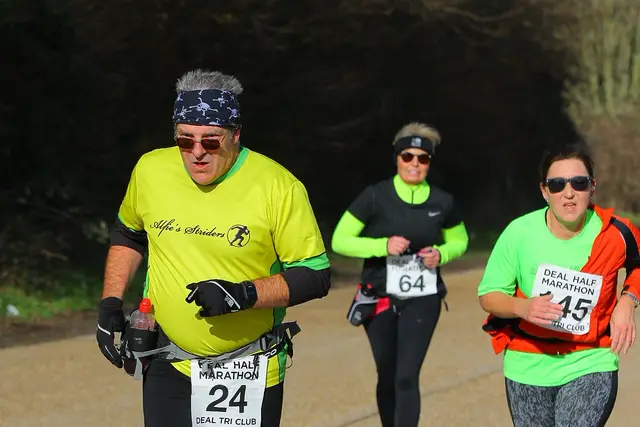
That is why the start line has so many fake noses on it. Plastic, foam and painted-on noses show up beside serious club vests and GPS watches. A good share of the field dresses up completely: Santa suits, grape bunches, whole groups in matching costumes.
Race day: December 31, 2026
The 2026 edition takes place on Wednesday, December 31, 2026. It is a 10K road race on closed city streets. For thousands of Barcelona runners it is the last workout of the year and a social date in its own right.
The organiser publishes the exact start time, route map and registration on the race’s official site. Those details are not repeated here because they change from year to year. The race traditionally runs in daylight, leaving the evening free for dinner and midnight.
December in Barcelona is usually mild and dry by northern European standards. Mornings and late afternoons can still be cool near the sea. Runners commonly wear an old layer to the start and drop it before the gun.
The seafront course in Sant Martí
Recent editions have been staged in the Sant Martí district, at the eastern end of Avinguda Diagonal. That is the Fòrum and Diagonal Mar area, with wide boulevards, modern towers and the Mediterranean a few blocks away. The course map for this edition sits on the official race site.
The terrain suits a fast 10K. This side of the city is flat, much flatter than the uphill grid toward Gràcia and Tibidabo. The avenues are broad enough to carry a big field without constant bottlenecks.
Spectators tend to gather near the start and finish and along the straight stretches of avenue. Many families make an afternoon of it. They walk the seafront promenade toward Poblenou and Bogatell beach before or after the race.
Getting to the start line
Public transport is the normal way in, since roads around the course close on race day. For the Fòrum area, the usual options are:
- Metro L4 (yellow line): El Maresme | Fòrum station, with Selva de Mar one stop closer to Poblenou.
- Tram T4: runs along the Diagonal toward the Fòrum from Ciutadella and Glòries.
- On foot: the seafront promenade from Barceloneta and the Port Olímpic is a flat walk of about an hour, and many runners use it as their warm-up.
Trains on L4 fill with runners in costume heading the same way. Locals usually reach the start area with plenty of time to spare, because bag drop and the pens get crowded. Leaving the hire car or taxi plan aside saves a lot of grief.
Bibs, pens and fake noses
Getting through the start smoothly follows a simple pattern.
- Registration is online only. Entry goes through the official race site. Bibs are personal, and swapping one with a friend is against race rules.
- Bib pick-up usually happens in the days before the race at a location named by the organiser. The runner’s pack generally includes a timing chip on or attached to the bib.
- Start pens are ordered by expected finishing time. Runners stand in the pen that matches their bib, which keeps walkers and costumed groups from boxing in the fast runners.
- Costumes are welcome. The usual etiquette is to keep large props and wide outfits toward the back so they don’t trip anyone.
- Language: announcements are mostly in Catalan and Spanish. Sortida means start and arribada means finish. Avituallament is the water station.
Spectators cheer with Som-hi! (“Let’s go!”) and Ànims! (“Keep going!”). Shouting either from the pavement is an easy way to join in.
After the finish: grapes, cava and midnight
The race is only the afternoon part of a long night. Once the medals are handed out, most runners go home, shower and head to dinner. In Spain the New Year’s Eve meal is usually late, often well after 9pm.
At midnight, Spain eats les dotze campanades: twelve grapes, one for each chime of the clock. Supermarkets sell small tins of peeled, seedless grapes for exactly this. Getting through all twelve before the last bell is meant to bring a lucky year, and it is harder than it sounds.
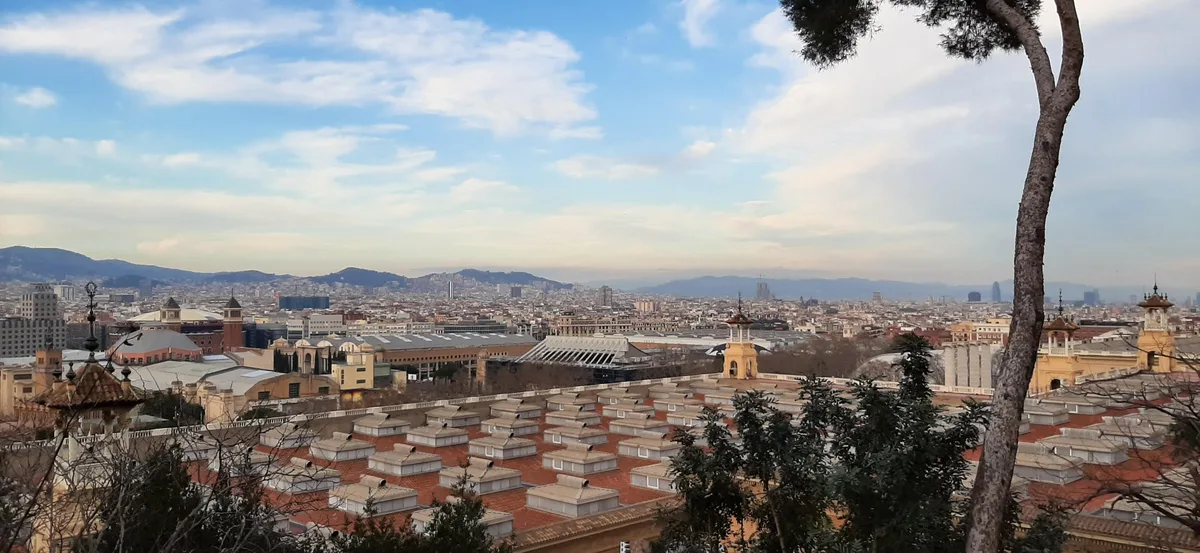
Barcelona traditionally hosts a large public countdown around Montjuïc and Avinguda de la Reina Maria Cristina, below the Palau Nacional. Others celebrate on rooftops or at the beach. Wearing red underwear for luck is a common Spanish custom too.
Where to stay and what to plan around
Runners from outside the city often stay near the course. Diagonal Mar and Poblenou have big modern hotels and quieter side streets. Poblenou’s Rambla has terraces for a post-race beer.
The Eixample and the Gothic Quarter are also a straight L4 or tram ride away. They put you closer to the midnight celebrations.
Two practical points shape the day. Many shops and restaurants close early on December 31 or open only for set New Year’s Eve dinners. January 1 is a public holiday, and much of the city sleeps late.
Frequently asked questions
When is the Cursa dels Nassos 2026?
It takes place on Wednesday, December 31, 2026, New Year's Eve. The start time and route map are on the race's official site.
Where does the race start and how do I get there?
Recent editions have been held in Sant Martí, around the Fòrum and Diagonal Mar at the eastern end of Avinguda Diagonal. Metro L4 to El Maresme | Fòrum or the T4 tram are the usual ways in, because roads near the course close. The exact course for this edition is on the official race site.
Why is it called the Race of the Noses?
It is named after l'home dels nassos, a Catalan folk figure with as many noses as there are days left in the year. On December 31 he has only one, so many runners wear fake noses or full costumes.
Is the course hard?
No. It is a 10K on the flat seafront side of the city, along wide avenues. It suits first-timers and runners chasing a fast time.
What is there to do after the race?
Most runners rest, then go out for a late dinner and eat the twelve grapes at midnight. Barcelona traditionally hosts a big public countdown below Montjuïc's Palau Nacional. Poblenou's Rambla is close to the finish area for a post-race drink.
Plan your trip to Barcelona
Spain eSIM & staying connected →
Some links above are affiliate links — if you book through them, Wander Atlas earns a small commission at no extra cost to you. It's how we keep every guide free.