Two dark-brick towers with green copper spires rise over the eastern edge of Bremen’s Marktplatz. They are easy to mistake for medieval work, but they are not. The church below them was founded in the 11th century. The towers you see went up in a big neo-Gothic rebuild in the late 1800s, after centuries of fire, collapse and patching.
That mix is the reason to come. Inside one building you get Romanesque crypts, a Gothic nave, 19th-century stonework and a cellar of mummified bodies. You also get a tower climb with the whole old town below you.
St. Petri Dom on the Market Square
The cathedral’s official name is St. Petri Dom, after Saint Peter. You’ll see the crossed keys of Peter all over Bremen, including on the city coat of arms. It has been a Lutheran church since the Reformation, and it is still a working parish.
The setting matters as much as the building. Turn your back to the west front and you’re facing Bremen’s main square:
- Bremen Town Hall (Rathaus), with its Weser Renaissance façade, listed as a UNESCO World Heritage Site
- The Roland statue, the stone knight who stands for the city’s freedoms, part of the same UNESCO listing
- The Town Musicians of Bremen, the bronze donkey, dog, cat and rooster on the Town Hall’s west side
- The Bürgerschaft, the city-state parliament’s modern glass-and-concrete building across the square
Inside the nave and crypts
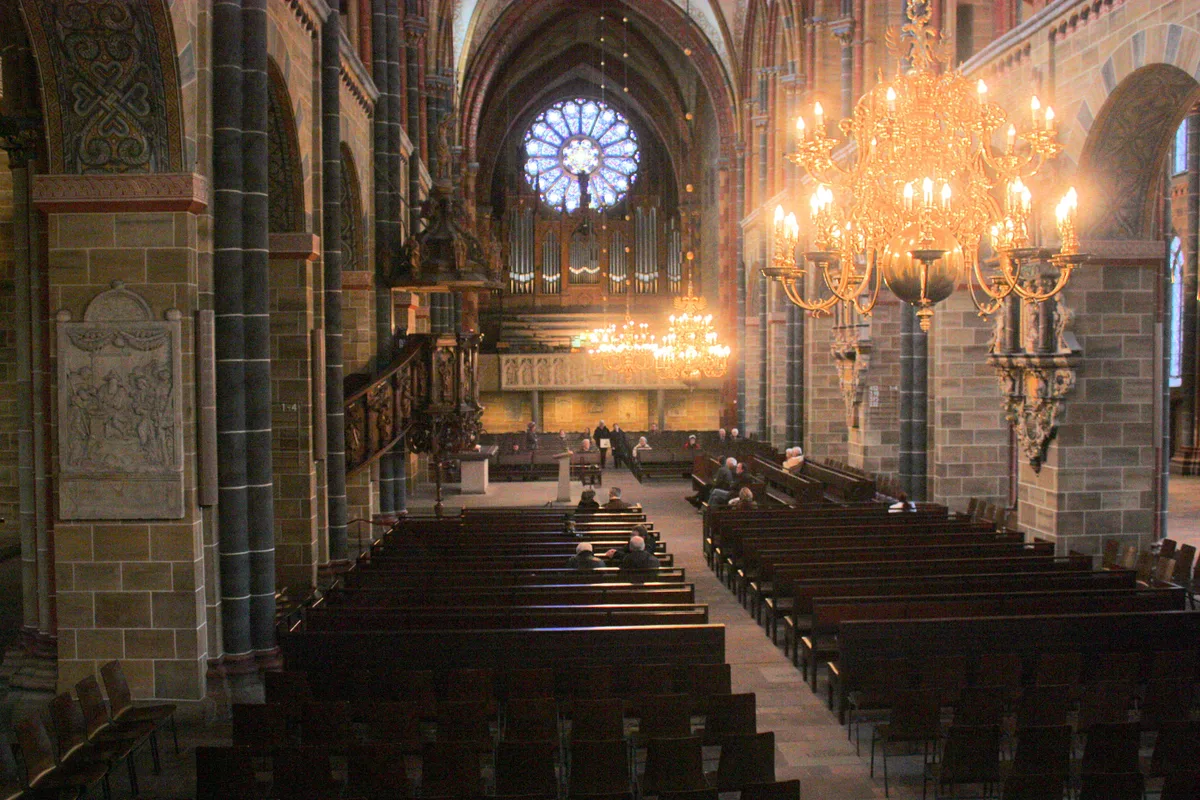
The interior is tall, pale and calm next to the square outside. Look for the double-aisled nave, the carved stone pulpit area and the stained glass, much of it from the 19th-century restoration. The cathedral is also known for its organs. The largest is a big Romantic instrument by the Wilhelm Sauer workshop, built in the 1890s.
Go down into the crypts. The east and west crypts are the oldest parts of the building still standing, with squat Romanesque columns and low vaults. This is the closest you’ll get to the 11th-century church the editorial summaries describe.
The Bleikeller and the cathedral museum
The Bleikeller, or “lead cellar”, is the place people tell their friends about. It’s said to get its name from lead that was once stored there for the roof. Bodies placed in the cellar over the centuries dried out instead of decaying, and several mummies now lie in open coffins. It is small, odd and genuinely memorable. Parents of young children may want to look first and decide.
The Dom Museum shows finds from excavations under the cathedral. These include grave goods from the burials of medieval archbishops, such as vestments and croziers. The Bleikeller has its own entrance on the outside of the building and its own opening times. Check them before you plan around it.
Climbing the south tower
The tower climb is a narrow stone spiral of about 265 steps. There’s no lift, and people coming down squeeze past you. At the top you look down on:
- the Town Hall roofs and the Marktplatz
- the Weser river and its bridges
- the tight lanes of the Schnoor quarter to the south
The tower is not always open. It often closes in the colder months and for bad weather, and it keeps its own hours. Check the cathedral’s official website for this month’s times before you count on the view.
Sweeping the cathedral steps
You may see a young man in a silly hat sweeping the cathedral steps while his friends throw bottle caps and confetti under his broom. This is Domtreppenfegen, a Bremen custom. A man who reaches his 30th birthday unmarried has to sweep the Domtreppe until a single woman kisses him and frees him.
The women’s version takes place across the square. Unmarried women turning 30 polish the door handles of the Town Hall, called Klinkenputzen. It’s a cheerful, public ritual, and taking photos is generally fine. Don’t kick the debris about, though: the birthday sweeper has to clear all of it.
Visiting a working church
The cathedral is a place of worship first, and the hours follow that. At the moment it opens 10am–5pm Monday to Saturday. On Sunday the doors open at 11:30am, once the morning service is over. These hours change with the season and around church holidays, so the official site is the best place to check this week’s times.
How a visit works:
- Entry: the nave is open to walk into. The tower, the museum and the Bleikeller have separate tickets, and prices are posted at the entrances.
- Services and concerts: if worship or a rehearsal is going on, stay at the back or come back later. Organ music is common here, so check the cathedral’s events listing if you’d like to hear one.
- Behaviour: men take off hats, phones go on silent, and you keep your voice down. Photos without flash are usually fine when no service is on.
- Timing: coming soon after the 10am opening on a weekday usually puts you ahead of walking tours that start from the Marktplatz. Sundays have the shortest visiting window.
- Language: you’ll see “Dom” on signs and hear locals call it “der Dom”. St. Petri Dom is how the city’s tram announcements and maps name it.
Getting there and what’s next door
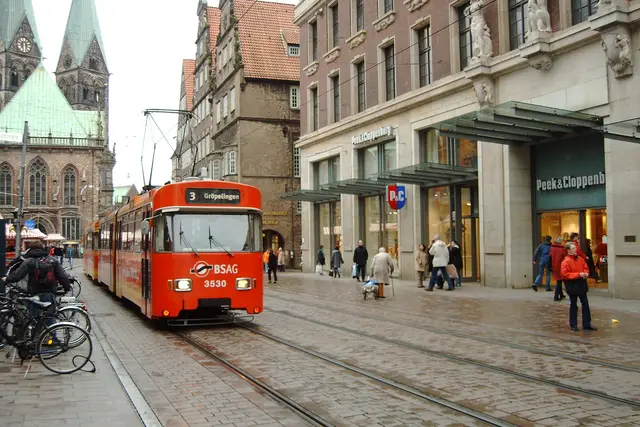
The closest tram stop is Domsheide, a short walk from the cathedral’s south side. Several city tram lines stop there. From Bremen Hauptbahnhof (the main station) it’s roughly a 15-minute walk south through the old town, or a few stops by tram. The address is Sandstraße 10-12, 28195 Bremen.
The cathedral fits easily into a half-day loop of the Altstadt:
- Böttcherstraße, the short brick lane of 1920s Expressionist buildings off the Marktplatz
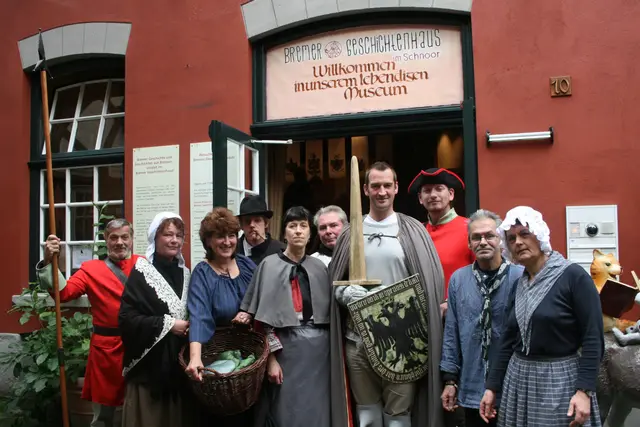
- The Schnoor, Bremen’s oldest quarter of small lanes and low houses, a few minutes’ walk south
- Bremer Ratskeller, the wine cellar under the Town Hall
- The Schlachte, the riverside promenade along the Weser
Plan on 1–2 hours at the cathedral if you do the crypts, the museum, the Bleikeller and the tower. Allow about 30 minutes if you only see the nave.
Frequently asked questions
How do I get to Bremen Cathedral by public transport?
Take a tram to Domsheide, a short walk from the cathedral's south side. From Bremen Hauptbahnhof you can also walk south through the old town in about 15 minutes. The address is Sandstraße 10-12, on the Marktplatz.
What are the opening hours of Bremen Cathedral?
At the moment it opens 10am–5pm Monday to Saturday and 11:30am–5pm on Sunday, after morning worship. Hours change with the season and on church holidays. The tower, museum and Bleikeller keep their own times, so check the official website before you go.
Can you climb the towers of Bremen Cathedral?
Yes. The south tower has a narrow spiral stair of about 265 steps and no lift, and the top looks over the Marktplatz, the Weser and the Schnoor. It often closes in the colder months and in bad weather, so check the official site first.
What is the Bleikeller?
It's the cathedral's 'lead cellar', where several bodies dried out naturally instead of decaying and are now shown in open coffins. It has its own entrance on the outside of the building and its own ticket.
How long should I spend at Bremen Cathedral, and what's nearby?
Allow 1–2 hours for the nave, crypts, museum, Bleikeller and tower, or about 30 minutes for the nave alone. The Town Hall, the Roland statue and the Town Musicians statue are right on the square. Böttcherstraße and the Schnoor quarter are a few minutes' walk away.
Plan your trip to Bremen
Germany eSIM & staying connected →
Some links above are affiliate links — if you book through them, Wander Atlas earns a small commission at no extra cost to you. It's how we keep every guide free.