Stone, gold and a knight with a sword
Look up before you look around. A stone knight stands on the cobbles holding a drawn sword and a shield, and he is facing the cathedral. This is the Roland, raised in 1404 as a sign of the city’s freedom. He has watched this square for over six centuries.
Behind him rises the Town Hall. Its Gothic body dates from the early 1400s. The ornate Weser Renaissance façade, with its tall gables and carved figures, was added in the early 1600s. In 2004 UNESCO listed the Town Hall and the Roland together as a World Heritage Site, and the square around them is why travellers come to Bremen at all.
Reading the four sides
The square is compact, and each side tells you something different.
- North: the Town Hall. Beneath it is the Ratskeller, one of Germany’s oldest wine cellars, which serves German wines only.
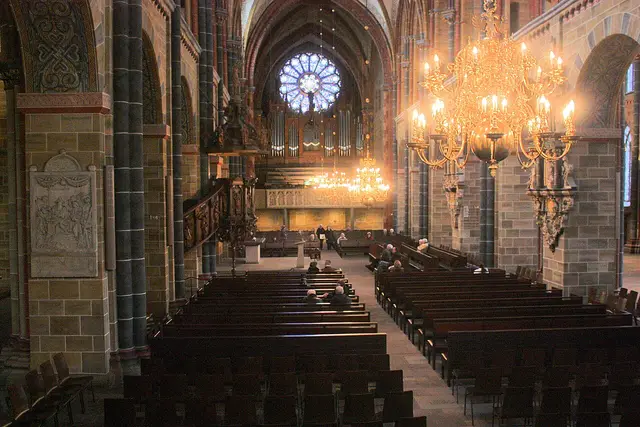
- East: St. Petri Cathedral. Its twin spires are the tallest thing on the skyline, and the brick-and-sandstone nave is far older than the façades around it.
- South: the Schütting, the old merchants’ guild house. Its stepped gable shows how the city made its money.
- Also east: the Haus der Bürgerschaft, the state parliament. It is a glass-and-concrete building from the 1960s, and it divides opinion among Bremers to this day.
On the Town Hall’s western flank stands Gerhard Marcks’ 1953 bronze of the Town Musicians of Bremen. That’s the donkey, dog, cat and rooster from the Grimm tale, stacked one on top of another. The donkey’s front legs shine bright gold where countless hands have rubbed them for luck.
Getting to the Marktplatz
Most visitors walk from the Hauptbahnhof. Head south through Bahnhofstraße and the shopping streets toward Obernstraße, and you’ll reach the square in about 15 minutes.
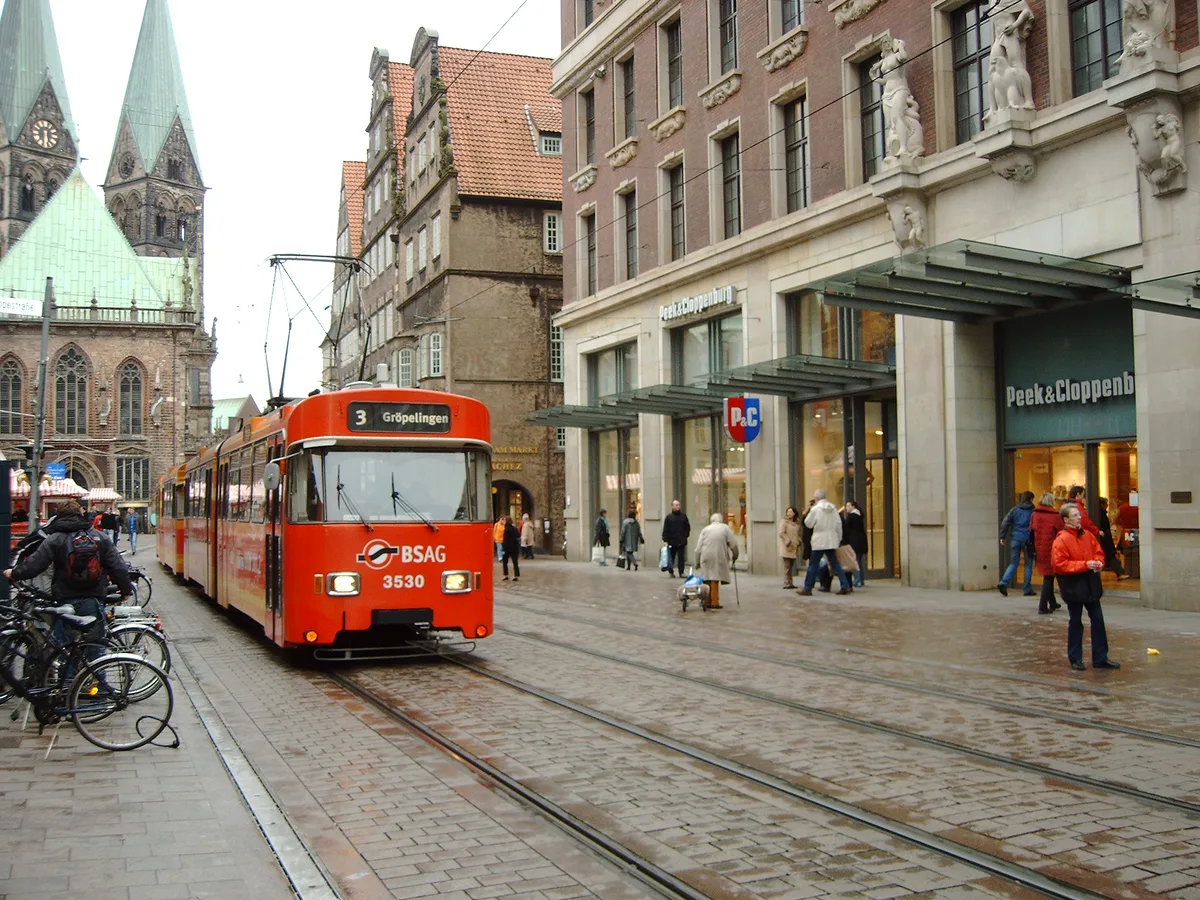
By tram, get off at Domsheide, just behind the cathedral. Lines 4 and 6 stop there, and line 6 also runs to Bremen Airport. The Obernstraße stop on the square’s western edge works too. Don’t drive into the Altstadt; it’s mostly pedestrianised, and the multi-storey car parks on the fringe are easier.
Moving through the square like a Bremer
The square never closes, but the buildings around it keep their own hours. The Town Hall is visited on guided tours, and the cathedral and its tower climb shut at set times. These hours shift through the year, so check the official sites for the month you’re travelling.
Locals use the square as a shortcut, so keep the paths toward Obernstraße and the cathedral clear. Line up your photos from the edges. A few customs are worth knowing:
- The Bremer Loch: a slot in the pavement near the parliament building. Drop a coin in for charity and it answers with the Town Musicians’ animal noises.
- The Spuckstein: near the cathedral, a cobble marked with a cross. It marks where the poisoner Gesche Gottfried was executed in 1831. Some locals still spit on it. Don’t confuse it with a lucky stone.
- The donkey’s legs: hold both legs with both hands for the full ritual. Expect a short queue on weekend afternoons.
In practice the square is quietest early in the morning, before tour groups arrive from the Weser cruise boats and coaches. It’s quiet again after dinner, when the floodlit façades are at their best.
When the square fills with stalls
From late November until just before Christmas, the Bremen Weihnachtsmarkt fills the square and the streets around it. Wooden huts sell roasted almonds, Glühwein and local Klaben, a dense fruit loaf. The Town Hall façade makes the backdrop.
Hot drinks come in a mug that carries a deposit (Pfand). Hand it back at any stall to get the deposit returned, or keep it as a cheap souvenir. Card payment is spreading, but many smaller huts still prefer cash. The Schlachte-Zauber market down on the Weser riverfront runs alongside it and makes a natural second stop.
Beyond the edges
The square works best as the hub of a half-day walk. Allow 45 minutes for the square on its own, plus an hour each for the Town Hall tour and the cathedral.
- Böttcherstraße: steps from the south side. It’s a narrow brick lane rebuilt in Expressionist style in the 1920s and 30s, with a carillon of Meissen porcelain bells.
- The Schnoor: a 10-minute walk southeast. Tiny fishermen’s and craftsmen’s houses line alleys barely shoulder-wide.
- The Schlachte: the riverside promenade along the Weser, with beer gardens in summer.
Start at the Roland, loop through Böttcherstraße to the river, and finish in the Schnoor. You’ll have seen Bremen’s medieval core without retracing a single step.
Frequently asked questions
How do I get to Bremen Market Square from the train station?
Walk south from the Hauptbahnhof through the shopping streets toward Obernstraße; it takes about 15 minutes. By tram, get off at Domsheide (lines 4 and 6, among others) just behind the cathedral.
Is Bremen Market Square open at night?
Yes. It's a public square and open 24 hours. The Town Hall and cathedral have their own seasonal opening times, so check their official sites before you go.
How long should I spend at the Marktplatz?
Allow about 45 minutes for the square, the Roland and the Town Musicians statue. Add roughly an hour each if you take a Town Hall tour or visit the cathedral and climb its tower.
When is the Bremen Christmas market on the square?
It usually runs from late November until shortly before Christmas, filling the Marktplatz and the streets around it. The Schlachte-Zauber market on the Weser riverfront runs at the same time.
What's near Bremen Market Square?
Böttcherstraße is right off the south side. The Schnoor quarter is about a 10-minute walk away, and the Schlachte riverside promenade along the Weser is a few minutes south.
Plan your trip to Bremen
Germany eSIM & staying connected →
Some links above are affiliate links — if you book through them, Wander Atlas earns a small commission at no extra cost to you. It's how we keep every guide free.