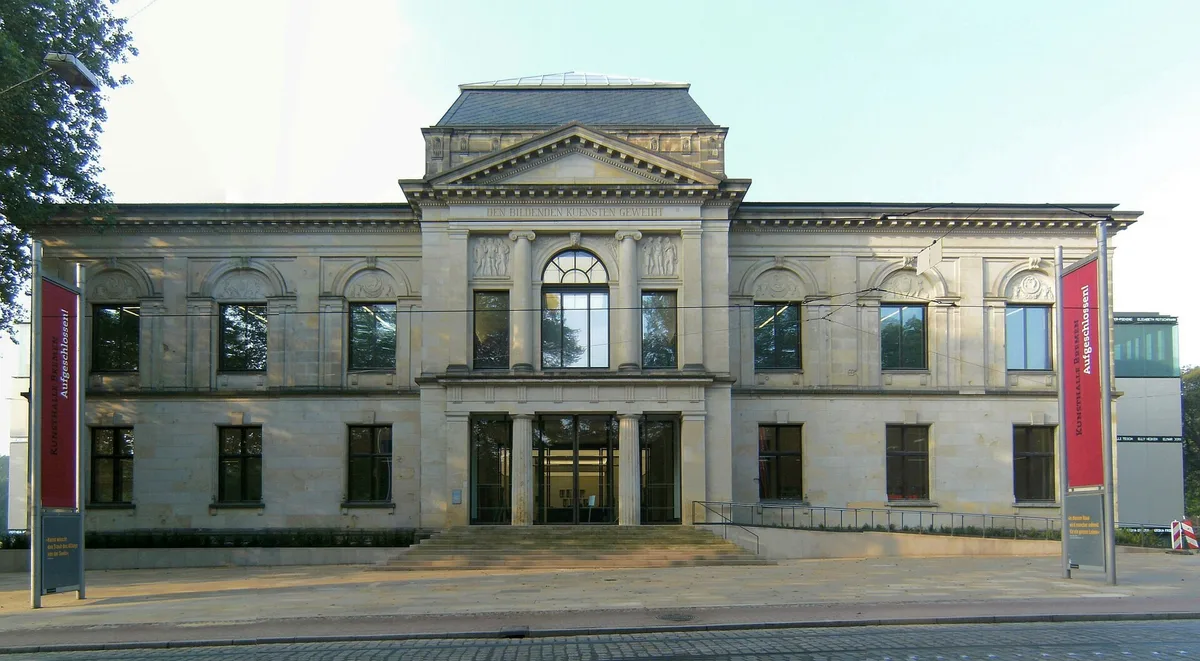
A museum on the old city wall
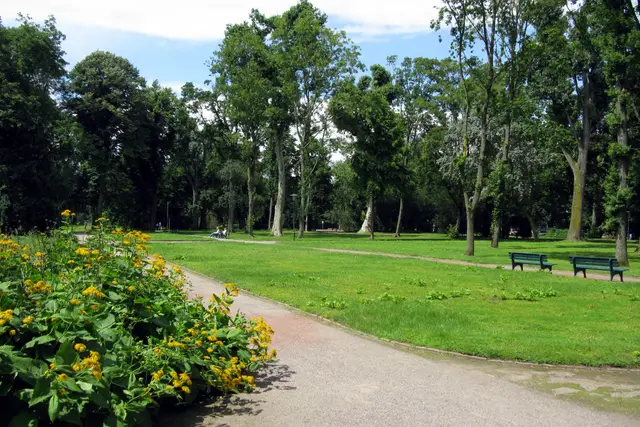
The address tells you where you are. Am Wall follows the line of Bremen’s old fortifications, and the Kunsthalle stands on the Wallanlagen, the park that replaced the ramparts. A curving moat runs through the greenery, and you walk along it to reach the building’s front steps.
The museum belongs to the Kunstverein in Bremen. This civic art association was founded in 1823 by the city’s merchants and citizens, and it still runs the place. The first building opened in 1849, so this is one of the older purpose-built art museums in Germany. You can see the private, civic beginnings in the collection. Much of it was bought or donated by local people rather than handed down from a royal court.
What hangs on the walls
The galleries cover roughly six centuries, and you can follow them in order. Old Masters come first, then the nineteenth century, then modernism and contemporary work. Names worth hunting down:
- Rubens and Rembrandt in the older European painting rooms
- Courbet, along with the French realists and Impressionists who followed him
- Claude Monet’s Camille, the 1866 full-length portrait of a woman in a green striped dress
- Picasso and the twentieth-century rooms
- The Worpswede painters, including Paula Modersohn-Becker, from the artists’ colony just outside Bremen
Temporary exhibitions take up a large share of the space and change through the year. Check what’s on before you go. A major show can shape the whole visit and sometimes needs its own ticket.
The poppy field that started a fight
One painting here has a story that reaches beyond Bremen. In 1911 the Kunsthalle bought Vincent van Gogh’s Field with Poppies (1889). The purchase set off the Bremer Künstlerstreit, a national argument over whether German museums should spend public money on French modernists.
The painter Carl Vinnen led the protest, and many prominent artists and critics answered in the museum’s defence. The museum won, and the painting is still here. Look at it knowing that this small canvas once divided the German art world. It explains a lot about the collecting confidence you see in the rest of the building.
Upstairs, the Kupferstichkabinett holds the print and drawing collection, one of the larger ones in Germany. Works on paper are sensitive to light, so they rotate through special displays. Part of the drawing collection was lost or carried off at the end of the Second World War, and some of it has never come back.
Tuesday nights until nine
The schedule has one quirk to plan around. Every other open day ends at 5pm, but on Tuesdays the doors stay open until 9pm. That makes Tuesday the day for a slower visit after work or after a day in the old town.
Mondays are closed. Plenty of travellers arrive on a Monday expecting to get in and end up looking at the facade instead. If your Bremen stay runs from Sunday to Tuesday, use Tuesday evening and leave the daytime for the Marktplatz.
Wednesday to Sunday the hours are 10am to 5pm. If you arrive mid-afternoon, give yourself less time with the permanent collection, because galleries begin clearing before closing.
Getting in and moving through the building
The front desk is just inside the entrance, and current admission prices are listed there and on the museum’s official website. Pay at the counter. Large bags and coats usually go into the cloakroom or lockers before you enter the galleries, which is standard practice in German museums.
A few habits will make the visit go more smoothly:
- Keep your distance from the paintings. Attendants in German museums will tell you if you lean too close or point a finger near the canvas.
- Check the photo rules at the desk. Photography rules often differ between the permanent collection and loaned temporary shows, and flash is generally not allowed.
- Pick up the floor plan. The building is the original structure with later wings added on. Without a plan it’s easy to miss whole rooms of the permanent collection.
- Go to the big exhibition first if your ticket covers one. Then see the permanent galleries while you’re still fresh.
Weekend afternoons tend to be busier, simply because that’s when most people have free time. If you want quieter rooms, opening time on a weekday is the safer choice.
Getting there on foot or by tram
The Kunsthalle sits between the medieval centre and the Ostertor district, the neighbourhood locals call das Viertel. The closest tram stop is Theater am Goetheplatz, served by lines 2 and 3, and from there it’s a short walk to Am Wall.
From the Marktplatz, with the Town Hall and the Roland statue, you can walk here in about ten minutes past the cathedral. From Bremen Hauptbahnhof, the nicest route follows the Wallanlagen park along the moat. It takes around twenty minutes on foot and stays almost entirely off busy roads.
Around the Kunsthalle
The museum’s immediate neighbours make an easy afternoon. The Gerhard-Marcks-Haus is right beside it and shows sculpture in the former Ostertor guardhouse. The Wilhelm Wagenfeld Haus, covering design, is also on the same stretch of the old wall.
Continue east and you reach the Viertel along Ostertorsteinweg. The street is lined with cafés, small bars and independent shops, and it’s a natural place to eat after a Tuesday-night visit. To the west, the Schnoor quarter’s narrow lanes and the Böttcherstraße are within walking distance, so it’s simple to pair the museum with a few hours in the old town.
Frequently asked questions
Is Kunsthalle Bremen open on Mondays?
No, it is closed every Monday. It opens 10am to 9pm on Tuesdays and 10am to 5pm Wednesday to Sunday.
How long should I spend at Kunsthalle Bremen?
Allow two to three hours for the permanent collection and a temporary exhibition. A large special show alone can take an hour or more.
How do I get to Kunsthalle Bremen by public transport?
Take tram line 2 or 3 to Theater am Goetheplatz and walk a few minutes to Am Wall 207. From the Hauptbahnhof you can also walk through the Wallanlagen park in about twenty minutes.
What are the highlights of the collection?
Look for works by Rubens, Rembrandt, Courbet and Picasso, Monet's portrait Camille, the Worpswede painters including Paula Modersohn-Becker, and Van Gogh's Field with Poppies, the painting at the centre of the 1911 Bremer Künstlerstreit.
What else is nearby?
The Gerhard-Marcks-Haus sculpture museum is right next door. The Marktplatz, Town Hall and Roland statue are about ten minutes' walk away, and the cafés of the Ostertor quarter (das Viertel) start just to the east.
Plan your trip to Bremen
Some links above are affiliate links — if you book through them, Wander Atlas earns a small commission at no extra cost to you. It's how we keep every guide free.