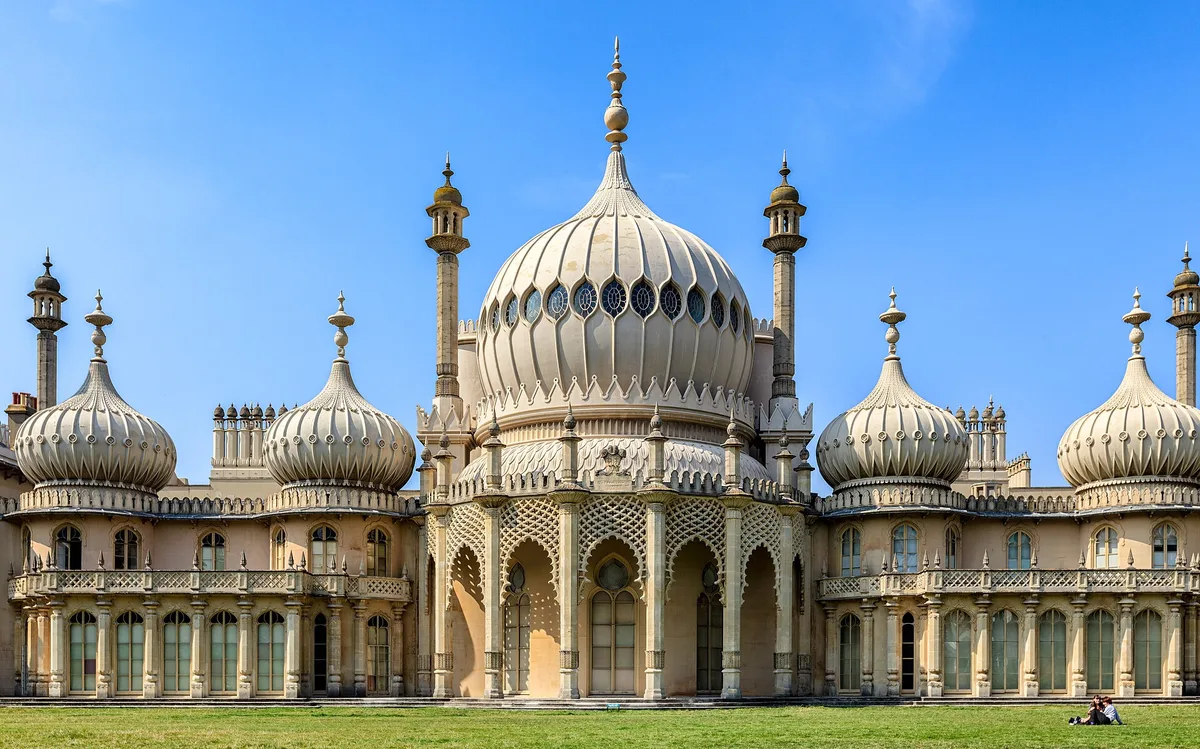
Domes Above the Old Steine
From the Old Steine traffic you see the Royal Pavilion’s pale onion domes and slim minarets rising over the garden trees. Nothing else on the English south coast looks like it. Just behind it are the Brighton Museum & Art Gallery and the Dome concert hall, so you are standing in the city’s cultural quarter, a few minutes’ walk from the sea.
The building started as a modest seaside villa for the Prince of Wales, the future George IV. Between 1815 and 1822 the architect John Nash wrapped it in the Indian-inspired exterior you see now. Inside, the decorators went somewhere else entirely: a European fantasy of China, all painted bamboo, lacquer red and gilded serpents.
Inside: Dragons, Lotus Lamps and Painted Bamboo
The tour runs through the state rooms in one direction. The look changes fast, and the rooms feel more theatrical than stately.
- The Banqueting Room: the chandelier is the showpiece. It hangs from the claws of a silvered dragon under a ceiling painted with a giant plantain tree, and it weighs about a ton.
- The Music Room: lotus-shaped glass lamps hang beneath a domed ceiling of gilded scales. The room was badly damaged by an arson attack in 1975 and took years of painstaking restoration.
- The Long Gallery: the spine of the house. It is lined with pink and blue painted bamboo motifs, and the staircase rails look like bamboo but are made of cast iron.
- The upstairs bedrooms: quieter and plainer. They include rooms associated with Queen Victoria, who never warmed to the place.
Restoration is ongoing, so a room or two may be closed or under wraps when you visit. Ask at the entrance which rooms are open.
The Great Kitchen’s Iron Palm Trees
Most palace kitchens are the dull part of the tour. This one is a highlight. The Great Kitchen was built with the latest technology of the 1810s, and its ceiling rests on slender cast-iron columns topped with copper palm fronds.
A long central table and rows of gleaming copper pans fill the room. They show how much work went into feeding George’s guests. His banquets were famous for running to dozens of dishes, and the kitchen sits close enough to the Banqueting Room to make that possible.
Take your time here. The palm columns are the detail visitors photograph most, and the room is often less congested than the state rooms either side of it.

From Pleasure Palace to Wartime Hospital
The palace had a short life as a royal home. After George IV’s death, William IV used it. Queen Victoria found it cramped and too public, and in 1850 she sold it to the town of Brighton. Before the sale she stripped out much of the furniture. Over the following century, many original pieces have been returned on loan from the Royal Collection.
The most moving chapter came during the First World War. From 1914 the Pavilion was a military hospital for wounded Indian soldiers from the Western Front. Wards filled the grand rooms. The India Gate at the southern entrance to the garden was presented in 1921 as thanks from the people of India.
Beating the Weekend Crush
This is one of Brighton’s most visited attractions, and the rooms are narrow enough that crowds slow the whole route. Weekends between 12pm and 5pm are the busiest time. If you arrive then, you will shuffle through the Banqueting Room behind other groups.
The quietest window is 10am to 11am on weekdays, which lines up with opening time. Here is how to make the most of it:
- Book a timed ticket online before you travel. The current price is on the official Royal Pavilion & Garden website, where you can also check for concessions.
- Arrive for the 10am opening and go straight through. Get the Banqueting Room and Music Room done before the late-morning groups catch up.
- Leave the garden until last. It is free to walk through and you can come back to it later.
- Check photography rules at the door. Flash and tripods are generally not welcome around fragile painted surfaces.
The palace opens 10am to 5:15pm every day of the week. Last admission comes before closing time, so don’t turn up at 5pm expecting to get in.
Planning Your Time
Allow about 90 minutes for the rooms at a steady pace. Add time if you like reading the panels or lingering over the furniture. A full morning covers the palace, the garden and a coffee without rushing.
The Pavilion Garden has been replanted to John Nash’s Regency design, with winding paths and dense shrubs. On a fine afternoon locals sit on the lawns with takeaway lunches. It is a good place to look at the domes from outside once you know what is under them.
Getting There and What’s Next Door
Brighton station is roughly a 15-minute walk away, downhill all the way. Walk down Queen’s Road or cut through North Laine, then head towards the Old Steine. Trains from London Victoria and London Bridge run frequently, so a day trip is easy. Parking in central Brighton is limited, which makes the train the simpler choice.
Within a short walk you have:
- Brighton Museum & Art Gallery, sharing the same garden.
- The Dome, George IV’s former riding stables, now a concert venue.
- North Laine, a grid of independent shops and cafés just to the north.
- The Lanes, a maze of narrow alleys with jewellers and antique dealers to the south-west.
- Brighton Palace Pier, about ten minutes’ walk south down the Old Steine to the seafront.
A good route is the palace first at 10am, lunch in the Lanes, then the pier for the afternoon.
Frequently asked questions
When is the quietest time to visit the Royal Pavilion?
The quietest window is 10am to 11am on weekdays, right after opening. Weekends from 12pm to 5pm are the busiest, so avoid them if you can.
What are the Royal Pavilion's opening hours?
It is open every day from 10am to 5:15pm. Last admission is before closing, so check the official website and don't arrive at the last minute.
How long do I need at the Royal Pavilion?
Plan on about 90 minutes for the state rooms and the Great Kitchen. Add time for the Pavilion Garden and the Brighton Museum next door.
How do I get to the Royal Pavilion from Brighton station?
It is roughly a 15-minute walk downhill from Brighton station, via Queen's Road or through North Laine to the Old Steine. Central parking is limited, so the train is usually easier.
What is near the Royal Pavilion?
Brighton Museum & Art Gallery and the Dome share its garden. North Laine and The Lanes are a few minutes' walk away, and Brighton Palace Pier is about ten minutes south.
Plan your trip to Brighton
Some links above are affiliate links — if you book through them, Wander Atlas earns a small commission at no extra cost to you. It's how we keep every guide free.