Why go
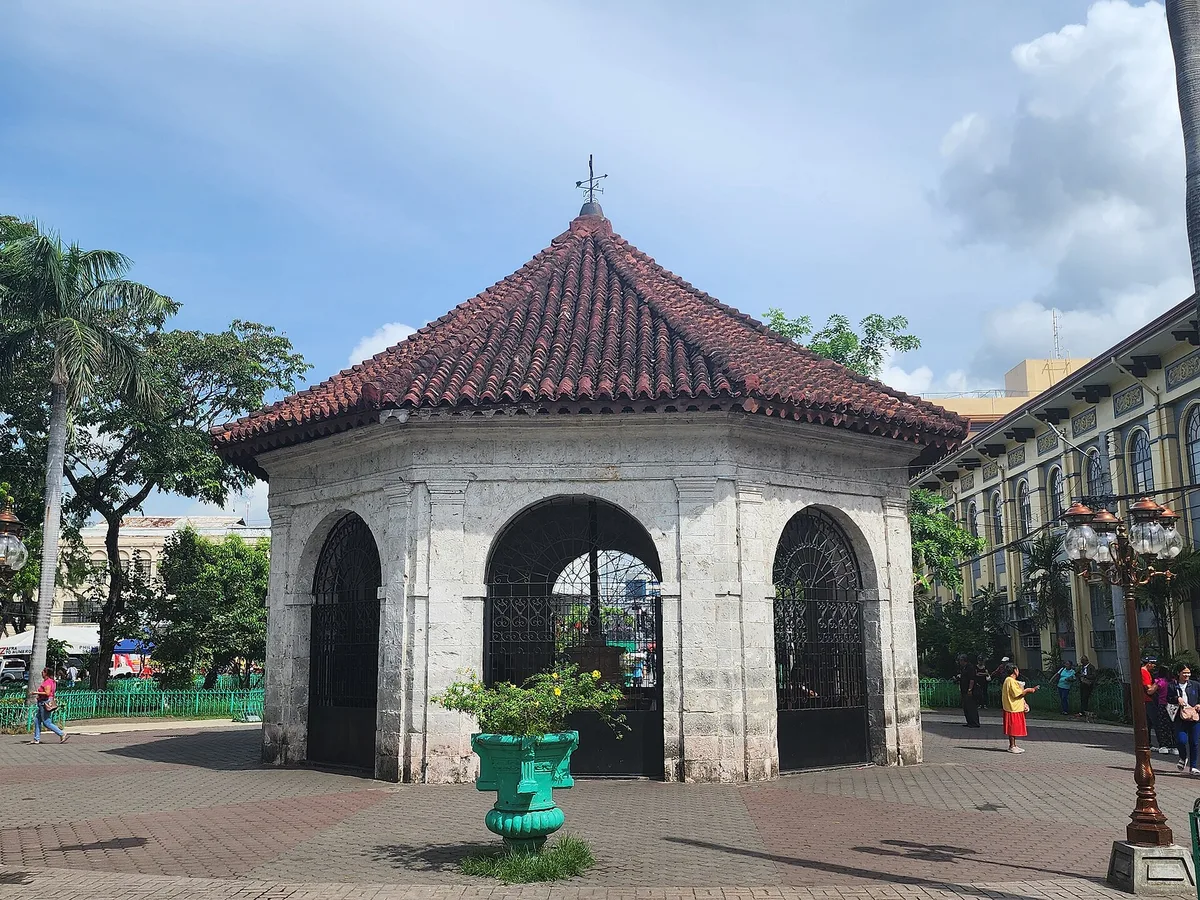
This is where Christianity in the Philippines is said to have begun. In April 1521, Ferdinand Magellan’s expedition planted a wooden cross here after baptizing the local rajah and his family. Five centuries on, that moment still pulls crowds daily.
The cross you see today isn’t the original. It’s a tindalo-wood replica encasing what’s believed to be a fragment of it. That doesn’t dampen the atmosphere one bit.
What you’ll actually see
You step into an open-sided octagonal kiosk, its ceiling painted with a mural depicting the baptism scene and the cross’s arrival by ship. The cross itself stands waist-high on a pedestal, ringed by a low fence and usually a cluster of candles burning nearby.
Vendors just outside sell tapered candles in different colors, each color said to represent a different prayer or intention, love, health, luck. You’ll see locals lighting them and murmuring quietly even amid the tourist bustle.
The whole visit takes 10–15 minutes unless you linger to watch the candle rituals or read the small plaques.
Getting there
The site sits on P. Burgos Street in downtown Cebu City, right next to the Basilica del Santo Niño. Most visitors combine both in one stop, since they share basically the same entrance plaza.
- From Cebu City proper, a taxi or Grab from the port area or SM City Cebu takes 10–20 minutes depending on traffic.
- Jeepneys marked for Colon Street or the Basilica also pass nearby.
- It’s walkable from Colon Street, one of the oldest streets in the country, if you want to stroll through the historic core.
Parking is scarce right at the site, so arriving on foot or by rideshare is easier than driving yourself.

When to go
The kiosk is open every day from 8am to 6pm, with no midday closure. Weekdays between 8 and 9am are the calmest stretch. You’ll get the mural and cross mostly to yourself.
Weekends are busy throughout the day, but the crush really builds from 2pm to 6pm as tour groups and family visitors pile in after lunch. If you’re set on a weekend trip, aim for the morning instead.
Because this is one of Cebu’s most-visited landmarks, expect company at almost any hour. Treat it as a quick, atmospheric stop rather than a place for quiet contemplation.
Nearby stops worth combining
Since you’re already downtown, stretch the visit into a half-day of colonial-era sights.
- Basilica del Santo Niño, right next door, home to the revered Santo Niño image; check separately for its own opening hours and mass schedule.
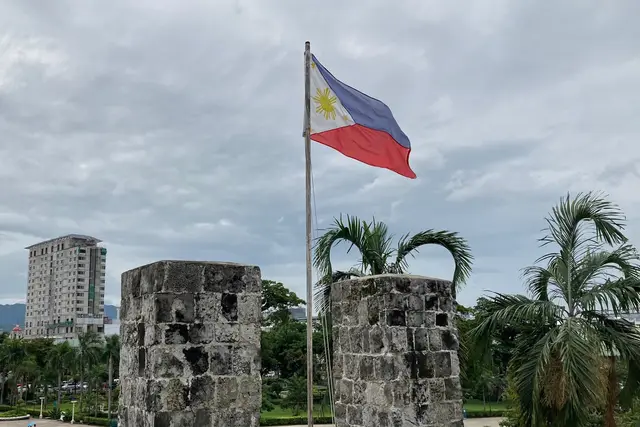
- Fort San Pedro, a Spanish-era triangular fort about 10 minutes’ walk south, with harbor views from its ramparts.
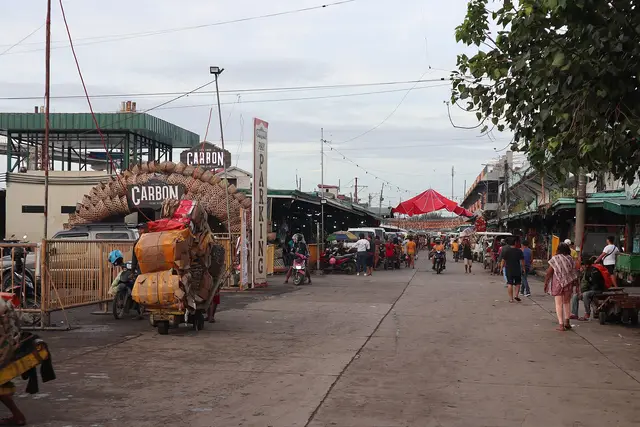
- Cebu City Hall and Colon Street, a short walk north, useful for a sense of the old commercial district.
Budget half a day if you want to see all three without rushing.
How to visit like a local
Locals treat the cross as a living shrine, not just a photo stop, so a little decorum goes a long way.
- Buy a candle from one of the outside vendors. Prices are small and negotiable, so agree before you take one.
- Light it, place it in the designated racks, and step back to let others do the same; don’t linger blocking the rail for photos.
- Dress modestly since you’ll likely walk straight into the adjoining basilica afterward.
- Keep valuables close. The plaza is crowded and pickpocketing opportunists know it.
The mistake most first-timers make is treating this as a five-second selfie stop and missing the mural overhead or the candle ritual entirely. Slow down for just a few extra minutes and the place makes a lot more sense.
Since it’s consistently one of the busiest landmarks in the city, the real trick to “visiting like a local” is timing: come right at 8am opening on a weekday, before tour buses and cruise groups arrive, and you’ll actually get a moment of stillness in a spot that’s rarely still.
Frequently asked questions
Is there an entrance fee for Magellan's Cross?
No, viewing the cross in its kiosk is free. You may pay a small, negotiable amount only if you choose to buy a votive candle from nearby vendors.
When is the quietest time to visit?
Weekday mornings between 8am and 9am are the calmest. Weekend afternoons from 2pm to 6pm are the busiest, so avoid that window if you dislike crowds.
How long should I spend here?
Most visitors spend 10–15 minutes at the cross itself, though pairing it with the neighboring Basilica del Santo Niño and Fort San Pedro can turn it into a half-day outing.
How do I get to Magellan's Cross from central Cebu City?
It's on P. Burgos Street downtown, a 10–20 minute taxi or Grab ride from most city hotels or the port area, and walkable from historic Colon Street.
Is the cross on display the original from 1521?
No — the visible cross is a wooden replica said to encase a fragment of the original, which was reportedly broken up and distributed as relics over the centuries.
Plan your trip to Cebu
Some links above are affiliate links — if you book through them, Wander Atlas earns a small commission at no extra cost to you. It's how we keep every guide free.