A house older than most of the city around it
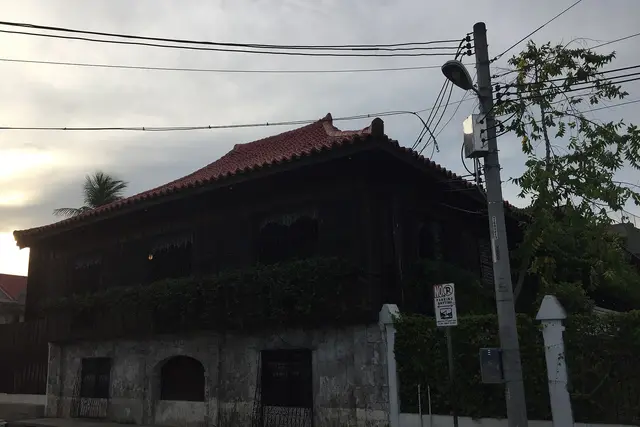
Mabini Street is plain concrete and tangled wiring. Then you reach a wall of coral stone under a roof of clay tiles. That is the Yap-San Diego Ancestral House. It was built in the late 1600s, which makes it one of the oldest homes still standing in the Philippines.
Its first owners were a Chinese merchant, Don Juan Yap, and his wife, Doña Maria Florido. They lived in the Parian, the district where Cebu’s Chinese traders were settled in the Spanish colonial era. The house later passed to the San Diego family through marriage. Its present owners restored it and opened it to visitors.
Coral stone below, hardwood above
The house follows the old bahay na bato pattern. The lower walls are thick coral stone, cut into blocks, and they keep the rooms cool. The upper floor is heavy timber, with wide plank floors and big windows. Walk around slowly and look at the joints. Some of this wood was set in place more than three centuries ago.
Inside, the rooms are packed tight with the owners’ collection:
- Hand-carved furniture: dark wooden beds, cabinets and chairs in the colonial style
- Religious art: carved saints and devotional pieces, some in glass cases
- Household objects: old jars, ceramics and kitchen tools from centuries of ordinary life
- The garden: a green courtyard behind the stone walls, a break from the traffic outside
There are no velvet ropes or long captions. The place feels like a lived-in house that has kept everything. You’ll want time to look closely at each room.

Finding Mabini Street in the Parian
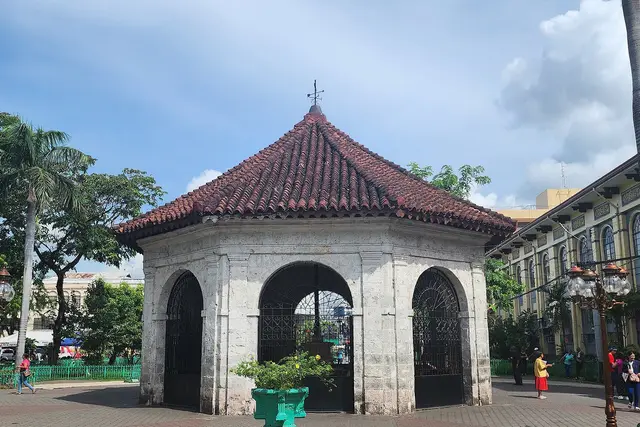
Cebu City has no metro, so most visitors come by taxi, Grab or jeepney. Tell the driver “Yap-San Diego, Mabini Street, Parian.” Most drivers know it. The house is at 155 Mabini St, a short ride from the Basilica Minore del Santo Niño and Magellan’s Cross.
Once you’re there, you can walk to the rest of old Cebu:
- Heritage of Cebu Monument: the big sculpture in Parian plaza, a few minutes’ walk away
- Casa Gorordo Museum: another restored ancestral home, on Lopez Jaena Street nearby
- Jesuit House of 1730: a Jesuit residence from the colonial era, also in the Parian area
- Colon Street: often called the oldest street in the Philippines, just beyond the district
These make an easy half-day on foot. Start with the Yap-San Diego house, because it opens at 9am.
Timing your visit around the crowds
The house is open every day from 9am to 7pm, with the same hours all week. On weekdays it’s quietest between 9am and 10am. That hour is your best chance to have a room to yourself and photograph it empty.
Weekends are a different story. From 11am to 4pm on Saturdays and Sundays, it’s at its busiest. Tour groups and families squeeze into the narrow rooms, and there’s a queue at the stairs. If a weekend is your only option, come at opening or late in the afternoon.
Give yourself 45 minutes to an hour. Allow longer if you like reading the details on old furniture.
Moving through a house that is still private
This is well known and on most heritage-walk routes, so don’t expect to discover it alone. What makes a visit go well is how you move through the rooms.
- Pay at the entrance. Check the current fee at the door, and bring pesos in cash.
- Look, don’t lean. The beds, cabinets and carvings are original, and there are few barriers. Keep bags close in tight spaces.
- Watch the floors and stairs. The old timber is uneven in places. Take the steps slowly.
- Ask before flash photography. Photos are welcome, but staff may ask you not to use flash near the religious images.
- Treat the saints as devotional. Many Cebuanos still see these images as sacred, not decoration. Speak quietly around them.
The staff can point out the oldest parts of the building. Asking which beams and walls are original is a good way to start a conversation.
Pairing it with a Parian afternoon
Visiting the house first makes the rest of the district easier to understand. Once you’ve seen coral-stone walls under timber, you’ll spot the same building style at Casa Gorordo. At the Heritage of Cebu Monument, look for the scenes of Chinese traders and Spanish rule. The house you just left comes from that same world.
End at the Basilica del Santo Niño or on Colon Street. You’ll have covered more than four centuries of Cebu in a few blocks.
Frequently asked questions
When is the quietest time to visit Yap-San Diego Ancestral House?
On weekdays it's quietest between 9am and 10am, right after opening. On weekends, avoid 11am to 4pm, when it's busiest.
What are the opening hours?
It's open every day, Monday to Sunday, from 9:00 AM to 7:00 PM.
How do I get there?
Take a taxi, Grab or jeepney to 155 Mabini St in the Parian district of Cebu City. It's a short ride from the Basilica del Santo Niño and Magellan's Cross. Most drivers know it by name.
How long should I spend there?
Plan 45 minutes to an hour for the rooms and the garden. Add more time if you'll walk to nearby Parian sights afterwards.
What else is nearby?
The Heritage of Cebu Monument, Casa Gorordo Museum and the Jesuit House of 1730 are all within walking distance. So is Colon Street, often called the oldest street in the Philippines.
Plan your trip to Cebu
Some links above are affiliate links — if you book through them, Wander Atlas earns a small commission at no extra cost to you. It's how we keep every guide free.