Why go
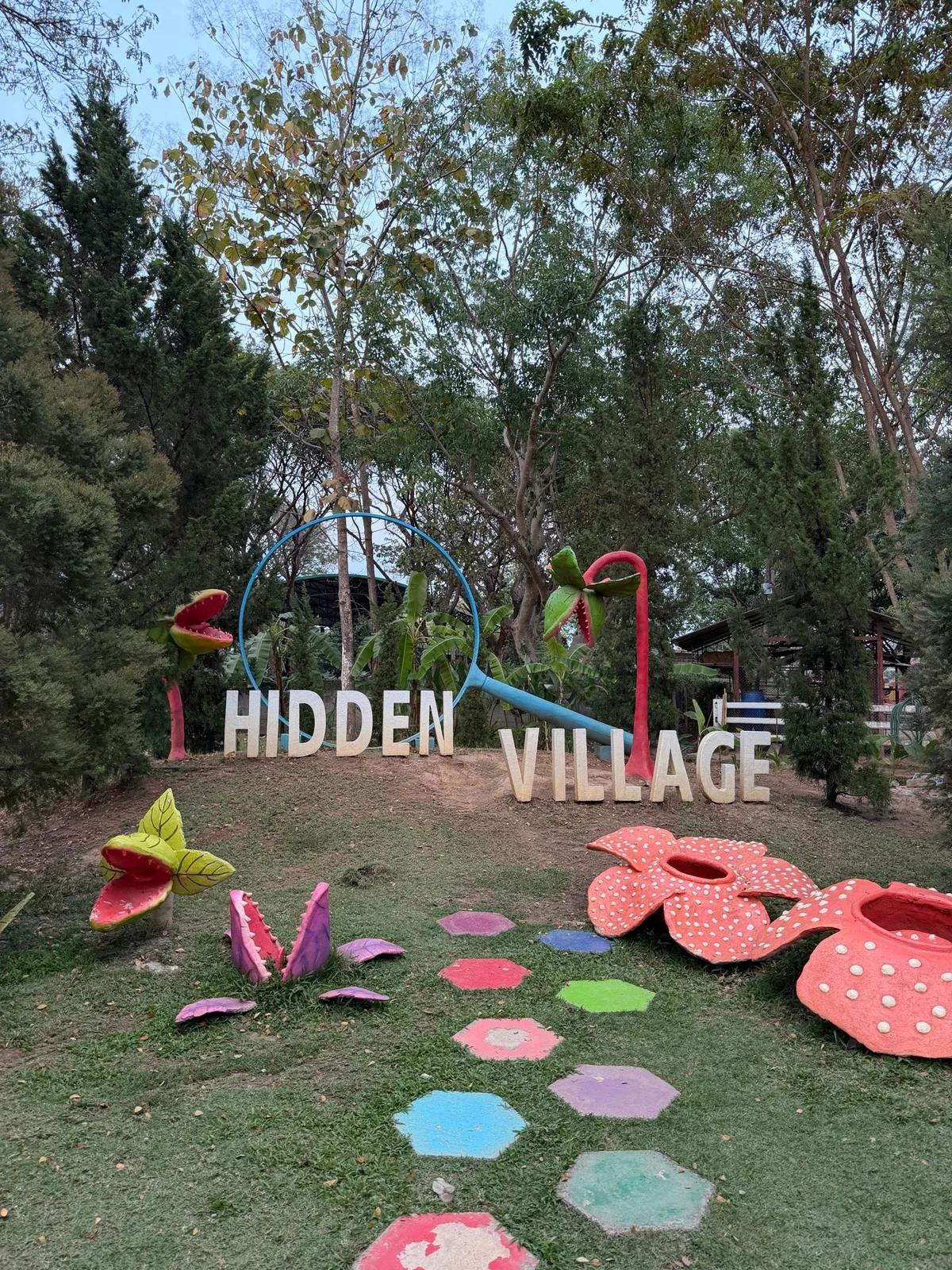
Chiang Mai’s old city is stacked with temples and night markets, but Hidden Village Chiang Mai offers something different: a sprawling, jungle-themed compound of wooden walkways, thatched huts, hanging bridges, and staged photo corners built around a working café. It’s the kind of place locals share on social media rather than something printed in old-school guidebooks, hence the “hidden” in the name, even though it now pulls a steady stream of visitors (over 2,400 reviews and a solid 4.2 rating attest to its popularity).
Go for the atmosphere and the pictures, not for deep cultural insight; it’s a relaxed half-day add-on rather than a must-see monument.
Getting there
The address (77/19 Moo 7, 168 Ban Tha Look Soi 8, Tambon San Phi Suea, Amphoe Mueang Chiang Mai) sits northeast of the old city, outside the main tourist grid of Nimman and the moat area. There’s no direct songthaew (red truck) route or public bus that serves this soi reliably, so the practical options are a Grab ride, a metered taxi, or your own rented scooter/car.
From the old city center (near Tha Phae Gate), expect roughly a 20–30 minute drive depending on traffic and exact route through San Phi Suea’s residential lanes. If self-driving, plug the exact soi into Google Maps rather than just the district name, since San Phi Suea has a maze of numbered sois that look similar. Parking is generally available on-site for scooters and cars.
What to see and do
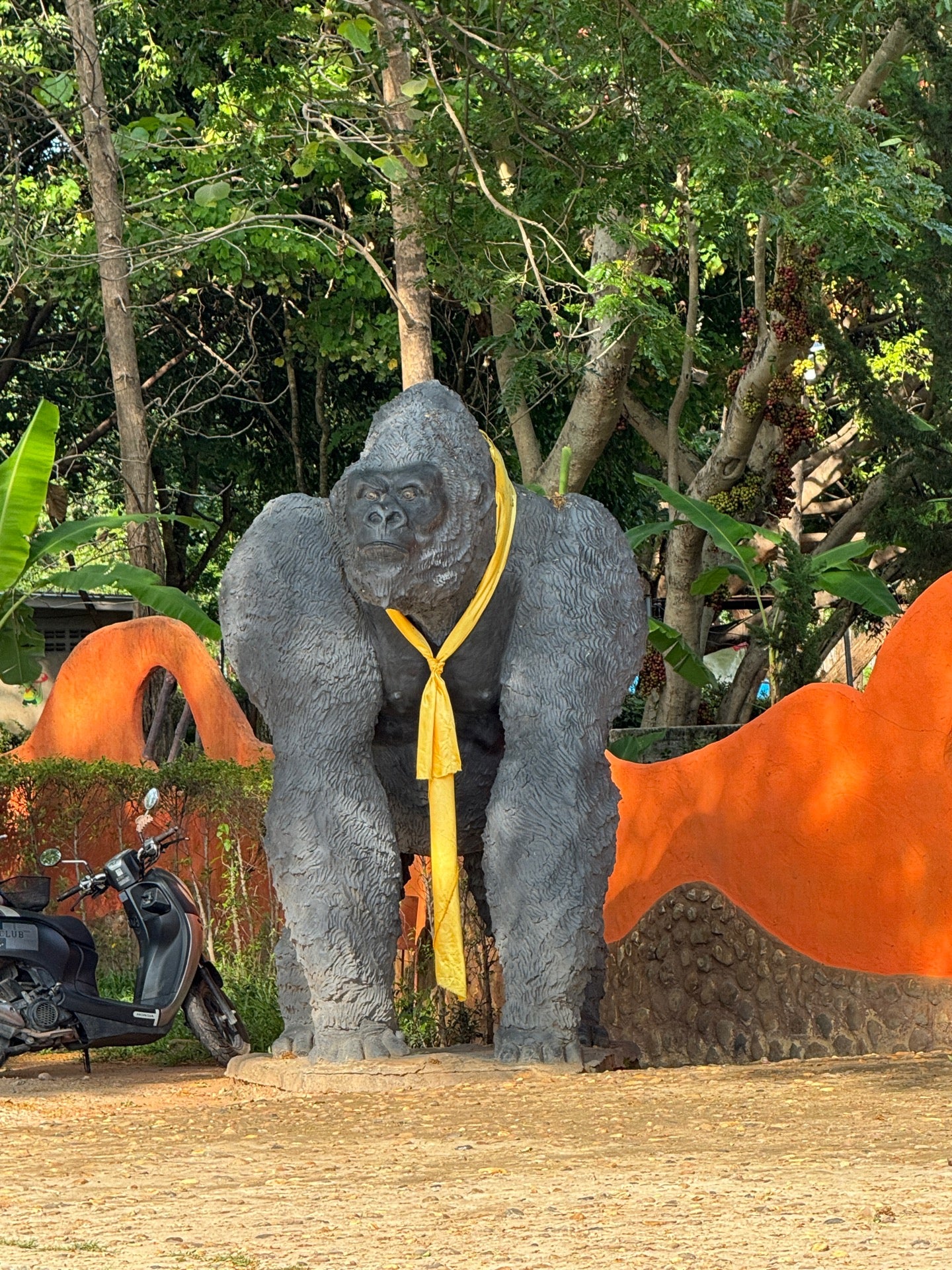
The draw here is wandering: raised bamboo and wood walkways weave between ponds, small waterfalls, swings over water, tunnel-like tree cover, and rustic huts styled like a jungle village. Photo spots are scattered throughout, so plan to spend most of your visit strolling and shooting rather than sitting still. Attached to the walking trail is a café/restaurant area serving Thai dishes and drinks, many visitors treat the entry as tied to a minimum food or drink order, so budget for at least a coffee, smoothie, or light meal while you’re there.
Because the layout is outdoors and partly shaded, comfortable footwear and sun protection help, especially at midday. Give yourself 60–90 minutes: enough to walk the full circuit, get photos at the main bridges and huts, and relax with a drink before heading back into the city.
When to go
Early morning (soon after opening) or late afternoon before sunset are the best windows. The light is softer for photos and the heat is more bearable, since much of the site is semi-outdoor with limited air conditioning. Weekdays are noticeably quieter than weekends, when domestic tourists and families flock in for photo sessions. Chiang Mai’s cooler season, roughly November through February, is the most comfortable time to explore any outdoor attraction in the city, including this one; the hot season (March–May) can make midday visits uncomfortable, and the rainy season (June–October) brings sudden downpours that can affect the wooden walkways underfoot.
Nearby & tips
San Phi Suea and the surrounding Mae Rim/Sankampaeng direction area has other rustic and nature-themed cafés with a similar hidden-garden aesthetic, so it’s worth checking what else is within a short drive if you’re renting a scooter for the day. Because operating hours, entrance fees, and menu prices at small independent venues like this can change without much notice, confirm current details (opening times and any entry/consumption charge) through Google Maps listings or a quick call before setting out, particularly if visiting on a public holiday.
Bring cash in small bills, as rural cafés outside the main tourist zones don’t always have reliable card payment. Pair the visit with a stop at a nearby temple or the Chiang Mai night bazaar on the way back into town to make it a fuller half-day loop rather than a single stand-alone stop.
Frequently asked questions
How do I get to Hidden Village Chiang Mai without a car?
Use a Grab ride-hailing app or a metered taxi from the old city — there's no direct songthaew or public bus route, and the soi network in San Phi Suea can be confusing to navigate on foot.
How much does it cost to enter?
There's typically a small entry fee or a minimum food/drink order at the attached café; exact amounts can change, so check the venue's current Google Maps listing or ask when booking your ride.
How long should I plan to stay?
Most visitors spend 60–90 minutes walking the wooden bridges and photo areas and having a drink or snack at the café.
What's the best time of day and year to visit?
Early morning or late afternoon for softer light and cooler temperatures; November to February is the most comfortable season overall, since the site is largely outdoors.
Is it worth visiting if I only have a couple of days in Chiang Mai?
It's a nice-to-have rather than essential — prioritize it if you enjoy rustic photo-op spots and have already covered temples like Wat Phra Singh or Doi Suthep.
Plan your trip to Chiang Mai
Thailand eSIM & staying connected →
Some links above are affiliate links — if you book through them, Wander Atlas earns a small commission at no extra cost to you. It's how we keep every guide free.
Related guides
 hidden gem
 Three Kings Monument: Chiang Mai Travel Guide (4.3★)
 hidden gem
 Night Bazaar: Chiang Mai Travel Guide (4.3★)
 attraction
 Chiang Mai National Museum: Travel Guide (4.2★)
 attraction