Wat Phra Singh Woramahawihan: Chiang Mai Travel Guide (4.7★)
When to visit Thailand: month-by-month weather, crowds and holidays →
✓ Facts verified via Google Places · Aug 31, 2026
At a glance
Opening hours
- Monday: 5:30 AM – 7:30 PM
- Tuesday: 5:30 AM – 7:30 PM
- Wednesday: 5:30 AM – 7:30 PM
- Thursday: 5:30 AM – 7:30 PM
- Friday: 5:30 AM – 7:30 PM
- Saturday: 5:30 AM – 7:30 PM
- Sunday: 5:30 AM – 11:00 PM
Live foot-traffic data via BestTime.app
How this guide is made
Produced with AI assistance and reviewed against live data sources. Facts such as hours, ratings, and location come from Google Places; images are licensed or public domain. Details can change — please verify before visiting. Editorial policy
Why go
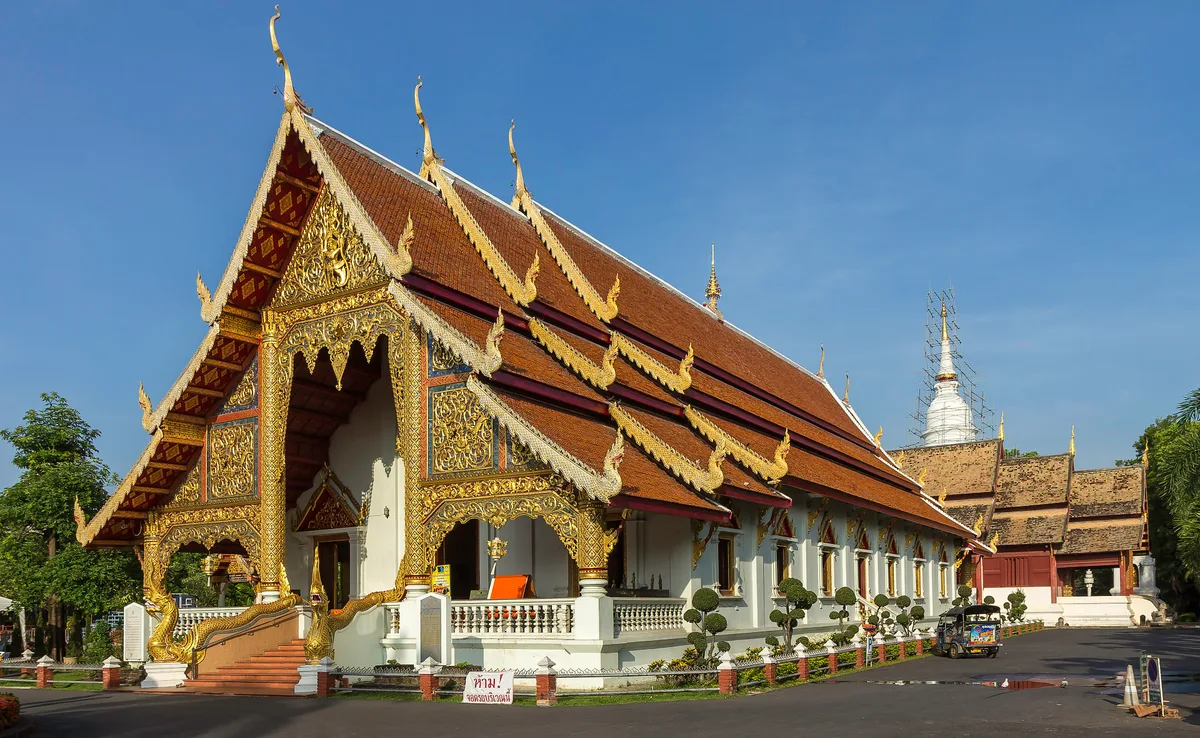
Wat Phra Singh isn’t just another stop on the temple circuit. Founded in 1345, it houses the Phra Singh Buddha, one of Thailand’s most venerated images, and its Lai Kham viharn holds some of the finest surviving temple murals in the north.
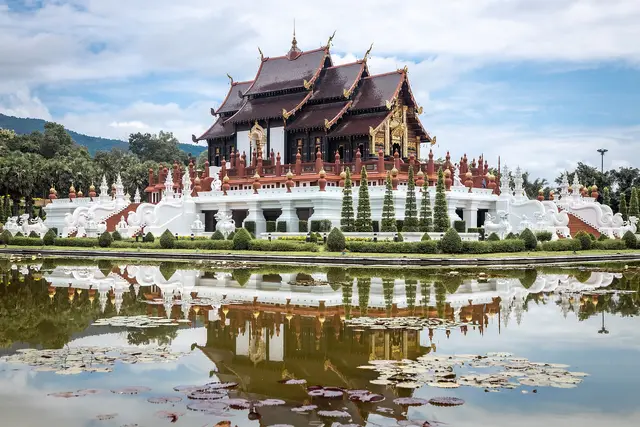
You feel the scale of the place before you notice the details. The main viharn’s roofline sweeps low and steep, tiled in orange and green, with gilded chofah finials curling up against the sky. Chedis rise behind it, their bells sheathed in copper and gold leaf that catches the afternoon light.
Getting there
The temple sits inside Chiang Mai’s Old City walls, at 2 Samlarn Road, near the western Suan Dok Gate.
Most visitors walk or cycle in from elsewhere in the Old City. It’s a flat, easy 10-15 minute stroll from the Three Kings Monument. A tuk-tuk or Grab car from outside the walls takes about 10-20 minutes depending on traffic, and drivers know it by name.
If you’re doing a walking loop of Old City temples, Wat Phra Singh pairs naturally with Wat Chedi Luang, about 10 minutes away on foot.
What to see
Head first for the Lai Kham chapel, tucked behind the main viharn. Its interior murals, painted in the 19th century, depict two folk tales, Sang Thong and Suwannahong, in scenes rich with everyday Lanna life: markets, boats, courtship, gossip.
The Phra Singh Buddha itself sits in the main viharn, a bronze image in the “Chiang Saen” style, draped in saffron cloth donated by worshippers. Look for:
- The scripture hall (ho trai), raised on a base to protect ancient palm-leaf manuscripts from insects and flood
- The ordination hall’s carved wooden gables
- Small shrines scattered through the grounds where locals leave flowers, incense, and gold leaf
Give yourself roughly an hour. Longer if you linger over the murals, which reward slow, close looking.
When to go
This is a well-visited temple, and it shows in the numbers. It’s among the most-reviewed religious sites in northern Thailand. Foot traffic is lightest between 7am and 8am, on both weekdays and weekends, before tour groups arrive.
Avoid weekend afternoons and evenings, especially the 4pm-11pm stretch, when crowds peak. Opening hours vary by day, so check ahead if you’re planning an evening visit once the heat and crowds have eased.
April’s Songkran festival brings ceremonial bathing of the Phra Singh Buddha and much larger crowds, atmospheric, but not a quiet visit.
How to visit like a local
Dress matters here more than at some temples: cover shoulders and knees, and remove shoes before entering any building with a Buddha image inside. Sarongs are sometimes available to borrow at the entrance if you arrive underdressed, but don’t count on it.
Entry to the grounds and main viharn is typically free, though the Lai Kham chapel and some inner halls may ask a small donation. Bring some small cash notes for this and for the donation boxes near the shrines.
- Walk clockwise around chedis and the ordination hall, following the direction other worshippers move
- Keep voices low inside the viharns; this remains an active place of worship, not just a sightseeing stop
- Sit or kneel with your feet pointed away from Buddha images, never toward them
- Photography is generally fine outdoors and in most halls, but watch for signs restricting flash near the murals
The mistake most visitors make is treating this purely as a photo stop and rushing through in fifteen minutes. Slow down at the Lai Kham murals. That’s the payoff. Since it’s genuinely popular rather than a quiet find, arriving right at opening is your best tool for having the courtyards to yourself.
Frequently asked questions
How much does it cost to enter Wat Phra Singh?
The main grounds and viharn are typically free to enter. Some inner areas, like the Lai Kham chapel, may request a small donation, so carry some cash in small denominations.
What are the opening hours?
5:30am to 7:30pm daily, except Sundays when it stays open until 11pm. Confirm hours locally if visiting during a festival.
When is the quietest time to visit?
Between 7am and 8am, on both weekdays and weekends, before tour groups and day-trippers arrive. Weekend afternoons and evenings from 4pm to 11pm are the busiest, so avoid that window if you want space to look around.
How long should I spend there?
About an hour covers the main viharn, the Lai Kham murals, and the chedis. Add extra time if you want to study the murals closely.
What else is nearby?
Wat Chedi Luang is roughly a 10-minute walk away, and the Three Kings Monument is about 10-15 minutes on foot, making it easy to build a walking loop of Old City sights.
Plan your trip to Chiang Mai
Some links above are affiliate links — if you book through them, Wander Atlas earns a small commission at no extra cost to you. It's how we keep every guide free.
Related guides
 attraction
 Wat Chedi Luang: Chiang Mai Travel Guide
 attraction
 Chiang Mai National Museum: Travel Guide (4.2★)
 attraction
 Wat Phra That Doi Suthep: Chiang Mai Travel Guide
 attraction