Chiang Mai National Museum: Travel Guide (4.2★)
When to visit Thailand: month-by-month weather, crowds and holidays →
✓ Facts verified via Google Places · Aug 31, 2026
At a glance
Opening hours
- Monday: Closed
- Tuesday: Closed
- Wednesday: 9:00 AM – 4:00 PM
- Thursday: 9:00 AM – 4:00 PM
- Friday: 9:00 AM – 4:00 PM
- Saturday: 9:00 AM – 4:00 PM
- Sunday: 9:00 AM – 4:00 PM
How this guide is made
Produced with AI assistance and reviewed against live data sources. Facts such as hours, ratings, and location come from Google Places; images are licensed or public domain. Details can change — please verify before visiting. Editorial policy
Why go
You come to the Chiang Mai National Museum not for a quick photo but to actually understand what you’ve been looking at all over the old city, the naga finials, the stucco lotus buds on temple gables, the seated Buddhas with that distinctive Lanna curve to the shoulders. The building itself signals this intent before you’re even through the door: a white, multi-tiered roofline in traditional northern Thai style, deliberately built to echo the region’s temple architecture rather than look like a colonial-era hall of artifacts.
Inside, the collection moves chronologically through the art, history, and culture of northern Thailand, and by the time you exit you’ll recognize Lanna-style Buddha imagery on sight for the rest of your trip.
Getting there
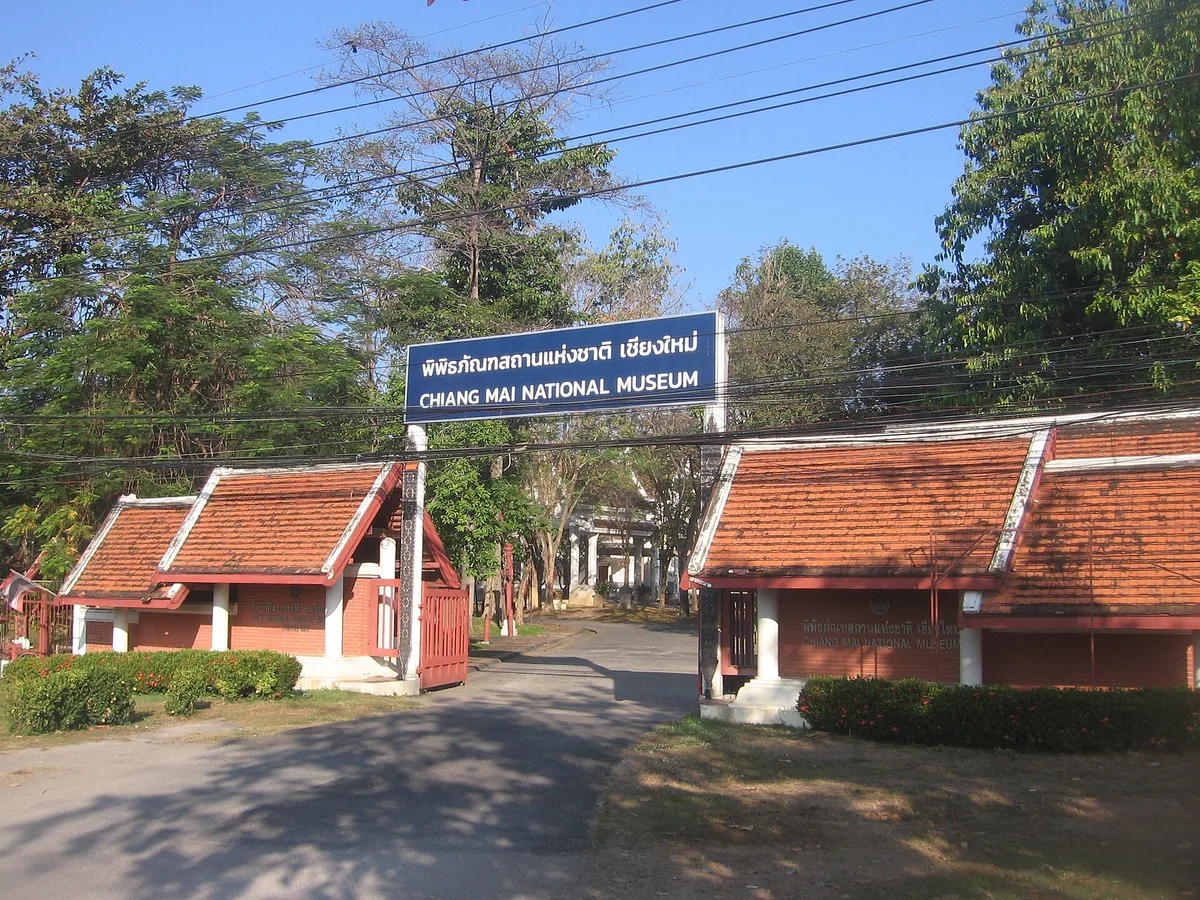
The museum sits at 451, Tambon Chang Phueak, on the northern fringe of Amphoe Mueang Chiang Mai, just outside the old city’s moat, a few minutes’ walk from Chang Puak Gate and directly adjacent to Wat Jet Yot temple. Most visitors arrive by songthaew (red truck taxi), Grab, or tuk-tuk from the old city, a ride of roughly 10–15 minutes depending on traffic.
If you’re already exploring temples on a rented bike or scooter, it’s an easy add-on stop since the surrounding sois are quiet and shaded by tamarind trees, a welcome change from the moat-side traffic.
What to see inside
Give yourself time on the ground floor, where prehistoric artifacts and early Lanna kingdom pieces set the historical framing, bronze drums, ceramics, and inscribed stones that establish just how old this region’s settled history is. Upstairs is where the museum earns its reputation: rooms devoted to Buddha imagery across different eras and styles, ornate temple carvings, lacquerware, silverwork, and textiles woven by northern Thai hill communities.
Look for the betel-nut sets and ceremonial umbrellas, small objects, easy to walk past, but they say more about daily Lanna court life than any grand statue does. The lighting is soft and museum-quiet throughout, a deliberate contrast to the brightness and noise outside, so it’s also simply a pleasant, cool place to slow down mid-afternoon.
When to go
Northern Thailand’s cooler season, roughly November through February, makes the walk from the gate and the time spent lingering in the outdoor courtyard far more comfortable, though the museum’s indoor galleries are a fine retreat any time of year, including the hot months of March–May when midday heat in Chiang Mai is intense. Mornings tend to be the calmest stretch, before tour groups doing the old-city temple circuit swing past Wat Jet Yot next door.
Budget 1.5 to 2 hours if you want to read the didactic panels properly; closer to an hour if you’re moving briskly through the highlights.
Pairing it with Wat Jet Yot
Because the museum shares its grounds area with Wat Jet Yot, a 15th-century temple famous for its seven-spired chedi decorated with stucco celestial figures, it makes sense to treat the two as one visit. Walk the temple first while the light is soft in the morning, then step into the museum’s air-conditioned galleries as the sun climbs higher.
The two together give you both the physical artifact and the still-functioning sacred space it came from, which is a far richer way to understand Lanna Buddhism than either site alone.
How to visit like a local
Dress as you would for any active temple in Chiang Mai, shoulders and knees covered, since you’ll likely walk through Wat Jet Yot’s grounds either before or after. Bring small cash for any entrance fee or ticket window rather than assuming card payment is accepted; museum ticket counters in Thailand still commonly run cash-only. There’s rarely a queue here compared to the old city’s headline temples, so there’s no need to book ahead, just show up.
Photography is typically fine in the courtyard and common areas, but watch for signage restricting flash or photos in specific gallery rooms and follow it, as this is enforced more strictly here than at open-air temples. The most common visitor mistake is treating this as a five-minute drive-by stop between temples; the collection rewards a slower pace, and the shaded benches in the courtyard are a genuinely nice place to sit with a bottle of water before moving on. Confirm the current opening hours and entrance fee on arrival or through your hotel, since both can shift seasonally.
Frequently asked questions
How long should I spend at the Chiang Mai National Museum?
Plan on 1.5 to 2 hours to read through the galleries properly, or about an hour if you're only hitting the highlights on the upper floor.
How do I get to the museum from the old city?
It's a short songthaew, Grab, or tuk-tuk ride (roughly 10–15 minutes) north to Chang Phueak, just outside the old city moat and right next to Wat Jet Yot temple.
What's the best time of day to visit?
Mornings are calmest, before old-city temple tour groups arrive at neighboring Wat Jet Yot. The cooler months (November–February) also make the outdoor courtyard more comfortable.
Can I combine it with another attraction nearby?
Yes — Wat Jet Yot, the 15th-century seven-spired temple, sits right next to the museum, making it a natural half-day pairing.
Do I need to book tickets in advance?
No, it's not typically busy enough to require booking. Bring cash for the entrance fee and check current hours and pricing before you go, as these can change.
Plan your trip to Chiang Mai
Some links above are affiliate links — if you book through them, Wander Atlas earns a small commission at no extra cost to you. It's how we keep every guide free.
Related guides
 attraction
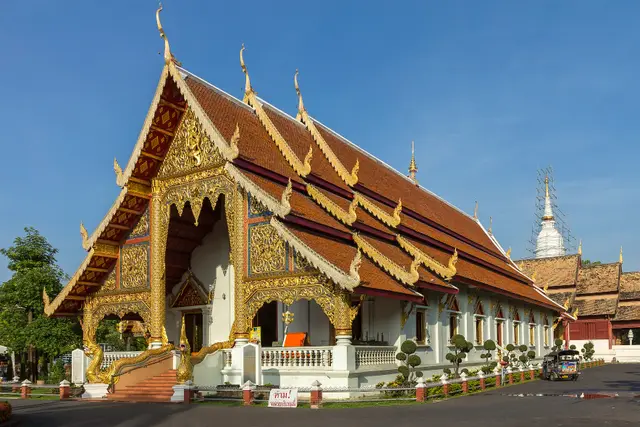
 Wat Phra Singh Woramahawihan: Chiang Mai Travel Guide (4.7★)
 attraction
 Wat Chedi Luang: Chiang Mai Travel Guide
 attraction
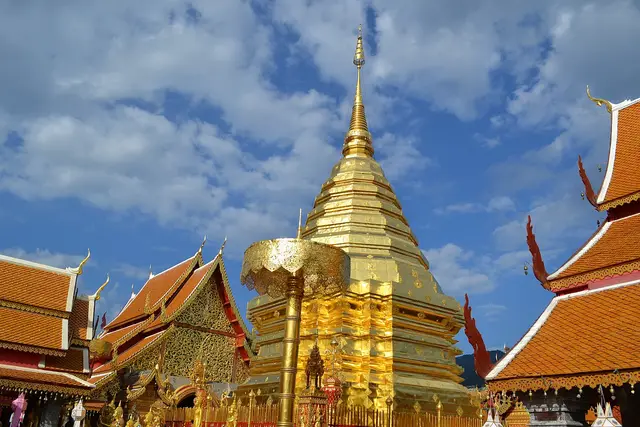
 Wat Phra That Doi Suthep: Chiang Mai Travel Guide
 attraction