You smell Chuncheon’s signature dish before you see it, a sweet-hot cloud of gochujang, garlic, and sesame oil drifting out from doorways along the streets near the city’s dakgalbi alley. This is the town where dakgalbi was invented, sometime in the 1960s, when cheap cuts of chicken were marinated in chili paste and grilled tableside as an affordable alternative to pork galbi. Every restaurant here claims its own version is the original, and 1.5 Dakgalbi has built a loyal following with its take on the classic.
Why go
Chuncheon without dakgalbi is like Jeonju without bibimbap (you’re missing the reason people make the trip. 1.5 Dakgalbi has earned a strong reputation locally and among visitors, holding a rating of 4.4 across nearly 1,800 reviews, which puts it firmly among the city’s most consistently well-regarded spots for the dish. It’s not a quiet insider secret) this is a well-known address that regularly draws a crowd, and the room fills with the hiss and clatter of metal spatulas scraping against giant round pans from late afternoon onward.
What to eat
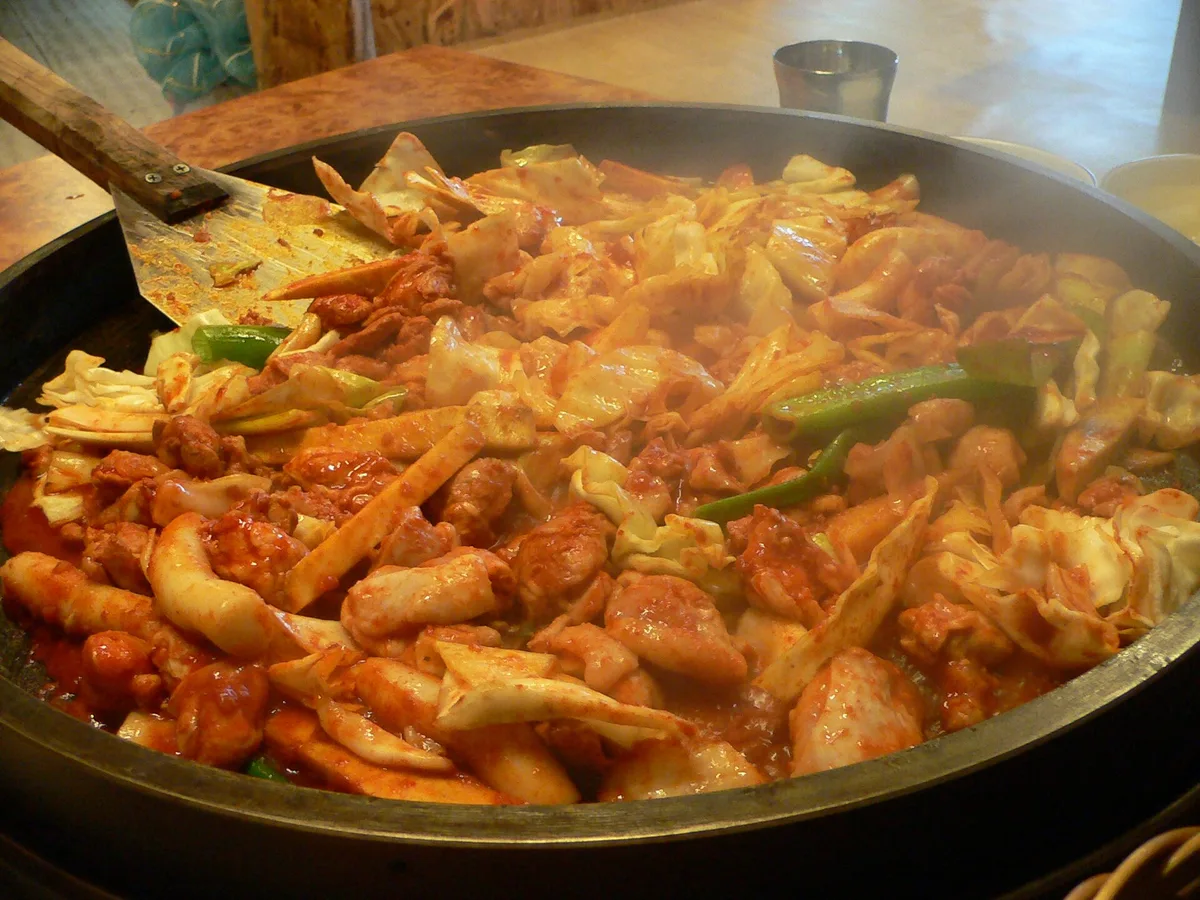
Dakgalbi here follows the traditional format: boneless chicken thigh tossed in a bright red marinade, cooked at the table on a huge flat pan alongside cabbage, sweet potato, tteok (rice cakes), and perilla leaves. You watch the staff toss and fold everything with long spatulas until the chicken chars slightly at the edges and the vegetables go glossy with sauce.
Order it for two or more. This isn’t a solo dish, and portions are built around groups splitting a shared pan. Once the chicken and vegetables are mostly gone, ask for bokkeumbap: the staff will stir fried rice, seaweed flakes, and sometimes cheese directly into the leftover sauce coating the pan, scraping up every bit of caramelized flavor left behind. It’s the unofficial second act of any dakgalbi meal and arguably the best part.
Getting there
The restaurant sits at 77 Human-ro in Chuncheon, Gangwon-do, within the cluster of dakgalbi restaurants the city is famous for. Chuncheon is roughly an hour to 90 minutes from Seoul by ITX-Cheongchun train from Yongsan or Cheongnyangni stations, making it an easy day trip or overnight stop. From Chuncheon Station or the bus terminal, taxis are inexpensive and the quickest way to reach the restaurant district; many visitors also walk the dakgalbi street itself, comparing menus and grill setups before choosing where to sit.
When to go
This restaurant tends to be calmer outside of peak dinner hours. The exception is the weekend dinner rush: try to avoid arriving between 5pm and 10pm on Saturdays and Sundays, when tables turn over slowly and groups wait for pans to free up. If you can eat a late lunch or an early weekday dinner, you’ll get seated faster and have more room to enjoy the tabletop cooking without feeling rushed by a line forming behind you.
How to visit like a local
Order at the counter or table by naming the dish simply as “dakgalbi” (닭갈비) and specifying how many people are eating, portions are typically priced per person and cooked together in one shared pan, so the group decides together rather than ordering individual plates. Expect to pay by card or cash, both widely accepted. There’s usually no reservation system for casual dakgalbi spots like this one; it’s a walk-in, take-a-number-and-wait kind of place, especially on weekend evenings, so if you’re visiting at peak time, put your name down and browse the surrounding shops rather than standing at the door.
Don’t rush the pan, waiting for the chicken to properly char at the edges before eating makes a real difference, and resist scooping bokkeumbap in too early since it needs the sauce to reduce first. The most common mistake tourists make is ordering too little; dakgalbi is meant to be a slow, communal meal with rice cake, extra rice, and drinks stretching it out over an hour or more, not a quick single-plate stop.
Good to know nearby
Chuncheon’s dakgalbi street clusters many similar restaurants within a short walk, so if 1.5 Dakgalbi has a wait, you have backup options nearby. The city is also known for makguksu (buckwheat noodles) as a second local specialty, and Namiseom Island, a popular scenic getaway, is a short bus or taxi ride away, worth combining into a fuller day trip if you have the time.
Frequently asked questions
How do I get to 1.5 Dakgalbi from Seoul?
Take the ITX-Cheongchun train from Yongsan or Cheongnyangni Station to Chuncheon Station (about 1 to 1.5 hours), then a short taxi ride to 77 Human-ro in the dakgalbi restaurant district.
When is the quietest time to visit?
Foot-traffic data shows it's calm from 11am to 10pm on both weekdays and weekends — just avoid the weekend dinner window of 5pm to 10pm, when it gets busiest.
How much does dakgalbi cost here?
It's mid-range by Korean standards, typically priced per person for the shared pan; confirm current menu prices on-site since they can shift year to year.
Do I need a reservation?
No formal reservation system is typical for this kind of restaurant — it's walk-in seating, so expect a short wait during weekend evening peak hours.
How long should I plan to spend there?
Budget at least an hour to 90 minutes: time for the chicken and vegetables to cook and char properly, plus the bokkeumbap fried rice finish most people order afterward.
Plan your trip to Chuncheon
South Korea eSIM & staying connected →
Some links above are affiliate links — if you book through them, Wander Atlas earns a small commission at no extra cost to you. It's how we keep every guide free.