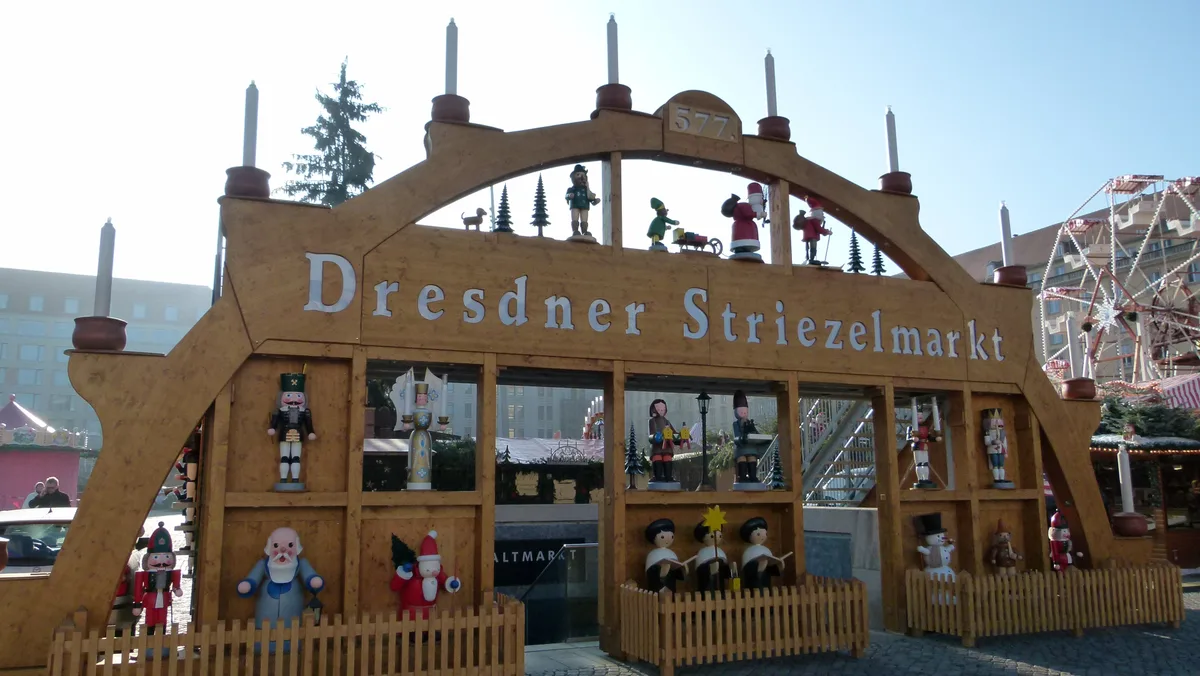
A wooden pyramid taller than the houses around it turns slowly over the Altmarkt. Carved figures ride each tier, and the whole thing is driven by the rising warmth of candles, in the old Erzgebirge style. Below it, rows of timber huts with pitched roofs fill the square. This is the Dresdner Striezelmarkt, and it has been held here since 1434.
A market named after a loaf
The name comes from Striezel, the old word for Stollen. That is the dense, buttery fruit bread dusted thickly in icing sugar that Dresden has baked for centuries. Bakers from the region still sell it whole and by the slice, usually wrapped and stacked on the counter.
The market’s age shows in what it sells. Most of the stalls come from the craft traditions of Saxony, not from a generic Christmas catalogue. Many readers find this is the one German market where the souvenirs actually belong to the place.
What to look for between the stalls
Walk the lanes slowly. The things worth stopping for:
- The step pyramid: a giant version of the Erzgebirge Christmas pyramid, and the meeting point everyone uses.
- Räuchermännchen: little wooden “smoking men” that puff incense smoke from their mouths.
- Nutcrackers and Schwibbögen: painted soldiers and the arched candle holders you’ll see in Saxon windows all December.
- Herrnhuter Sterne: the many-pointed paper and plastic stars from Herrnhut in Upper Lusatia.
- Pflaumentoffel: a tiny chimney sweep built from dried prunes. It is Dresden’s own good-luck figure.
To eat, try Stollen first. Then look for roasted almonds, potato pancakes with apple sauce, and Glühwein. If the timing works, go for the Stollenfest. It is usually on the Saturday before the second Sunday of Advent, when a Stollen weighing several tonnes is paraded through the old town and cut up on the square.

Getting to the Altmarkt
The market is central and easy to reach on foot. Trams stop at Altmarkt, right at the square’s edge, and at Postplatz a few minutes away. From Dresden Hauptbahnhof, walk north up the Prager Straße shopping street for roughly 10–15 minutes and you come out at the square.
The Kreuzkirche stands on the Altmarkt’s southeast corner. Its boys’ choir, the Dresdner Kreuzchor, is a big draw for Advent concerts, and tickets go quickly.
Mugs, deposits and the Advent crowds
Glühwein comes in a ceramic mug, and the price includes a deposit (Pfand). Hand the mug back to any stall in the same scheme and you get the deposit returned. Keep it instead and you have a souvenir, because each season has a new design. Prices are posted on each stall’s board.
Payment is mixed. More stalls take cards every year, but small craft huts and snack stands may still want cash, so carry some euros.
This is no secret. The Striezelmarkt is one of the best-known Christmas markets in Germany, and coach tours plan whole trips around it. Reasoning from how these markets usually work, weekday daytimes are easier than evenings, and Advent weekends are the busiest. Keep your bag in front of you in the tight lanes near the pyramid.
Around the square and beyond
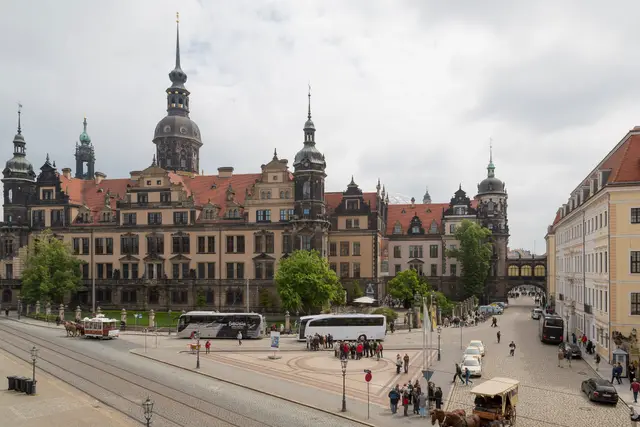
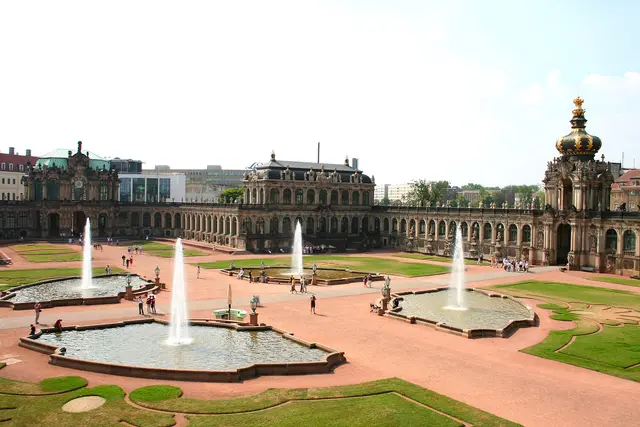
Don’t stop at the Altmarkt. A five-minute walk north takes you to the Neumarkt and the rebuilt Frauenkirche, where a separate market sits under the dome. Keep going and you reach the Brühl Terrace above the Elbe, the Residenzschloss and the Zwinger.
Some visitors make an evening of it and work through two or three of the old town’s markets. Allow at least two hours for the Striezelmarkt alone, and longer if you plan to shop for crafts.
Outside Advent
The Altmarkt is a public square, so you can walk through it at any hour of the year. Other seasonal markets and events use it through the year too. The Christmas huts, the pyramid and the Stollen stalls only appear in the weeks leading up to Christmas, generally from late November until Christmas Eve. Dates and daily times change each year, so check the official Dresden city site for this season’s schedule before planning a trip around them.
Frequently asked questions
When does the Dresdner Striezelmarkt take place?
It runs during Advent, generally from late November until Christmas Eve. Exact dates and daily times change each year and are published on Dresden's official city site.
How do I get to the Striezelmarkt?
It's on the Altmarkt in the old town. Take the tram to Altmarkt or Postplatz, or walk north up Prager Straße from Dresden Hauptbahnhof in about 10–15 minutes.
What should I buy or eat there?
Dresdner Stollen is the signature buy. For souvenirs, look for Erzgebirge woodcraft: smoking men, nutcrackers and Schwibbögen candle arches. There are also Herrnhut stars and the prune-figure Pflaumentoffel. Have Glühwein in the seasonal mug.
How long should I spend at the market?
Allow at least two hours. Add time for the Frauenkirche and the Neumarkt market, a five-minute walk away.
How does the Glühwein mug deposit work?
A deposit (Pfand) is added to your first drink. Return the mug to a participating stall to get it back, or keep it as a souvenir. Prices are posted on each stall.
Plan your trip to Dresden
Germany eSIM & staying connected →
Some links above are affiliate links — if you book through them, Wander Atlas earns a small commission at no extra cost to you. It's how we keep every guide free.