Friday Market: Fujairah Travel Guide (4.3★)
When to visit United Arab Emirates: month-by-month weather, crowds and holidays →
✓ Facts verified via Google Places · Sep 23, 2026
At a glance
Opening hours
- Monday: 7:00 AM – 12:00 AM
- Tuesday: 7:00 AM – 12:00 AM
- Wednesday: 7:00 AM – 12:00 AM
- Thursday: 7:00 AM – 1:00 AM
- Friday: 7:00 AM – 1:00 AM
- Saturday: 7:00 AM – 1:00 AM
- Sunday: 7:00 AM – 12:00 AM
How this guide is made
Produced with AI assistance and reviewed against live data sources. Facts such as hours, ratings, and location come from Google Places; images are licensed or public domain. Details can change — please verify before visiting. Editorial policy
What you’re actually walking into
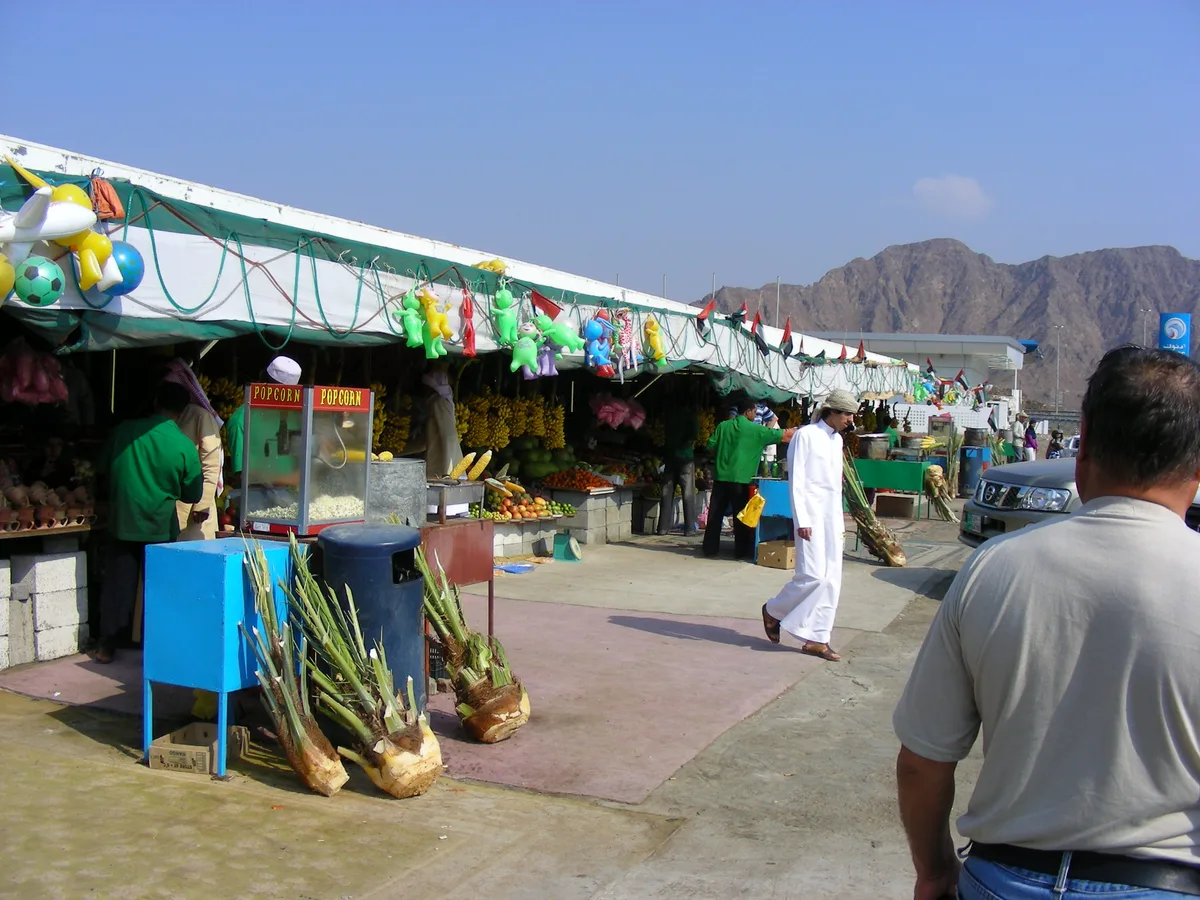
Friday Market, known locally as Souq Al Jumʻah, is a line of open-fronted stalls strung along the Al Dhaid road in the mountain pass between Masafi and Fujairah. It got its name because Friday used to be the big trading day, when farmers and Bedouin traders came down from the Hajar Mountains to sell produce. The name stuck even though the stalls now open every day of the week.
The setting is what makes it: red-brown mountains rising on both sides, a two-lane highway running straight through, and dozens of shopfronts stacked with terracotta pots, woven baskets, dried limes, dates and sacks of spices. It’s a working roadside souq, not a curated tourist bazaar, though plenty of tour buses stop here on the way between Dubai and the east coast.
Getting there and getting your bearings
The market sits on the road connecting Fujairah city to Masafi and the Dubai-Sharjah highway, so most visitors arrive by car, taxi or as part of a group tour heading to the east coast beaches. There’s no train or metro link; this is mountain-road territory.
- Coming from Dubai or Sharjah, follow signs for Masafi, then continue toward Fujairah; the stalls appear in clusters along both sides of the road.
- Coming from Fujairah city, it’s a straightforward drive inland along the same route, roughly the reverse direction.
- Parking is informal, pull-offs and gravel shoulders in front of each stall cluster rather than a single lot.
Because it stretches along a highway rather than sitting in one contained square, you’ll want to pick a cluster of stalls, park, and walk that stretch rather than trying to see the whole market in one pass.
The pottery mile
Ceramics are the market’s calling card. Stall after stall displays terracotta urns, hand-painted vases, tagines and garden pots, some stacked three metres high right at the roadside.
Much of it is decorative rather than food-safe cookware, so ask before buying anything you plan to cook in. Sizes range from tea-light holders to pieces large enough to need two people and a car boot with the seats down. If you’re driving back to Dubai or Abu Dhabi, bring padding: blankets, towels, anything to stop pottery rattling against itself on the mountain road.

Produce, dates and the dried-goods stalls
Alongside the pottery, a good portion of the market deals in fresh and dried food: mountain-grown produce, sacks of dates in several grades, dried limes (loomi) used in Emirati cooking, nuts, and bags of loose spices scooped to order. Prices are generally not marked, so a bit of back-and-forth is normal here, more so than in a mall or supermarket.
Textiles and rugs turn up in the same stretch, often Persian or Afghan-style carpets rolled and stacked against the wall. Quality varies a lot stall to stall, so it’s worth comparing a few before committing rather than buying at the first one you stop at.
Timing it around the mountain heat
The market runs long hours: 7am to midnight most days, stretching to 1am Thursday, Friday and Saturday nights. That late-night window matters here because this stretch of road can be brutally hot at midday for most of the year.
Morning, shortly after opening, is workable if you want to browse without sweating through your shirt. The other comfortable window is evening, once the sun drops behind the mountains and the stalls light up for the night crowds. Weekend evenings, especially Thursday and Friday, pull the heaviest traffic, both vehicle and foot, since this is a very popular stop rather than a quiet find; if you want a calmer browse, an early morning visit on a weekday is the better bet.
Haggling like it’s still a trading post
Even though it’s grown into a tour-bus stop, the bargaining culture of the old trading souq is still very much alive. Prices you’re first quoted, especially on pottery and rugs, are opening offers, not final ones.
- Ask the price, then counter meaningfully lower rather than shaving a small amount off.
- Cash is the default currency of negotiation here; card machines exist at some stalls but slow the haggling down and weaken your position.
- Buying two or three items from the same stall, or from a stallholder you’ve already chatted with, usually gets a better combined price than single items across several stalls.
- If a price feels fixed and the seller won’t move, it’s fine to walk toward the next stall; there’s usually a near-identical item a few doors down.
What to skip if you’re short on time
With the market stretching along a working highway rather than sitting in a single walkable block, trying to cover every stall in one visit is a good way to run out of patience. Pick pottery or textiles or food, not all three, if you only have half an hour.
Skip stalls with obviously generic tourist souvenirs, keyrings, fridge magnets, and head for the ones with visible bulk goods, sacks of dates, stacked terracotta, rolled carpets. Those are the stalls doing genuine trade rather than pure passer-by sales, and they’re usually where the better prices and the more interesting haggling happen.
Frequently asked questions
Is Friday Market in Fujairah only open on Fridays?
No, despite the name it's open every day, roughly 7am to midnight, with slightly later closing (1am) on Thursday, Friday and Saturday nights.
How do I get to Friday Market without a tour?
Drive or take a taxi along the road connecting Fujairah city to Masafi; the stalls line both sides of the highway in clusters, and parking is on gravel shoulders in front of each section.
What's the best time to visit to avoid crowds?
It's a very popular stop on the Dubai-to-east-coast route, so weekend evenings (especially Thursday and Friday) draw the biggest crowds. An early weekday morning shortly after the 7am opening is calmer.
What should I buy at Friday Market?
Pottery and terracotta are the signature items, alongside dates, dried limes, spices and rugs. Bring padding or blankets if you're transporting large ceramics by car.
Is bargaining expected here?
Yes, especially for pottery and carpets. Initial prices are opening offers, cash negotiations move faster than card payments, and buying multiple items from one stall often gets a better combined price.
Plan your trip to Fujairah
Some links above are affiliate links — if you book through them, Wander Atlas earns a small commission at no extra cost to you. It's how we keep every guide free.