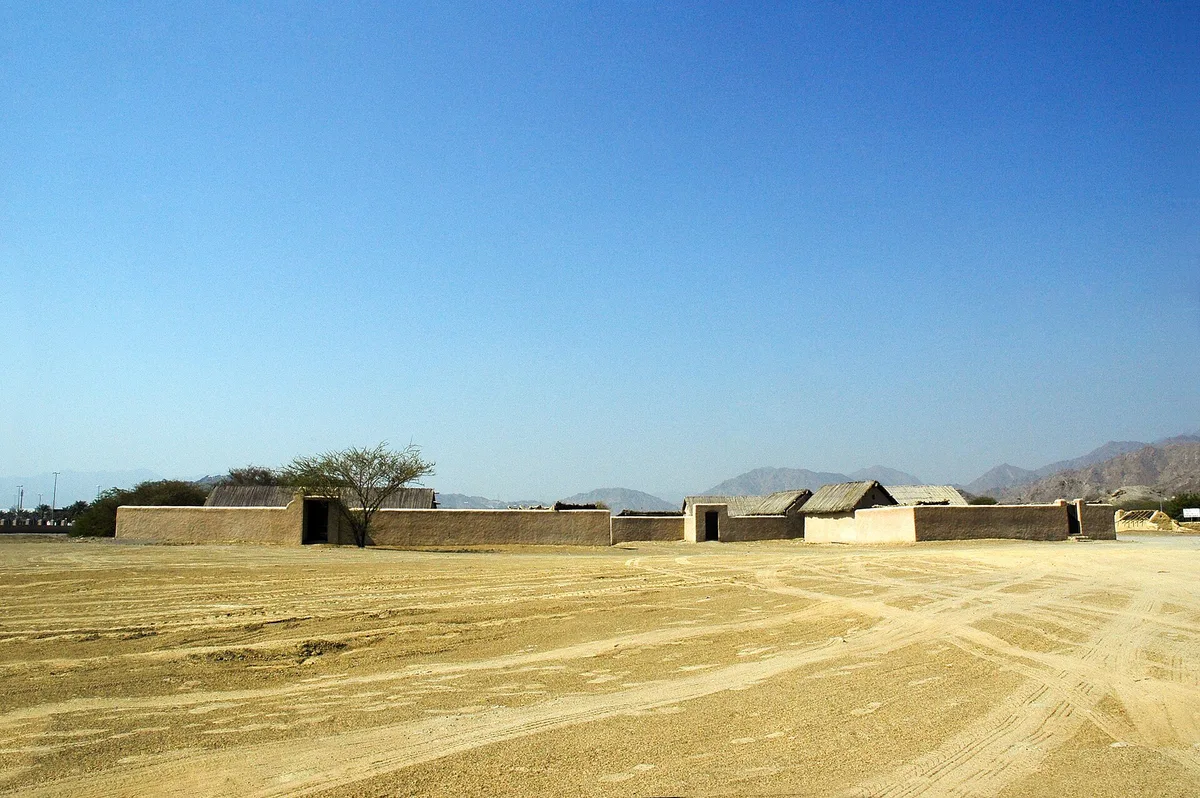
Palm fronds against the Hajar
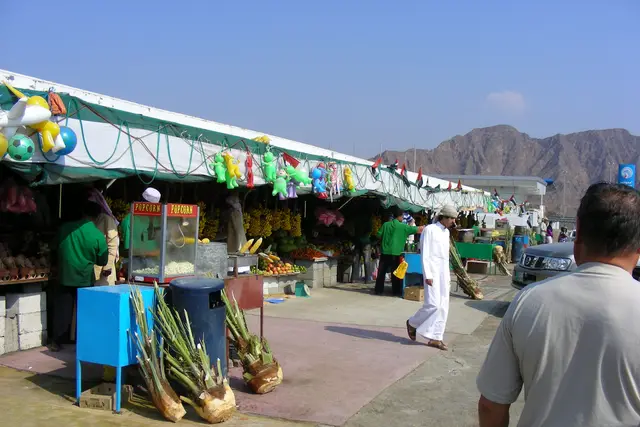
The mountains here sit close behind the town. Fujairah’s jagged Hajar range rises behind the low rooftops of Al Sharyah, and the Heritage Village is a small walled pocket of the older east coast laid out beneath it. Here you walk through reconstructed homes, work areas and household objects from before the oil years, at a slow pace and usually with plenty of space.
It sees nothing like the visitor numbers of Dubai’s heritage districts. That is most of its appeal. You can stand inside a doorway, read a sign properly and take a photo without anyone else’s elbow in the frame.
What the village shows you
Expect a tour of everyday survival more than one grand monument. The village recreates how people on this coast once lived between the sea, the date palms and the mountains. The exhibits are the plain kind that explain a lot.
Things to look for as you walk:
- Arish houses built from palm fronds, the breezy summer homes of the coast
- Stone and mud structures, the sturdier style used inland and in the mountains
- Fishing gear and wooden boats, a reminder that Fujairah faces the Gulf of Oman, not the Arabian Gulf
- Farming tools and irrigation channels, linked to the falaj system that fed the oases
- Domestic objects such as pottery, grinding stones and coffee pots
The scale is modest. Treat it as a primer that makes the rest of the emirate easier to read, and you will get the most from it.
Working around the clock and the sun
The schedule has one quirk that catches people out. Saturday to Wednesday the gates open 8am to 6:30pm. On Friday it opens only from 2:30pm to 6:30pm, after midday prayers, so a Friday morning trip ends at a closed gate.
Thursday is listed as open 24 hours. Even so, the village is outdoors and best seen in daylight, so plan for normal visiting hours.
Heat is the bigger factor. From roughly May to September, the middle of the day here is punishing and shade is scarce. Arriving soon after 8am gives you softer light on the mountains and a much more pleasant walk. Between October and April you can visit comfortably at almost any open hour.
Reaching Al Sharyah
There is no metro on this coast. Most visitors drive. From Dubai the trip takes around two hours, and the last stretch crosses the Hajar Mountains on the Sheikh Khalifa bin Zayed Highway, which is a good drive in itself.
If you are staying in Fujairah city or at one of the beach resorts up the coast, a taxi is the simplest option. Intercity buses connect Dubai and Sharjah with Fujairah, and a short taxi ride from the city takes you on to the village. Enter “Fujairah Heritage Village, Al Sharyah” in your map app rather than just “Fujairah”, which can drop you in the city centre.
Walking the village with some respect
The village has no set route. You set the pace, and a few habits make the visit go better.
- Dress modestly. Covered shoulders and knees are the norm in Fujairah, which is more conservative than Dubai.
- Ask before photographing people, especially Emirati women and families. The buildings are fair game; people are not.
- Carry water. There is little shade between the exhibits, and the heat builds quickly.
- Read the signs. Without them, a palm-frond hut is just a hut. With them, it explains how a family lived through the summer.
- Check the entry terms at the gate. Arrangements can change, so confirm when you arrive.
Leave the drone in the car. The site sits close to official and heritage buildings, and the UAE regulates drone flights strictly.
Making a half day of it
An hour covers the village comfortably. The real value is in what is around it. Several of Fujairah’s main heritage sights are close together, so the village works best as the first stop of a loop.
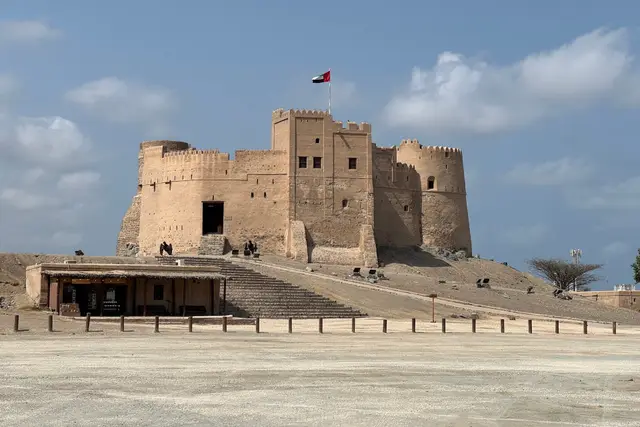
- Fujairah Fort, one of the oldest forts in the UAE, is a short drive away. Its pale towers stand among old date palms.
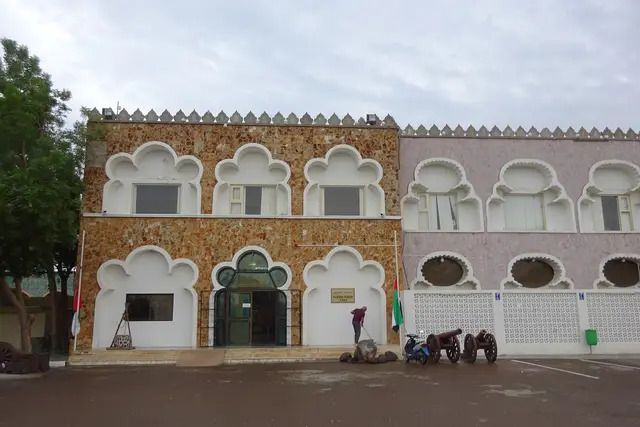
- Fujairah Museum adds the archaeology, with finds from sites around the emirate.
- Ain Al Madhab Gardens sits nearby on the foothills and is known for its mineral springs.
Start at the village while the morning is cool, then move to the fort before the light gets harsh. In the late afternoon, head to the corniche, where the Gulf of Oman lies flat and blue in front of the mountains you just drove through.
Frequently asked questions
What are the opening hours of Fujairah Heritage Village?
Saturday to Wednesday it opens 8am to 6:30pm. On Friday it opens only 2:30pm to 6:30pm. Thursday is listed as open 24 hours, but it is an outdoor site best seen in daylight.
How long should I spend at Fujairah Heritage Village?
About an hour is enough for the village itself. Add Fujairah Fort, Fujairah Museum and Ain Al Madhab Gardens and you have an easy half day.
How do I get to Fujairah Heritage Village from Dubai?
Driving takes around two hours, finishing on the Sheikh Khalifa bin Zayed Highway through the Hajar Mountains. Without a car, take an intercity bus to Fujairah and then a short taxi to Al Sharyah.
When is the best time of year to visit?
October to April, when it is comfortable to walk outdoors. In summer, arrive close to the 8am opening (not possible on Fridays) to avoid the worst of the heat.
What should I wear?
Modest clothing that covers your shoulders and knees, plus a hat and sunscreen. Bring water, as there is little shade between the exhibits.
Plan your trip to Fujairah
Some links above are affiliate links — if you book through them, Wander Atlas earns a small commission at no extra cost to you. It's how we keep every guide free.