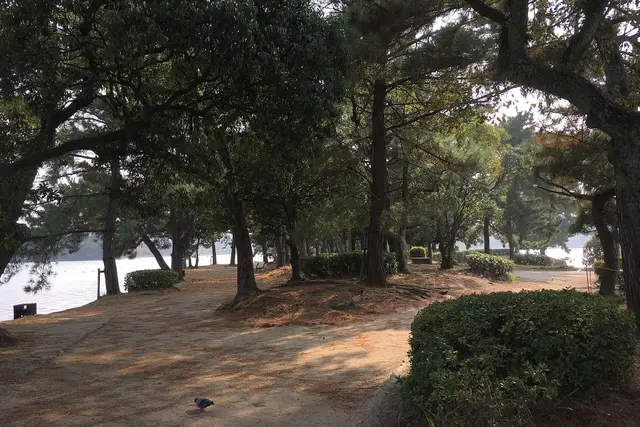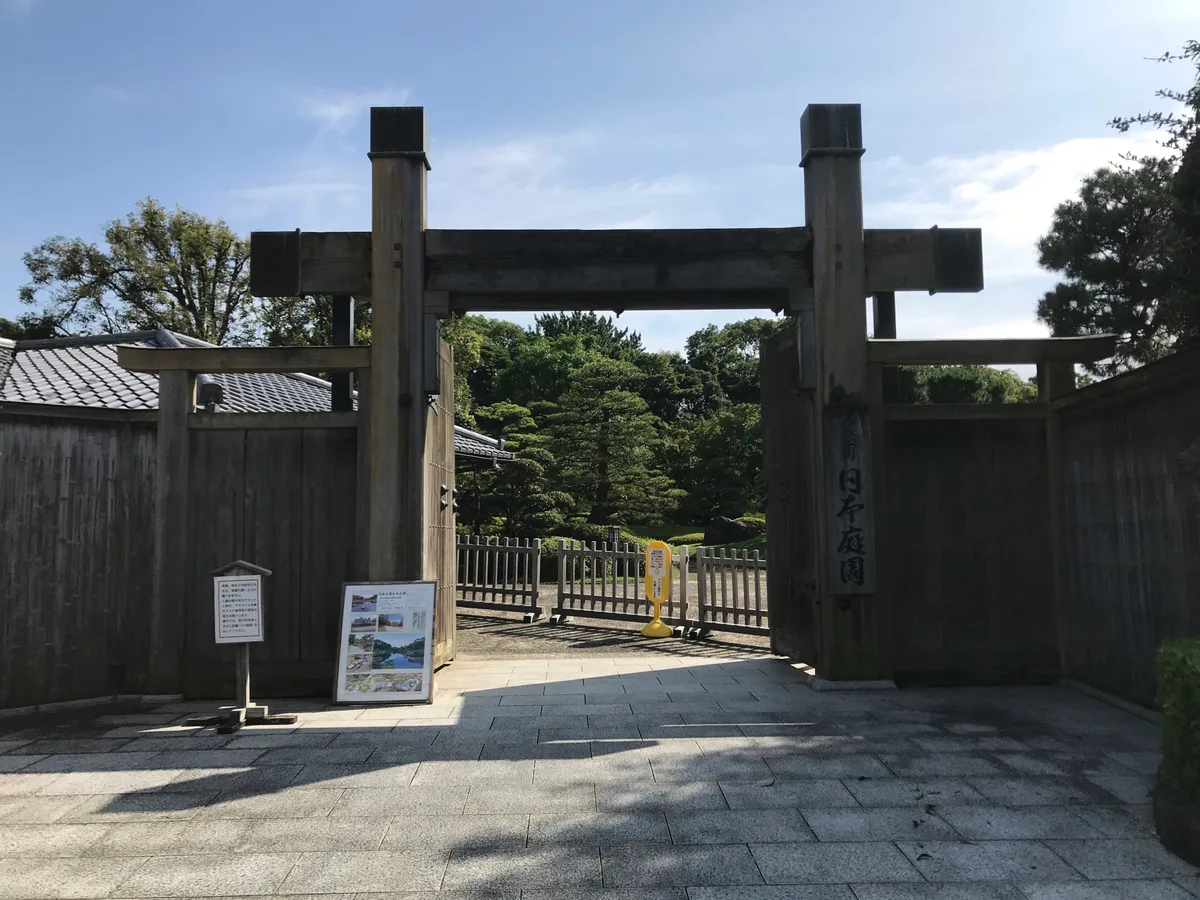
You step through a plain wooden gate off the main park path, and the traffic noise from Ohori Park’s outer loop just falls away. Inside, gravel paths curve around a series of ponds, clipped pines lean at practiced angles, and a stone lantern marks the turn toward the teahouse. It’s a pocket garden, only about 1.2 acres, but it’s laid out so you can’t see the whole thing at once, every bend hides the next view.
Why this garden, and why now
This is a proper karesansui-and-pond style Japanese garden, not a Western-style flower park. It sits inside the much larger Ohori Park, itself built around a former moat of Fukuoka Castle.
The contrast is the point. One minute you’re beside a wide public lake with joggers and paddleboats, the next you’re inside a walled garden built for quiet contemplation.
What you’ll actually see
The layout rewards slow walking rather than a quick loop. Expect these features as you go:
- A central pond with koi, crossed by stepping stones and a low bridge
- A dry rock-and-gravel section representing mountains and water
- A traditional teahouse where you can sit and take in the garden view
- Manicured pines, azaleas, and maples that shift the garden’s palette through the seasons
- Stone lanterns and a raked-sand area near the garden’s quieter back corner
Spring brings azalea color along the paths; autumn turns the maples deep red near the teahouse. Both seasons draw more visitors, so pair either with an early visit.

Getting there
The garden sits at 1-7 Ōhorikōen in Chuo Ward, inside the northwest section of Ohori Park. The closest station is Ōhorikōen Station on the Kuko (Airport) subway line, about a 10-minute walk through the park itself.
If you’re coming from central Fukuoka or Tenjin, it’s an easy add-on to a walk around the park’s main lake, which loops past Fukuoka Castle ruins and the Fukuoka Art Museum. Budget half a day if you want to see the castle ruins too.
When to go
The garden is closed Mondays, and open 9am to 6pm every other day of the week. Weekends get busiest between 10am and 5pm, especially when the maples or azaleas are at their peak.
Arrive right at 9am opening, or come after 5pm in the warmer months when there’s still good light. Weekday mornings before 10am are consistently the calmest window if your schedule allows it.
How to visit like a local
Treat this as a slow, contemplative stop, not a sight to tick off in five minutes. Locals and regular visitors linger at the teahouse rather than rushing the loop.
Pay for entry and any teahouse order in cash or with an IC card like Suica or Nishitetsu’s nimoca, small garden venues like this don’t always take foreign credit cards. There’s no need to book ahead; entry is walk-up.
Take your shoes off if the teahouse floor requires it, and keep voices low near the pond. This is a garden built for quiet, not a photo backdrop to shout across. The etiquette mistake most visitors make is treating it like the main park outside: running, cycling, or picnicking isn’t the vibe here.
It’s well-known enough to draw a steady stream of visitors, but it’s not overwhelmed the way some Kyoto gardens are. Come outside the weekend midday peak and you’ll often have entire stretches of path to yourself. Combine it with a walk around the main Ohori Park lake before or after, locals use that loop for jogging and sunset walks, and it makes the contrast with the walled garden feel sharper.
Bring a little extra time to just sit. The teahouse seating facing the pond is the best few minutes of the whole visit, and it’s easy to rush past it if you’re moving on to the castle ruins or museum next door.
Frequently asked questions
What are the opening hours for Ohori Park Japanese Garden?
Tuesday to Sunday, 9:00 AM to 6:00 PM. It's closed every Monday.
When is the quietest time to visit?
Weekday mornings shortly after the 9am opening tend to be calmest. Avoid weekends between 10am and 5pm, when foot traffic peaks.
How do I get to the garden?
Take the Kuko (Airport) subway line to Ōhorikōen Station, then walk about 10 minutes through Ohori Park to the garden entrance in Chuo Ward.
How long should I spend there?
Most visitors spend 30–45 minutes walking the paths; add 20 minutes if you stop for matcha at the teahouse.
What's nearby worth combining with this visit?
The main Ohori Park lake loop, Fukuoka Castle ruins, and the Fukuoka Art Museum are all within a short walk.
Plan your trip to Fukuoka
Japan eSIM & staying connected →
Some links above are affiliate links — if you book through them, Wander Atlas earns a small commission at no extra cost to you. It's how we keep every guide free.