The green crown of the peninsula
Guia Hill is where Macau runs out of buildings. From the top you look down over casino towers, the Outer Harbour and the bridges to Taipa, all from under a canopy of trees.
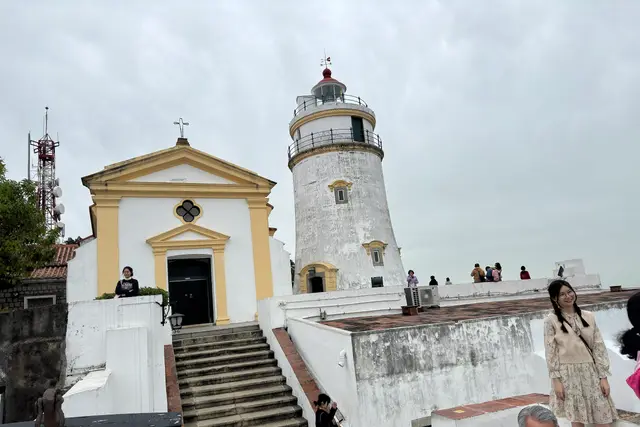
The park wraps the whole hill. A paved road and footpaths circle it, and at the summit sits a cluster of whitewashed walls: Guia Fortress, the Chapel of Our Lady of Guia and Guia Lighthouse. Together they form part of the Historic Centre of Macao, inscribed as a UNESCO World Heritage Site in 2005.
It still gets far fewer visitors than the Ruins of St. Paul’s. That makes it one of the easier heritage sites in the city to enjoy without being jostled.
Up by cable car or on foot
There are two ways up. Which one suits you depends on your knees.
- Guia Cable Car: the lower station is inside Flora Garden (Jardim da Flora) on Avenida de Sidónio Pais. The ride is often described as one of the shortest cable car lines in the world: small cabins and a quick lift over the treetops. The fare is posted at the station.
- On foot: footpaths climb from Flora Garden and from the streets around the hill. The climb is steady rather than brutal, and the trees shade most of it.
- By taxi: cars can reach the summit along Estrada da Guia. That’s useful if you’d rather walk down than up.
From Senado Square it’s roughly half an hour’s walk to the foot of the hill. Many people take a taxi or bus to Flora Garden instead.
Fortress, chapel and lighthouse
The summit is compact. You can cover all three sites in under an hour.
The fortress was built by the Portuguese between 1622 and 1638, partly to watch for Dutch ships after the failed Dutch attack of 1622. Its thick masonry walls follow the shape of the hilltop.
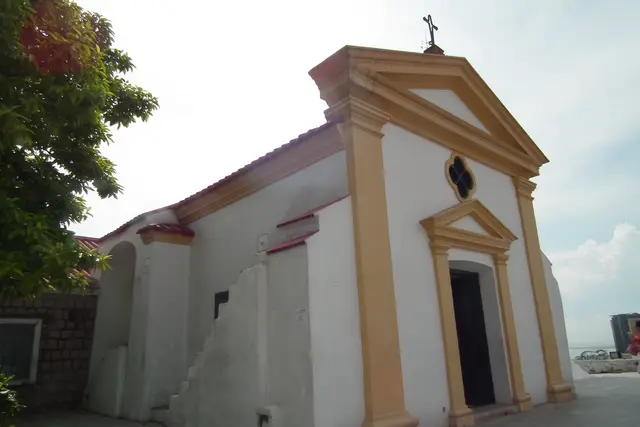
Inside the walls stands the small Chapel of Our Lady of Guia. Restoration work uncovered frescoes on its walls that mix Western religious images with Chinese decorative motifs. It’s a small room, so give your eyes a moment to adjust from the glare outside.
Guia Lighthouse, completed in 1865, was the first modern lighthouse on the China coast. Next to it is the typhoon signal mast. Macau has long used it to warn the city of approaching storms.

Tunnels and the ring path
Don’t stop at the summit. Under the fortress area runs a network of military tunnels and air-raid shelters cut into the hill, now opened to visitors. Inside they’re cool and narrow, a sharp change from the heat at the top.
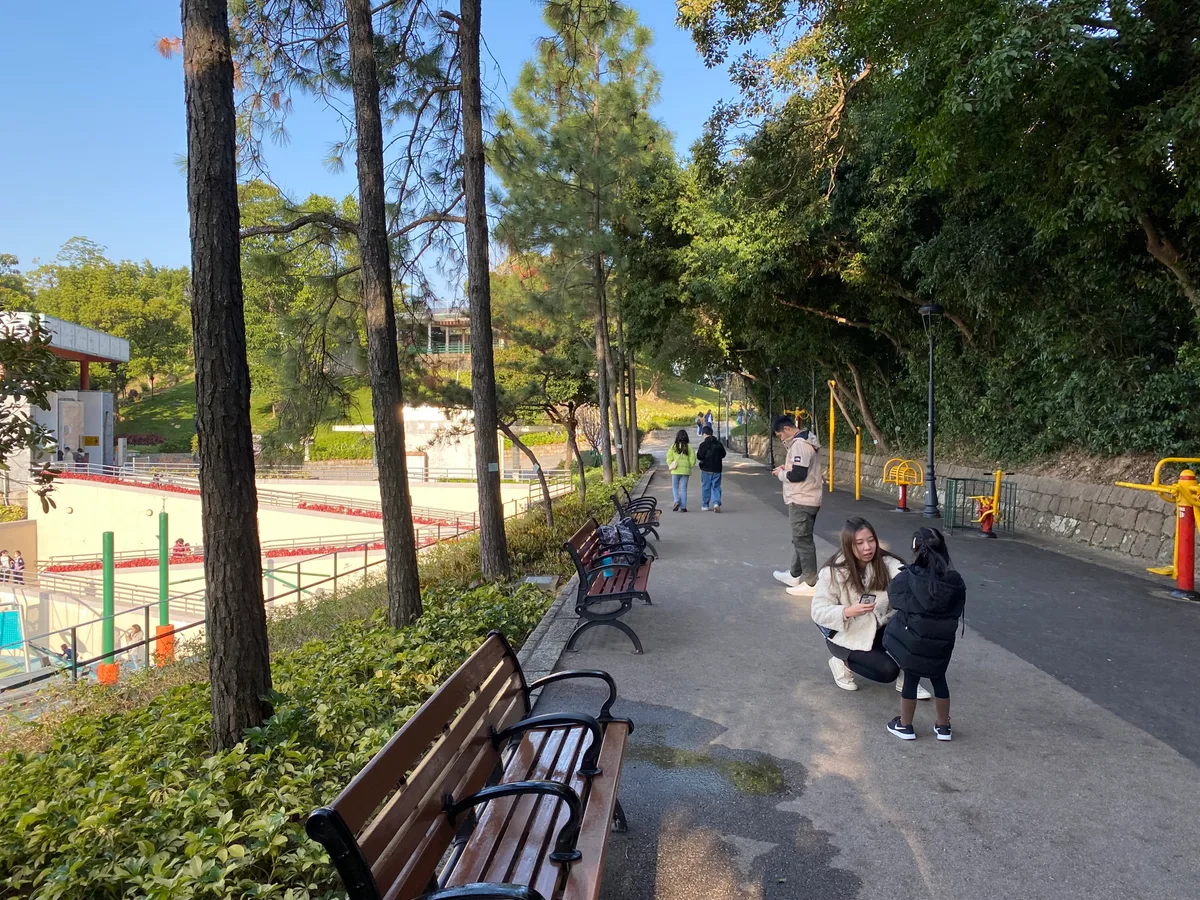
Further down, the ring road around the hill works as a walking and jogging circuit. Exercise stations are set along it, and through gaps in the trees you get views over the peninsula. Walk a full loop, then cut back up to the lighthouse by a side path.
Walking Guia Hill well
The hill rewards a few simple habits.
- Treat the chapel as a church. It is consecrated. Keep your voice down, and don’t use flash near the frescoes.
- Go early or late in summer. From June to September the humidity is heavy and mosquitoes gather under the trees. Repellent earns its place in your bag.
- Watch the typhoon signals. When a high signal is raised, outdoor facilities and the cable car can shut. The park’s 24-hour listing doesn’t override that.
- Go up one way, down another. Take the cable car up, then walk down through the woods. You’ll see both sides of the hill without retracing your steps.
- Check the inner sites separately. The park grounds are currently listed as open 24 hours. The fortress, tunnels and cable car keep their own times, and these shift through the year, so check the official Macao tourism site before you go.
October to December is usually the clearest, driest season. It’s the best time for long views from the lighthouse terrace.
Pairing it with the neighbourhood
Guia sits between old Macau and the newer districts, so it links easily with nearby sights.
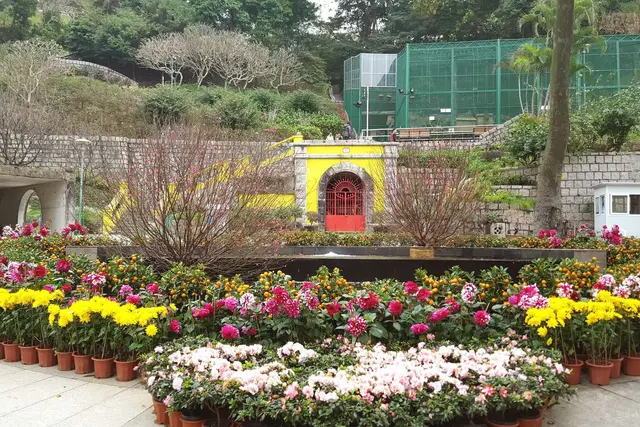
- Flora Garden: the cable car’s lower station, a formal garden that was once the grounds of a colonial villa.
- Lou Lim Ieoc Garden: a Suzhou-style garden with pavilions and a lotus pond, a short walk west.
- Sun Yat Sen Memorial House: close to Lou Lim Ieoc Garden, in a Moorish-style building.
- Tap Seac Square: a short walk on, with its row of pastel colonial buildings.
Put these together and you have a slow half-day: hill in the morning, gardens at midday, the square in the afternoon.
Frequently asked questions
How do I get to the top of Guia Hill?
The easiest way is the Guia Cable Car from its lower station inside Flora Garden on Avenida de Sidónio Pais. You can also walk the shaded footpaths up from Flora Garden, or take a taxi along Estrada da Guia to the summit.
How long should I spend at Guia Hill Municipal Park?
Plan on 1.5–2 hours to see the fortress, chapel, lighthouse and tunnels and walk part of the ring path. Add more time if you're pairing it with Flora Garden or Lou Lim Ieoc Garden.
Is the park open at night?
The park grounds are currently listed as open 24 hours. The fortress, chapel, tunnels and cable car keep separate times that change through the year, so check the official Macao tourism site first.
What is the best time of year to visit?
October to December usually brings the clearest, driest weather and the best views. Summer is hot and humid with mosquitoes under the trees, so go early or late in the day then.
Is Guia Hill part of the UNESCO site?
Yes. Guia Fortress, the Chapel of Our Lady of Guia and Guia Lighthouse are part of the Historic Centre of Macao, inscribed as a World Heritage Site in 2005.
Plan your trip to Guia
Macau eSIM & staying connected →
Some links above are affiliate links — if you book through them, Wander Atlas earns a small commission at no extra cost to you. It's how we keep every guide free.