Drums on the fourth Sunday
The 2027 main event falls on January 24. Dinagyang always lands on the fourth Sunday of January. It is a Catholic feast for the Santo Niño and a street dancing contest at once, so a Mass and a drumline can share the same morning in downtown Iloilo City.
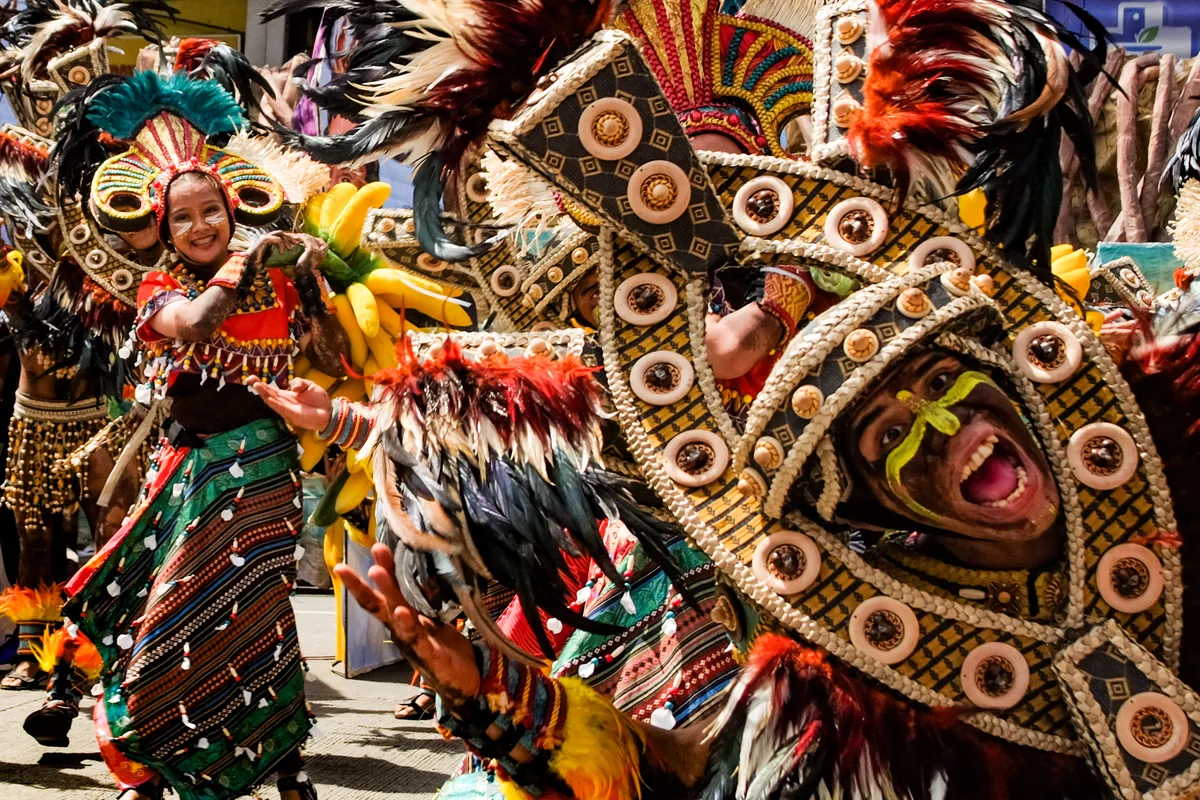
The festival goes back to 1968, when a replica of the Santo Niño came to Iloilo from Cebu. The dances draw on the older Ati-Atihan tradition. Performers in dark body paint, feathered headdresses and woven costumes act out stories of the Ati, the island’s earliest people, and of the Child Jesus.
What the day looks like
Groups called tribes compete, each one made up of dozens of dancers with a drum corps behind them. They move along a set route through the old downtown and stop at judging areas to perform a full choreographed routine. Between stops the drumming keeps going, and the crowd answers with the festival chant, “Hala Bira!”
The religious side happens mostly in the days before Sunday:
- Masses and novenas at San Jose Placer Church on Plaza Libertad, home of the venerated Santo Niño image
- A fluvial procession carrying the image on the Iloilo River
- Street-side food stalls and night events across the city centre

Seats, sidewalks and the heat
Most people watch for free from the sidewalk along the route. The covered and uncovered stands at the judging areas are ticketed. They give you the full routines, which tribes perform at the judging points and not between them. The festival organiser handles seat sales and publishes the schedule and route on its official channels.
Locals who watch from the street usually claim a spot hours before the first tribe arrives, since the curbs fill up fast. They bring the following:
- An umbrella or hat, as there is little shade along the route
- Water, because the parade runs through the hottest part of the day
- Clothes they don’t mind getting stained, since dancers’ body paint rubs off in the crush
- A small bag carried in front, as the crowds are packed tight
The procession and the Masses are acts of devotion. People stay quiet during the prayers and keep the aisles clear for devotees carrying Santo Niño images. Inside San Jose Placer Church, shoulders are usually covered.
Reaching Iloilo for Dinagyang
Iloilo International Airport is in Cabatuan, roughly 19 km north of the city. Domestic flights from Manila and Cebu land there, and vans and taxis run into downtown. Fast-craft ferries cross the Guimaras Strait from Bacolod, which makes it easy to pair the trip with Negros.
Hotels in the city centre and the Smallville and Iloilo Business Park area fill up for festival weekend, and visitors often stay several days for the lead-up events. Once the streets close on parade day, walking beats any vehicle. On the evenings around the festival, Ilonggos usually head to the stalls for batchoy, the noodle soup the city is known for, or for grilled seafood.
Frequently asked questions
When is Dinagyang Festival 2027?
The main street dancing day is Sunday, January 24, 2027. Dinagyang is always held on the fourth Sunday of January, and religious events take place in the days before it.
Do I need a ticket to watch Dinagyang?
No ticket is needed to watch from the street along the route. Seats in the stands at the judging areas are ticketed and sold through the festival organiser, which also publishes the official schedule.
Where does Dinagyang take place?
Mostly in downtown Iloilo City. Tribes dance along a route with judging areas, and the religious events centre on San Jose Placer Church at Plaza Libertad and the Iloilo River.
How do I get to Iloilo City for the festival?
You can fly into Iloilo International Airport in Cabatuan, about 19 km from the city, from Manila or Cebu. You can also take a fast-craft ferry across the Guimaras Strait from Bacolod.
What should I bring to the parade?
Bring sun protection, water and clothes you don't mind getting stained by the dancers' body paint. The route has little shade, and the crowds at the curb are dense.
Plan your trip to Iloilo
Philippines eSIM & staying connected →
Some links above are affiliate links — if you book through them, Wander Atlas earns a small commission at no extra cost to you. It's how we keep every guide free.
Related guides
 hidden gem
Iloilo City Garden of Love: Travel Guide
 attraction
Jaro Metropolitan Cathedral of St. Elizabeth of Hungary & National Shrine of Our Lady of Candles: Iloilo Travel Guide
 attraction
Molo Mansion: Iloilo Travel Guide (4.5★)
 attraction