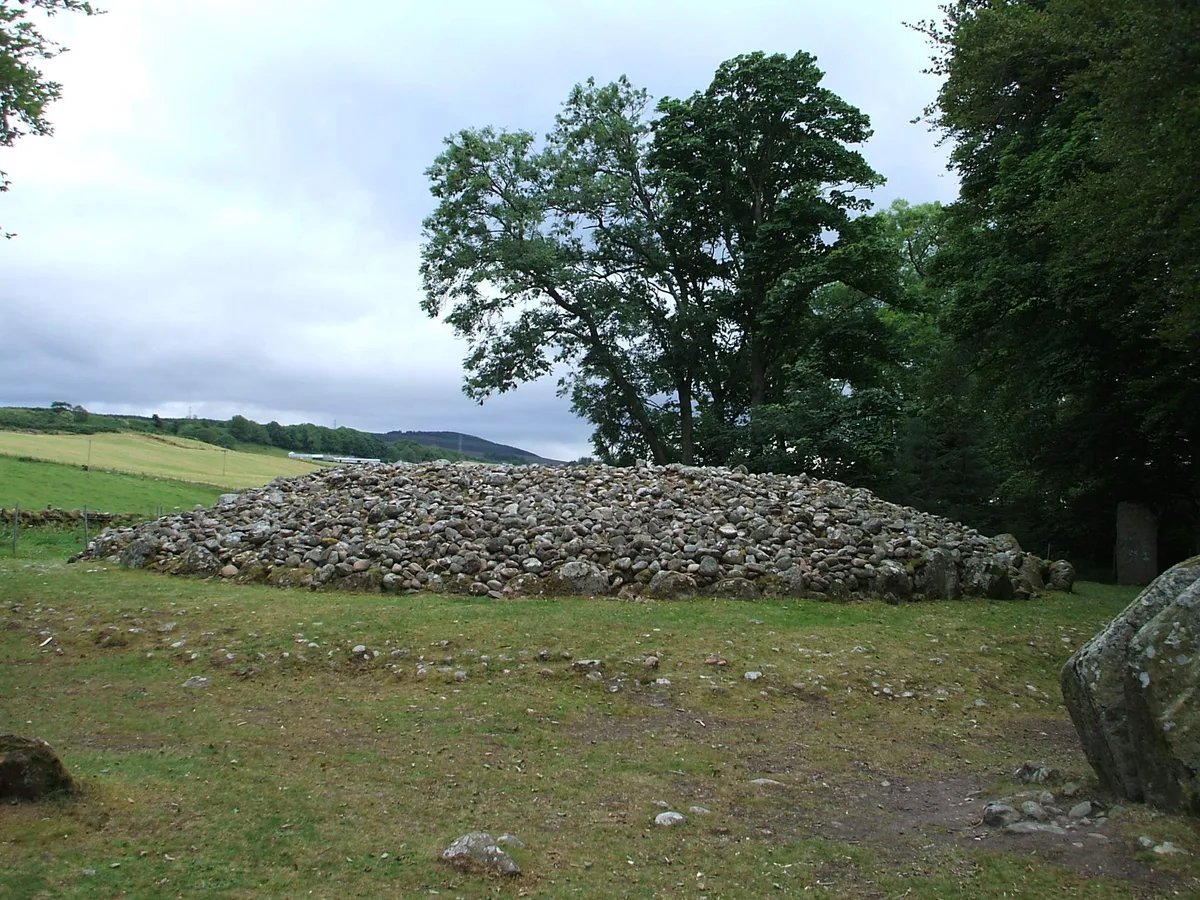
Three cairns under the beech trees
Clava is quieter than its fame suggests. You leave the car on the verge of a single-track lane and step into a grove of tall trees. Inside it, three heaps of rounded river stones sit in a row, each with a ring of standing stones around it. The site is roughly 4,000 years old. It sits on a flat terrace above the River Nairn, and the trees cover most of it in shade.
The official name is Balnuaran of Clava. It is one of the best-preserved examples of the Clava cairn type, a style of burial monument found only around the Inverness area and the Moray Firth. Historic Environment Scotland looks after it, and there is no gate, ticket desk or fence. You walk straight in.
Reading the stones
Each of the three cairns is built differently. Once you know what to look for, you can tell them apart.
- North-east passage cairn: a round chamber with a low passage leading into it. You can walk down the passage into the open middle.
- Central ring cairn: a closed ring with no way in. Low stone “rays” run out from it to some of the standing stones.
- South-west passage cairn: the twin of the first one. Look for cup-marked stones in its kerb, with small circular hollows pecked into the rock.
Both passages point south-west, towards the spot where the sun sets at midwinter. The standing stones also get taller towards that side. On clear evenings around the December solstice, people come to watch the low light reach down the passages.
You will also find a smaller kerb cairn among the trees, and the outline of a later structure. Most visitors miss these on the way past.
Getting there from Inverness
The cairns are east of the city, just past Culloden. Driving is the easy option: follow the B9006 towards Culloden Battlefield, then take the signed turn down towards the Nairn valley. The final stretch is narrow single-track road with passing places, and it runs under the Clava Viaduct.
There is no direct bus to the stones. A common plan is to catch a bus to Culloden and then walk down the lanes, which takes around 20–30 minutes each way. The roads have no pavements, so wear something bright. Taxis from Inverness are simple to arrange, and many Outlander and Highland day tours include Clava too.
The car park is just a small lay-by. Once it fills, cars end up lining the lane.
Getting the stones to yourself
Clava is very popular, partly because of Outlander: the books’ Craigh na Dun stones were inspired by sites like this one. Tour coaches tend to stop here in the middle of the day, often straight after Culloden. Arriving early in the morning or in the evening usually means sharing the circles with far fewer people. Google currently lists the site as open 24 hours, but check Historic Environment Scotland’s site before planning a dawn or dusk visit.
A few habits help here:
- Don’t climb on the cairns or lean on the standing stones. The kerbs are original prehistoric work, and footfall is already wearing the ground around them.
- Use passing places properly. Pull in on your left, or wait opposite a passing place on your right, so the oncoming car can get past. Give a small wave as thanks.
- Never park in a passing place or across a field gate. Farm vehicles use this lane.
- Leave stones, coins and ribbons where they are, and add none of your own. Offerings left in the chambers end up being cleared away by staff.
The site has no toilets, café or bins. Use the facilities at Culloden first and take your rubbish with you.
What to bring and how long to stay
Most people spend 45 minutes to an hour, which is enough to walk each cairn and read the information panels. The grass under the trees stays damp for much of the year and can get muddy, so wear shoes with grip, not good trainers.
- A waterproof layer, because Highland weather changes fast
- Midge repellent between late spring and late summer, when the sheltered valley gets midges
- A torch if you’re there near dusk, when the trees make it dark sooner
Pairing it with Culloden and the viaduct
Clava fits easily into a half day with Culloden Battlefield, about a mile up the hill. That is where the last Jacobite rising ended in 1746, and its visitor centre is the nearest place for food and toilets. Seeing them together gives you two very different chapters of Highland history within a few minutes of each other.
On the way back, stop to look at the Clava Viaduct. Its long run of sandstone arches carries the Highland Main Line over the Nairn valley. Further east, Cawdor Castle and the town of Nairn make a good extension if you have a car and a free afternoon.
Frequently asked questions
How do I get to Clava Cairns from Inverness without a car?
There is no direct bus. You can take a bus to Culloden and then walk about 20–30 minutes down narrow country lanes with no pavements, or get a taxi. Many Highland and Outlander day tours from Inverness also stop here.
Is Clava Cairns open at any time of day?
Google currently lists it as open 24 hours, and there is no gate. Opening arrangements can change, so check Historic Environment Scotland's official site before an early-morning or evening visit.
How long do I need at Clava Cairns?
Most visitors spend 45 minutes to an hour walking around the three cairns and reading the panels. Add an hour or two if you're also visiting Culloden Battlefield, about a mile away.
Are there toilets or a café at Clava Cairns?
No. There is just a small parking area. The closest facilities are at the Culloden Battlefield visitor centre.
What is the connection between Clava Cairns and Outlander?
Stone circles like Clava's are widely seen as the inspiration for the Craigh na Dun stones in Outlander. That is one reason the site gets busy with tour groups in the middle of the day.
Plan your trip to Inverness
United Kingdom eSIM & staying connected →
Some links above are affiliate links — if you book through them, Wander Atlas earns a small commission at no extra cost to you. It's how we keep every guide free.
Related guides
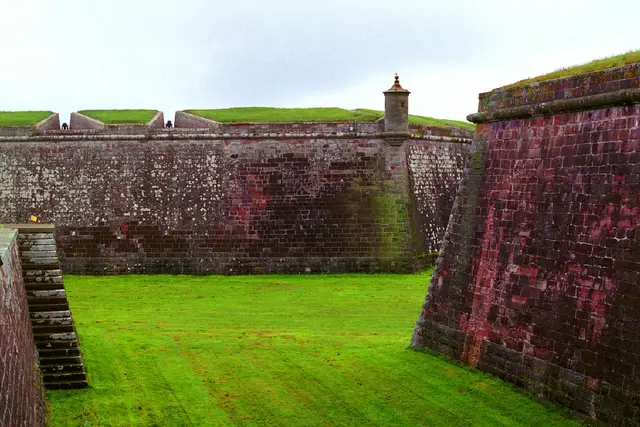 attraction
 Fort George: Inverness Travel Guide (4.6★)
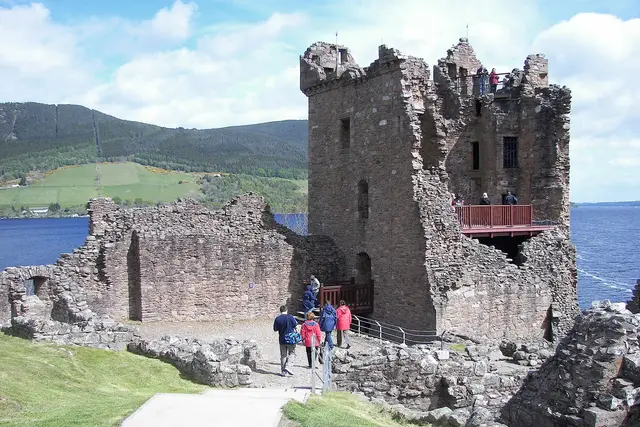 hidden gem
 Urquhart Castle: Inverness Travel Guide (4.5★)
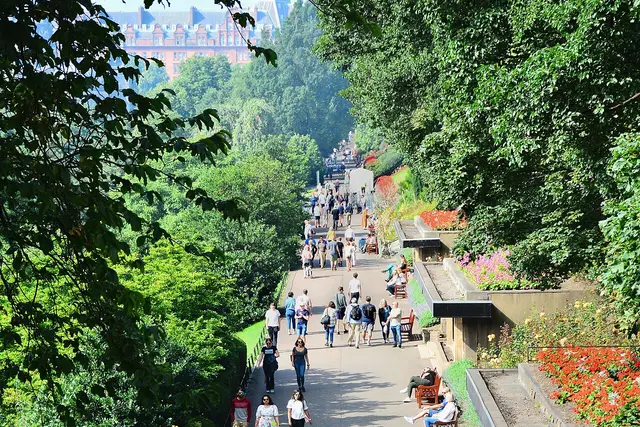 attraction
 Princes Street Gardens: Edinburgh Travel Guide (4.7★)
 attraction