Through the gates on Great Western Road
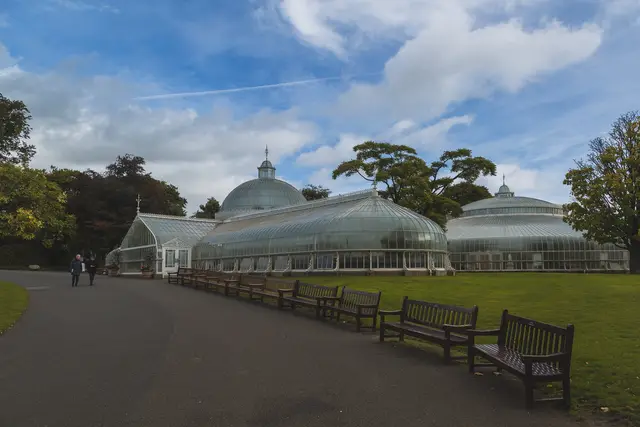
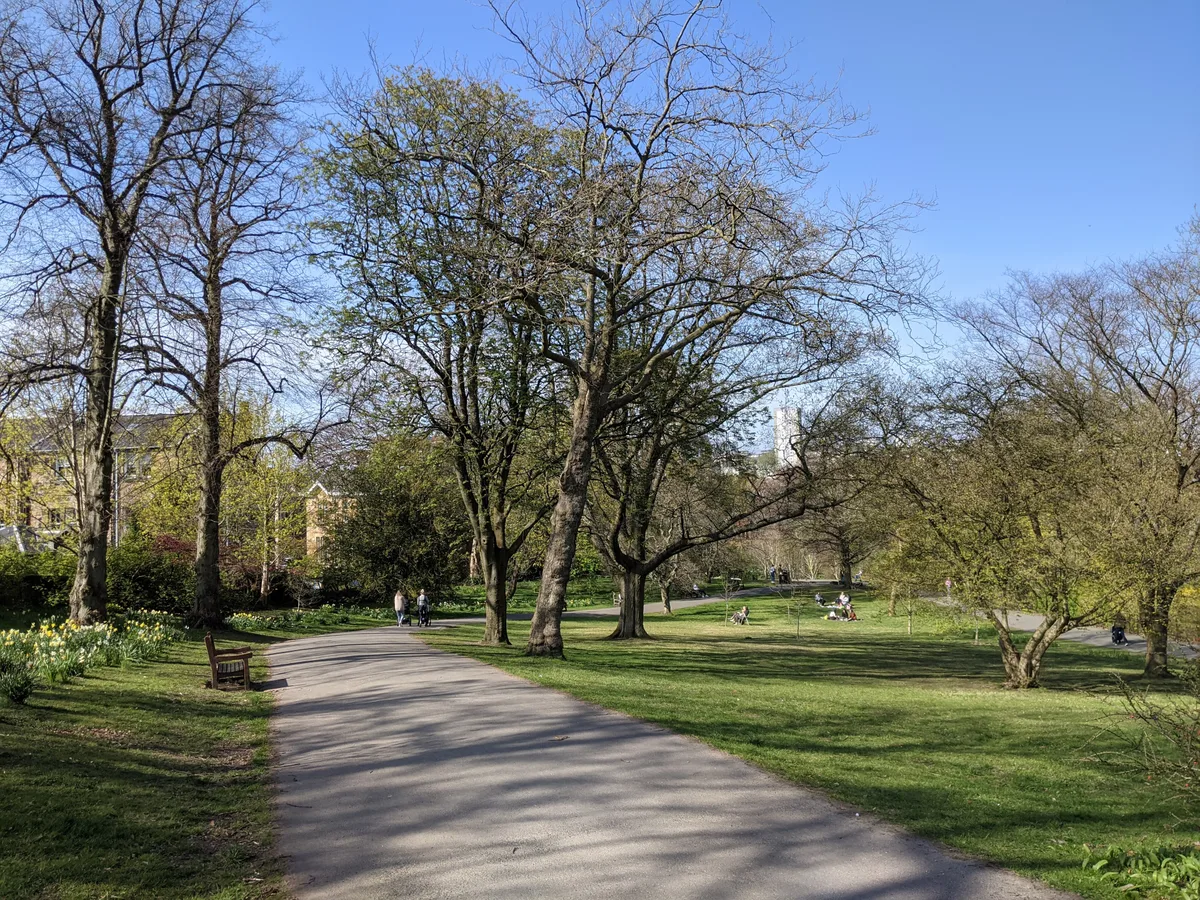
The main gates face one of Glasgow’s busiest roads. Step through and you’re on a wide path with lawns and specimen trees on either side, and the traffic noise quickly drops behind you. Ahead on your left is a white-painted dome of curved glass and iron. That’s the Kibble Palace, and nearly everyone heads straight for it.
The gardens cover 27 acres. The formal part stays up on the flat ground by the road, then the land drops steeply to the River Kelvin. Most first-time visitors only see the top half. The best walking is down the slope.
The Royal Botanic Institution of Glasgow founded the gardens in 1817, and they moved to this site in 1842. They’re now one of the most-reviewed outdoor attractions in the city.
Inside the Kibble Palace
The Kibble Palace started life somewhere else entirely. It was built as a private conservatory for the engineer John Kibble at his house at Coulport on Loch Long. In 1873 it was taken apart, shipped up the Clyde and rebuilt here. Between 2004 and 2006 it was dismantled again for a full restoration.
You go in through a small domed vestibule, which opens into the large main dome. Inside you’ll find:
- Tree ferns from Australia and New Zealand, growing under the high glass
- Marble statues placed among the planting, mostly Victorian
- A circular pond under the central dome
- Temperate plants arranged around the curved outer walkway
The air inside is noticeably damper and warmer than outside. That’s welcome on a grey Glasgow afternoon. Bring a cloth for your glasses or camera lens, because they will fog up as you walk in.
The Main Range and the working plot
The Main Range is the long, lower glasshouse behind the Kibble Palace. It’s divided into a run of separate houses, each kept at its own climate. You walk through them in order, and each door brings a change in heat and smell. The collections include orchids, begonias, tropical economic plants and desert succulents.
Outside, the gardens keep a working vegetable plot alongside the ornamental beds. It’s a refreshing change from the show planting, with real crops grown in rows and changing through the seasons. It shows you what grows in the west of Scotland, not just what a glasshouse can manage.
The glasshouses usually open later and close earlier than the gates. Check Glasgow City Council’s Botanic Gardens page for this month’s times before you plan around them.
The station under the trees
The gardens hide a ghost railway. Botanic Gardens station, on the old Glasgow Central Railway, stood beside the main gate until passenger services ended in 1939. The station building burned down in 1970. The tunnels and platforms are still there, out of sight beneath the grounds.
You can’t go underground. On the lower paths near the river, though, you’ll come across the bricked-up tunnel mouths and old railway cuttings. Knowing they’re there makes the woodland feel different.

Down to the Kelvin
Take a path from the lawns down through the trees and you reach the River Kelvin. Here the gardens join the Kelvin Walkway. Follow the river south-east and it takes you past Kelvinbridge towards Kelvingrove Park. Head the other way and you’re on a long green route out of the city.
The slope is steep in places and gets muddy after rain. Wear shoes that can cope with wet leaves.
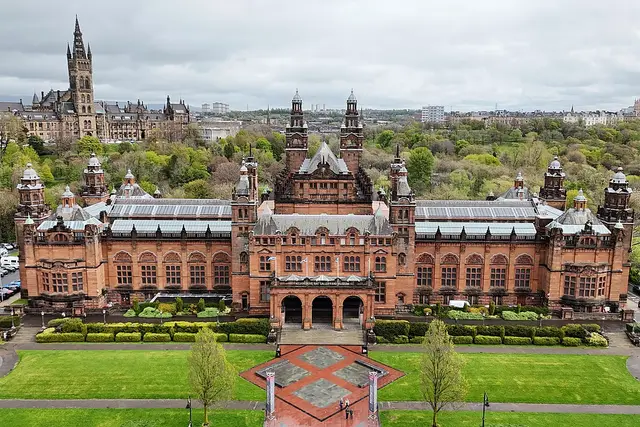
If you have a full afternoon, walking along the river turns a garden visit into a proper West End day. That way you can reach Kelvingrove Art Gallery and Museum and the University of Glasgow’s towers on foot.
When the gates are quietest
Our crowd data is clear about this. The gardens are calmest between 7am and 10am and between 4pm and 6pm, on weekdays and weekends alike. At the moment the gates open at 7am and close at 6pm every day of the week. Park hours change through the year, so check the council’s site for this month’s times.
Try to avoid weekends between 11am and 4pm. That’s when the lawns fill up with picnics and the Kibble Palace walkway gets crowded with buggies.
The early window does have a catch: the glasshouses may not be open yet. If you want the glasshouses quiet, aim for late afternoon on a weekday, before they close. If you just want the grounds, early morning is unbeatable.
Getting there from the West End
The nearest stop is Hillhead station on the Glasgow Subway, which runs as a single loop with Inner and Outer Circle trains. Come out onto Byres Road and walk north to the junction with Great Western Road. The gates are diagonally opposite, at the corner of Queen Margaret Drive. The walk takes under ten minutes.
Kelvinbridge station also works if you’re coming along the river path.
Plenty of buses run along Great Western Road from the city centre. Street parking nearby is limited and fills up on sunny weekends, so public transport is the easier choice.
Afterwards, Byres Road and the cobbled Ashton Lane are a few minutes’ walk south for food and drinks.
Sharing the lawns with the West End
There are no tickets and no queue at the gate. You just walk in, and entry to the grounds is free. Inside the glasshouses there may be a donations box. How much you give is up to you.
Some etiquette that makes your visit easier:
- Glasshouse paths are narrow. Keep left and move on from the popular spots inside the Kibble Palace dome.
- Picnics on the lawns are normal when the weather is dry. Take your rubbish with you.
- Dogs are welcome in the grounds, but follow the signs at the glasshouse doors.
- Cycling: the river paths are shared, so give a bell or a word before you pass walkers.
- Plants and cuttings are part of a botanic collection. Look, but don’t take.
Glasgow weather can change within an hour. A light waterproof matters more here than at most attractions, because half the best walking is out in the open. Bring layers too, since the tropical houses are much warmer than the paths outside.
Frequently asked questions
When is the quietest time to visit Glasgow Botanic Gardens?
It's quietest between 7am and 10am and between 4pm and 6pm, on weekdays and at weekends. Avoid weekends between 11am and 4pm, the busiest time. The glasshouses usually open later than the gates, so if you want to see them, a late weekday afternoon is your best bet.
How do I get to Glasgow Botanic Gardens by public transport?
Take the Glasgow Subway to Hillhead, walk north up Byres Road to Great Western Road and cross to the gates at the corner of Queen Margaret Drive. The walk takes under ten minutes. Kelvinbridge station is also close if you walk along the River Kelvin path.
How long should I spend at Glasgow Botanic Gardens?
One to two hours covers the Kibble Palace, the Main Range glasshouses and the upper lawns. Allow half a day if you want to walk the river paths or carry on along the Kelvin Walkway to Kelvingrove Park.
What are the opening hours?
At the moment the gates open from 7am to 6pm every day of the week. Hours change through the year, and the glasshouses keep shorter hours than the grounds. Check Glasgow City Council's Botanic Gardens page for current times before you go.
What is there to see nearby?
Byres Road and Ashton Lane are a few minutes' walk south, with plenty of cafés and bars. Kelvingrove Art Gallery and Museum and the University of Glasgow are both within walking distance, either through the West End streets or along the River Kelvin.
Plan your trip to Glasgow
United Kingdom eSIM & staying connected →
Some links above are affiliate links — if you book through them, Wander Atlas earns a small commission at no extra cost to you. It's how we keep every guide free.