Jeju National Museum: Travel Guide (4.4★)
When to visit South Korea: month-by-month weather, crowds and holidays →
✓ Facts verified via Google Places · Sep 5, 2026
At a glance
Opening hours
- Monday: Closed
- Tuesday: 9:00 AM – 6:00 PM
- Wednesday: 9:00 AM – 6:00 PM
- Thursday: 9:00 AM – 6:00 PM
- Friday: 9:00 AM – 6:00 PM
- Saturday: 9:00 AM – 6:00 PM
- Sunday: 9:00 AM – 6:00 PM
Live foot-traffic data via BestTime.app
How this guide is made
Produced with AI assistance and reviewed against live data sources. Facts such as hours, ratings, and location come from Google Places; images are licensed or public domain. Details can change — please verify before visiting. Editorial policy
Why go
Jeju is sold to most visitors as a landscape (volcanic cones, black-sand beaches, waterfalls tumbling out of basalt cliffs), but the island has a distinct human history that’s easy to miss if you only chase views. Jeju National Museum is where that story gets filled in: the ancient Tamna kingdom that ruled the island independently for centuries, the haenyeo women divers, the shamanist belief system with its own pantheon, and the darker chapters of Joseon-era political exile, when the island was used as a place to banish disgraced officials and scholars.
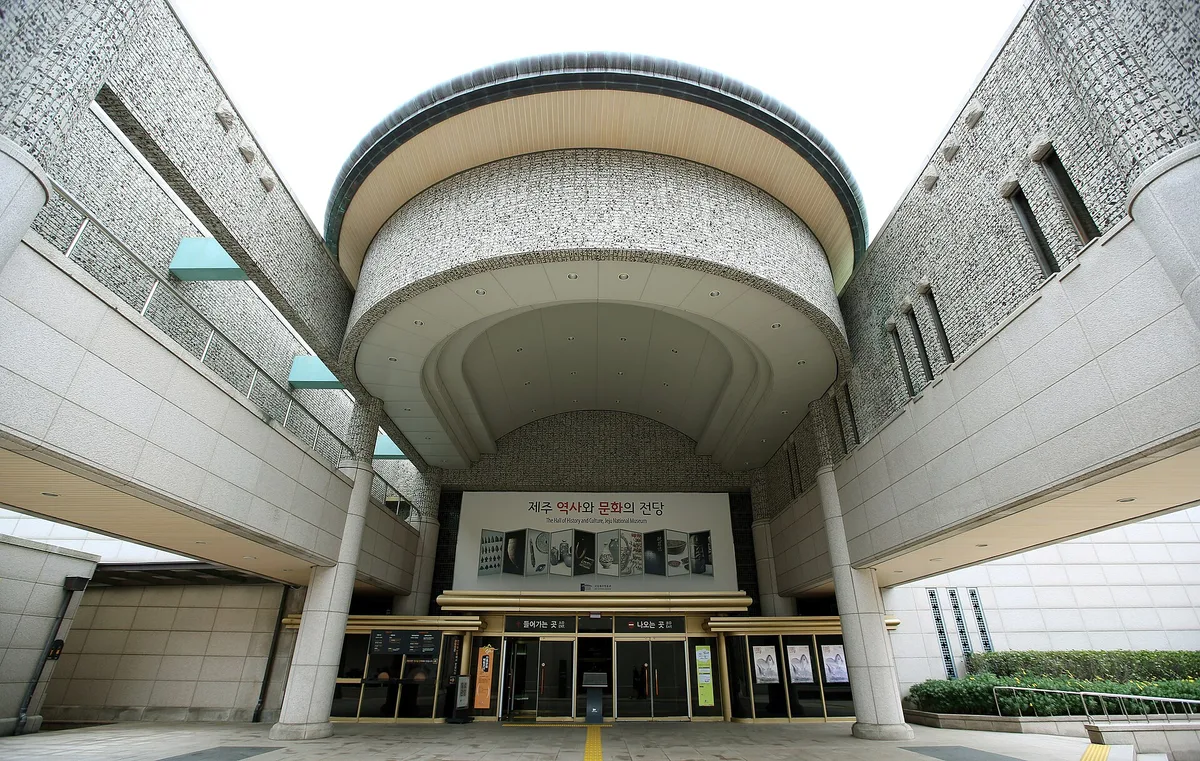
The building itself, a low, deliberately unshowy concrete structure set against greenery, was designed to not compete with the collection or the coastline nearby.
Getting there
The museum sits in Jeju City proper, at 17 Iljudong-ro, a few minutes’ drive from the airport and easy to combine with a morning arrival or a final afternoon before a flight out. Public buses running along the northern coastal road stop within walking distance, and taxis from downtown Jeju City or the airport are quick and inexpensive given the short distance.
There’s no subway system on Jeju, so most visitors arrive by rental car, taxi, or local bus, if you’re driving, there’s on-site parking, which makes this an easy add-on to a loop around the island’s north side.
What to see
Inside, the permanent exhibits move roughly chronologically: prehistoric and Tamna-kingdom artifacts first, then a section on Jeju’s maritime and shamanist culture, and finally displays covering the Joseon dynasty’s use of the island as an exile destination for out-of-favor aristocrats and scholars. Look for the volcanic-rock burial markers, the reconstructed traditional Jeju house layout, and the artifacts tied to the haenyeo diving tradition, a culture UNESCO recognized as Intangible Cultural Heritage.
Signage is bilingual in Korean and English throughout, which makes it genuinely navigable without a guide. The natural-history side of the collection also explains Jeju’s volcanic formation in plain terms, useful context if you’re about to go hike Hallasan or walk a lava tube afterward.

When to go
The museum keeps steady hours Tuesday through Sunday. Plan around that if you’re building a north-Jeju itinerary. On weekends, the busiest window runs from 11am to 5pm, so if you want the galleries to yourself, aim for right at opening or come on a weekday afternoon instead. Budget roughly an hour to an hour and a half for a full walk-through; longer if there’s a special exhibition running, which the museum rotates periodically alongside the permanent collection.
How to visit like a local
This is a well-known, well-visited stop rather than a secret one, so the smart move isn’t finding it. It’s timing it. Go right when the doors open at 9am, or drop in on a weekday, to skip the midday weekend crush. Entry to the permanent exhibition is typically free or very low-cost (special exhibitions sometimes carry a separate fee), but confirm current admission details before you go since these things shift.
Koreans generally move through museums quietly and don’t linger to chat in the galleries, follow that lead, keep voices low, and don’t touch the reconstructed house displays even where they look walk-in-able. Photography is usually fine in the permanent galleries without flash, but special exhibitions sometimes restrict it, so check the signage at the entrance to each room rather than assuming.
There’s no dress code, but bring a light layer. The galleries run cool. If you’re short on time, ask staff (or check the info desk map) for the highlights of the Tamna and haenyeo sections, since those are the two most Jeju-specific parts of the collection rather than generalized Korean history you might see in other regional museums.
Nearby
The museum pairs naturally with other north-coast Jeju City sights. You can combine it with a stroll through the Jeju Mokgwana government office complex or a coastal walk if you’re staying in the city rather than out near the resorts.
Frequently asked questions
How long should I spend at Jeju National Museum?
Most visitors need about 1 to 1.5 hours for the permanent collection; add extra time if a special exhibition is running.
What are the opening hours?
Tuesday through Sunday, 9:00 AM to 6:00 PM. It's closed all day Monday.
When is it quietest?
Right at opening on weekdays is calmest. On weekends, avoid 11am–5pm, which is the busiest stretch.
How do I get there without a car?
Local buses along Jeju City's coastal road stop nearby, or take a short taxi ride from downtown Jeju City or the airport, both just minutes away.
Is it worth visiting if I'm mainly here for nature?
Yes — it gives context on Jeju's volcanic geology and the Tamna-era and haenyeo culture that shaped the island, useful background before hiking Hallasan or visiting lava tubes.
Plan your trip to Jeju
Some links above are affiliate links — if you book through them, Wander Atlas earns a small commission at no extra cost to you. It's how we keep every guide free.