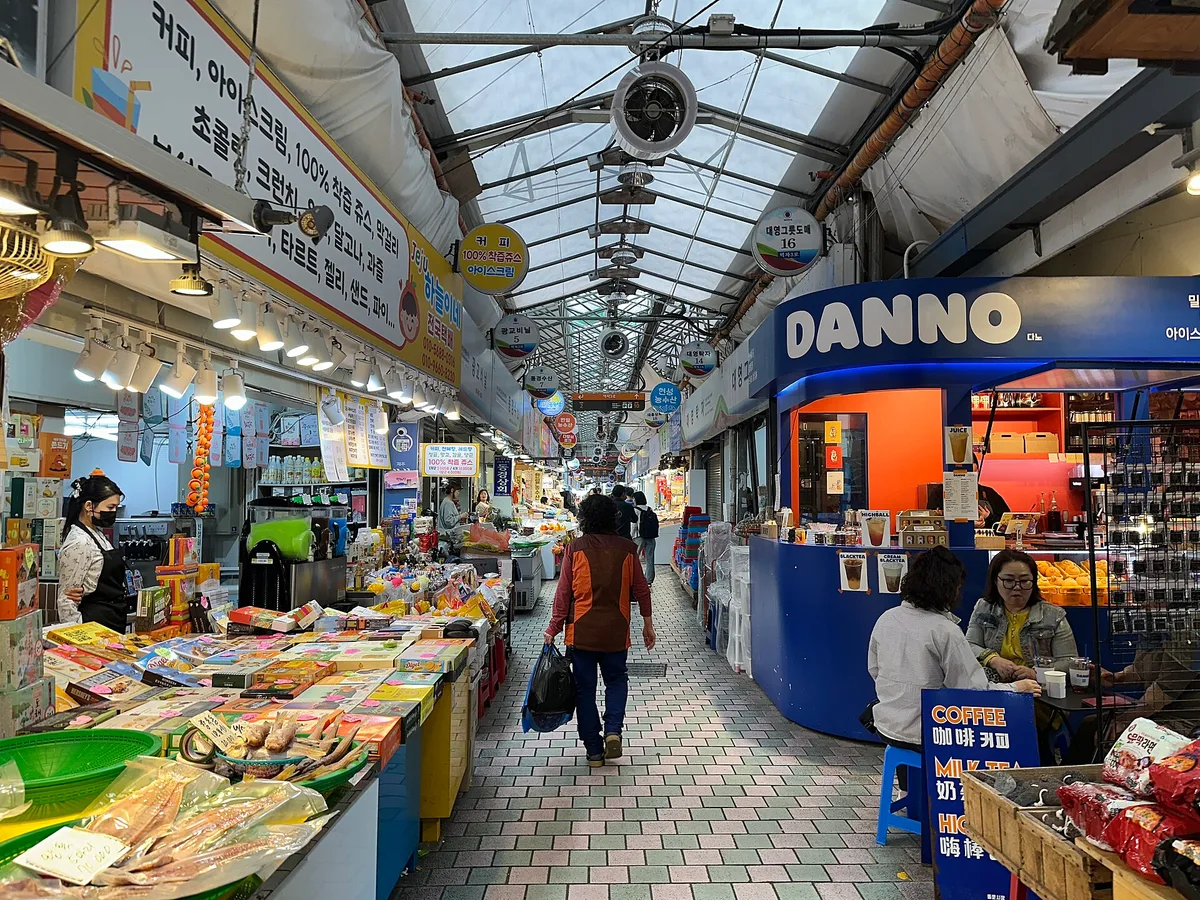
Under the roof on Gwandeok-ro
Orange is the colour you walk into. Hallabong and other Jeju citrus are stacked in pyramids and boxed in branded cartons for the flight home. Behind the fruit, the fish aisles run on water. Silver ribbons of galchi (hairtail) and pink okdom (tilefish) sit on ice, and vendors hose down the concrete floor between customers.
The market was set up in 1945, just after Korea’s liberation, and it is the oldest permanent market on the island. It’s now a roofed grid of lanes with numbered gates, taking in clothing, dried goods and kitchenware as well as food. It is one of the most-reviewed places in Jeju City. Expect company in the aisles.
What to eat and carry out
Most stalls sell one thing and sell a lot of it. Look for these:
- Hwe (sashimi) platters: fish stalls slice to order and pack it in foam trays, often with lettuce and chogochujang dipping sauce.
- Omegi-tteok: Jeju’s millet rice cakes rolled in red bean or nuts, sold from dessert stalls.
- Jeju black pork: sold raw by the butchers, and skewered or grilled at the evening food stalls.
- Hallabong and gamgyul: sold loose or boxed, with juice and chocolate spin-offs.
- Dried galchi and seaweed: vacuum-packed and light enough for a suitcase.
In the evening, the night-market section near Gate 8 fills with griddle carts. They sell things like torched black pork, abalone gimbap and tangerine drinks. Check current night-market times locally, as they are separate from the daytime stalls.

Buying fish, fruit and paying at the stalls
This is a working market, and it runs on quick decisions. Ask the price per piece or per box before anything goes in a bag. Point, confirm, pay. Most stalls take Korean and foreign cards, but a few small food carts go faster with cash. Tipping isn’t part of the deal here.
Shipping is routine. Fruit sellers can courier boxes within Korea using taekbae, so you don’t have to carry them. Fish stalls will pack seafood in ice boxes sealed for domestic flights; tell them you’re flying and when. Pick up sashimi last, just before you leave. There is no big seating hall for it. Many visitors eat it back at their hotel or on the seafront at Tapdong.
Morning, soon after the 8am opening, is best for fish, because the ice is freshest and the choice is widest. Evening is for the food carts. Aisles are narrow and wet in the seafood section, so keep large bags close and step aside when a trolley comes through.
Getting there and what’s next door
The market sits in old Jeju City (Jeju-si), roughly 15 to 20 minutes by taxi from Jeju International Airport. Many city and airport buses stop at “Dongmun Market” or Dongmun Rotary. Use Kakao Map or Naver Map for live routes, as Google’s transit directions are patchy in Korea.
Give it one to two hours, and longer if you stay for the night stalls. After that, Gwandeokjeong Pavilion and the Jeju Mokgwana government compound are a short walk west. The Sanjicheon stream runs just east of the market to the harbour, and Tapdong’s sea wall is a ten-minute walk north.
Frequently asked questions
What are Dongmun Market's opening hours?
The market opens 8:00am to 9:00pm, seven days a week. The evening food stalls in the night-market section keep their own schedule, so check it locally before planning dinner there.
How do I get to Dongmun Market from Jeju Airport?
It's roughly 15 to 20 minutes by taxi. Many city and airport buses stop at Dongmun Market or Dongmun Rotary; check Kakao Map or Naver Map for the current route.
Can I take seafood or tangerines on a flight?
Yes, for domestic flights. Fish stalls pack seafood in sealed ice boxes, and fruit sellers can ship boxes within Korea by courier. Tell the vendor your plans. For international flights, check your destination country's customs rules on food first.
How long should I spend there?
One to two hours covers the fish, fruit and food aisles. Stay longer if you're visiting for the evening night-market stalls.
What's near Dongmun Market?
Gwandeokjeong Pavilion and Jeju Mokgwana are a short walk west. The Sanjicheon stream runs beside the market, and Tapdong seafront is about ten minutes north on foot.
Plan your trip to Jeju
Some links above are affiliate links — if you book through them, Wander Atlas earns a small commission at no extra cost to you. It's how we keep every guide free.