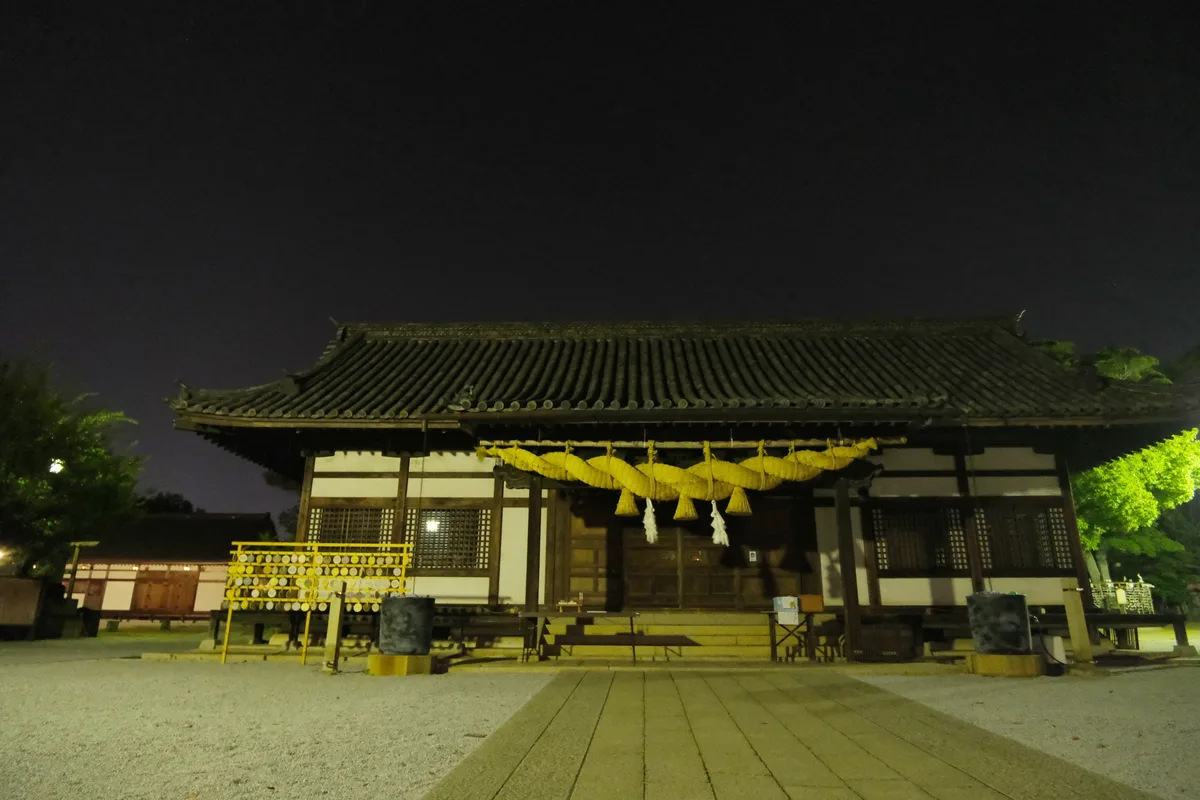
Above the rooftops of Honmachi
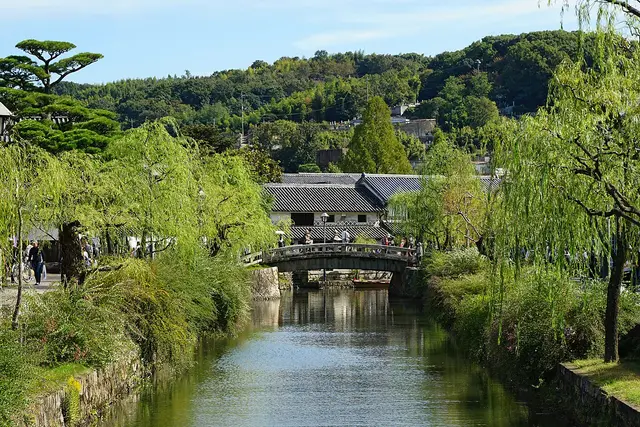
The canal district stops at a hill. Behind the white-walled storehouses and willow-lined water of the Bikan Historical Quarter, Tsurugatayama rises abruptly. A stone stairway climbs from the Honmachi lanes, and Achi Shrine sits at the top.
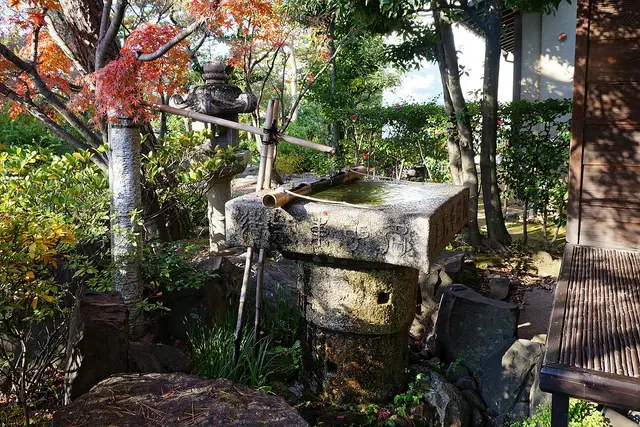
This is Kurashiki’s guardian shrine. It is a working Shinto sanctuary with halls, a purification basin and an offering box, not a museum piece. It is also the one spot in town where you look down on the tiled roofs you have spent the morning walking among.
Stones, wisteria and the long view
Three things draw people up the hill. Each rewards a slightly different kind of attention.
- The sacred boulders. Rock groupings on the grounds are treated as iwakura, stones where the divine is believed to descend. They are older in spirit than the halls around them. Look for the ropes and paper streamers marking them as sacred, and don’t climb on them.
- The great wisteria. A huge, old wisteria spreads across a trellis in the precinct. It usually blooms from late April into early May, with long hanging clusters of pale purple. Outside that window it is a broad green canopy.
- The view. From the edge of the grounds the Bikan roofscape opens out below. The rest of Kurashiki and the flat Okayama plain stretch beyond it. The shrine is known locally for its sunsets over this outlook.
Timing your climb
The listed schedule is currently 9am–5pm every day. Shrine hours, and especially the shrine office hours, can shift with the season and on festival days. Check the official site for the month you are going.
Weekends are the hard part. Foot traffic typically stays high from 9am right through to 5pm on Saturdays and Sundays, so you will be sharing the stairs and the viewpoint. If you can, go on a weekday instead.
The calmest window is usually 4pm–5pm on weekdays. That late slot also gives you lower, warmer light over the rooftops. In late autumn and winter, when the days are short, sunset comes close to the end of the listed hours. In other months, ask the shrine office or check the official site before planning a sunset visit.

At the offering hall
A few customs make the visit smoother. They are expected of visitors too, and nobody minds a foreigner who tries.
- Pass through the torii slightly to one side. The centre of the path is traditionally reserved for the deity.
- Purify at the temizuya. Ladle water over your left hand, then your right. Pour a little into your cupped hand to rinse your mouth, then tip the ladle upright so the rest runs down the handle.
- Pray in the standard way. Drop a coin in the offering box and ring the bell if there is one. Bow twice, clap twice, hold a short silent prayer, then bow once more.
- Keep your voice low and step aside for anyone praying. Ask before photographing shrine staff or ceremonies.
Coins are what people use at the offering box, so keep a few in a pocket before you climb. Charms (omamori), fortune slips (omikuji) and the ink-and-stamp shrine seal (goshuin) are handled at the shrine office during its hours. Prices are posted there. If your fortune is a bad one, tie it to the rack provided rather than taking it home.
Getting there from Kurashiki Station
You don’t need transport once you are in town. From the south exit of JR Kurashiki Station, walk south toward the Bikan Historical Quarter. The route through the shopping arcades to the canal takes roughly 15 minutes at an easy pace.
From the canal, head into the Honmachi lanes on the hill side of the quarter. The shrine’s address is 12-1 Honmachi. Signs point to the main stairway, which is steep and long, so take it slowly in summer heat. Allow 45 minutes to an hour for the climb, the precinct and the view. Stay longer in wisteria season.
Pairing it with the canal quarter
The shrine fits neatly into a day in Bikan. It is easiest to climb after you have walked the canal. Then the roofs below are streets you already know.
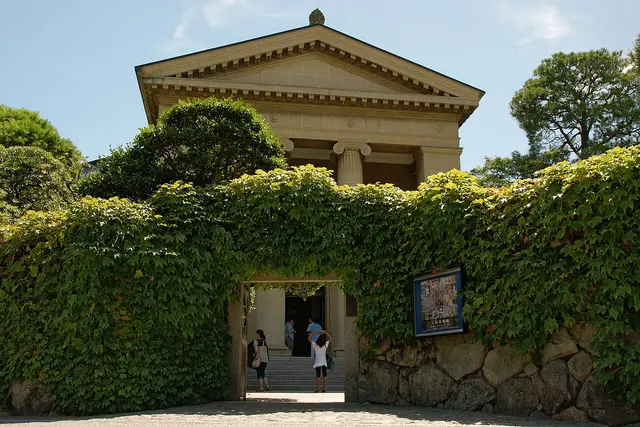
- Ohara Museum of Art sits by the canal, a short walk downhill. It is Japan’s first museum of Western art.
- Kurashiki Ivy Square is the ivy-covered former cotton mill on the quarter’s eastern side.
- Honmachi and Higashimachi lanes, at the foot of the hill, are quieter than the canal front. They are lined with old merchant houses and small shops.
Plan your day so the climb lands on a weekday late afternoon. You get the stones, the tree and the rooftops with the fewest people between you and them.
Frequently asked questions
When is the quietest time to visit Achi Shrine?
Weekdays between 4pm and 5pm are usually the calmest. On weekends it tends to stay busy the whole time from 9am to 5pm, so a weekday visit is the better bet.
How do I get to Achi Shrine from Kurashiki Station?
Walk south from the station's south exit to the Bikan Historical Quarter, which takes about 15 minutes. Then follow the signs in the Honmachi lanes to the stone stairway up Tsurugatayama. The address is 12-1 Honmachi.
When does the wisteria bloom?
The shrine's great wisteria usually flowers from late April into early May. Bloom timing varies year to year, so check local reports close to your visit.
How long should I spend there?
Allow 45 minutes to an hour for the climb, the halls, the sacred boulders and the view over the old town. Allow more if the wisteria is in bloom.
Can I see the sunset from Achi Shrine?
The shrine is known for its sunset views over Kurashiki. It currently lists hours of 9am–5pm, and those can change by season, so check the official site for the month you are visiting before planning around sunset.
Plan your trip to Kurashiki
Japan eSIM & staying connected →
Some links above are affiliate links — if you book through them, Wander Atlas earns a small commission at no extra cost to you. It's how we keep every guide free.